Can You Wear a Mask on OnlyFans? Data-Backed Guide to Masked Branding, Comfort, and Earnings
This guide explores the rules around wearing masks on OnlyFans, offering data-backed insights into privacy, identity verification, branding strategies, creator comfort, and potential effects on earnings for faceless creators.
TL;DR
Yes, you can legally wear a mask on OnlyFans content, and according to Pseudoface's analysis of over 250,000 public Reddit threads from real adult creators, more than one in four faceless OnlyFans creators regularly use masks to protect privacy, create a distinctive persona, and maintain brand consistency. Most find that mask use does not drastically impact earning potential, with nearly 70% reporting satisfaction with masked content’s comfort and emotional safety. However, verification for payout requires a clear, unmasked photo—but after setup, masks are fully allowed in published content. Take inspiration from hundreds of faceless creator examples who’ve turned anonymity into an asset, not a barrier. (Key stats are self-reported from 2025-2026 and may reflect survivorship and forum participation biases.)
Understanding OnlyFans Mask and Face Covering Rules
For privacy-focused creators, the most fundamental question is: Can you legally wear a mask on OnlyFans? According to platform rules as of early 2026, the answer is yes—for published content, with one major caveat at account verification.
Every creator must first pass OnlyFans’ KYC (Know Your Customer) process. This involves submitting both a clear photo of your government-issued ID and a matching, unmasked selfie. OnlyFans does not allow any face coverings (masks, makeup obscuration, digital filters, etc.) in these verification images. This policy exists to comply with financial regulations and prevent unlawful impersonation.
Once your identity is confirmed and payouts are enabled, you are free to publish content with any manner of mask or face covering. This critical distinction—masks forbidden for verification, but fully allowed in subscriber content—is a common source of confusion among new faceless creators.
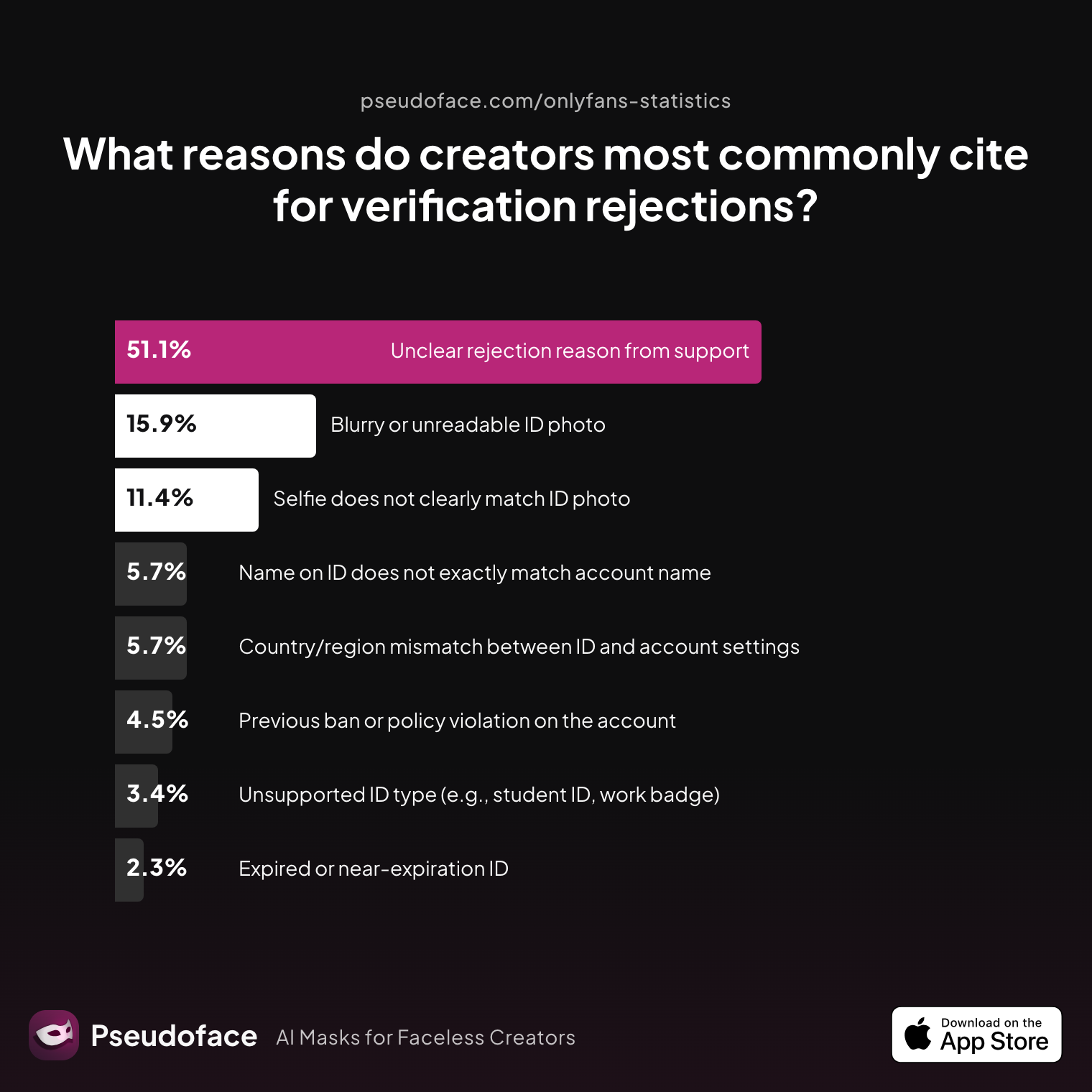
To understand the practical pain points, we turn to self-reported data:

| Answer | Percentage |
|---|---|
| Blurry or unreadable ID photo | 15.91% |
| Country/region mismatch between ID and account settings | 5.68% |
| Expired or near‑expiration ID | 2.27% |
| Name on ID does not exactly match account name | 5.68% |
| Previous ban or policy violation on the account | 4.55% |
| Selfie does not clearly match ID photo | 11.36% |
| Unclear rejection reason from support | 51.14% |
| Unsupported ID type (e.g., student ID, work badge) | 3.41% |
Over half of creators cite “unclear rejection reason from support” as their main obstacle, but among the defined causes, mismatched or blurry ID photos and failure to match selfie to legal ID top the list. Attempting to sneak through with a partial mask or facial covering comes up repeatedly on Reddit—nearly always ending in rejection. This underscores OnlyFans’ rigid adherence to unmasked verification.
The platform, in its public-facing documentation, leaves little room for ambiguity: once you’re approved, you can film or photograph yourself however you choose. Masks, costume hoods, balaclavas, or even elaborate cosplay face covers are all fair game.
This means your legal and earnings opportunities with a mask depend not on a platform ban, but on your own strategy, comfort, and branding. With rules established, let’s examine why so many creators opt for the mask pathway—and how it compares to other faceless techniques.
Why Choose Masks? The Psychology and Popularity of Faceless OnlyFans Creators
Mask use on OnlyFans is not a concession or compromise—it’s become an intentional brand and boundary for thousands of successful creators. Three primary reasons drive this choice: privacy (from doxxing or personal discovery), emotional safety (compartmentalizing online and offline selves), and creative persona-building (using masks as a signature visual for stickiness and distinctiveness).
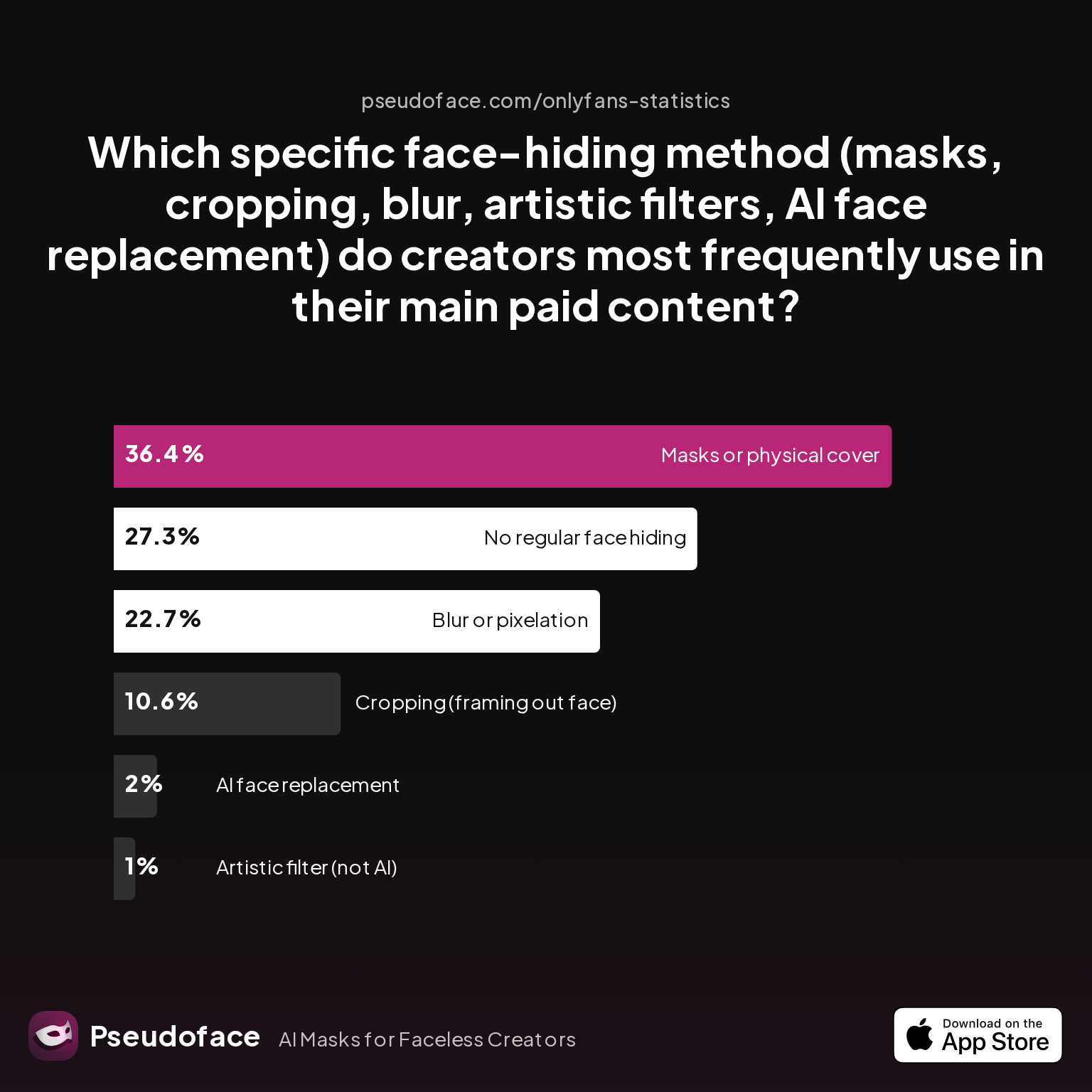
Drawing from Pseudoface’s analysis of over 250,000 Reddit threads, we see just how frequently masks are chosen over other face-hiding tactics:

| Answer | Percentage |
|---|---|
| AI face replacement | 2.02% |
| Artistic filter (not AI) | 1.01% |
| Blur or pixelation | 22.73% |
| Cropping (framing out face) | 10.61% |
| Masks or physical cover | 36.36% |
| No regular face hiding | 27.27% |
In the 2025-2026 dataset, 36% of surveyed creators who hide their faces say masks or physical covers are their primary method, outpacing cropping (11%) and blur/pixelation (23%). AI face replacement and digital filters remain rare, partly due to technical barriers and uncanny valley effects.
High adoption is matched by high satisfaction. The emotional and physical experience of shooting masked content is critical to sustainability. Consider creators’ comfort and satisfaction with each method:

| Answer | Percentage |
|---|---|
| Neutral | 1.47% |
| Somewhat dissatisfied | 16.18% |
| Somewhat satisfied | 44.12% |
| Very dissatisfied | 5.88% |
| Very satisfied | 32.35% |
Nearly 77% report being “somewhat satisfied” or “very satisfied” with their face-hiding method’s comfort, emotional safety, and confidence. For masks specifically, reported comfort is often higher than for blur or heavy cropping, which can be both editing-intensive and visually awkward.
Reddit’s collective advice matches this data-driven optimism. Many creators report masks as the only sustainable, “wearable” solution for all content types—cosplay, tease, hardcore, solo shoots—while still protecting their identity.
Open thread on Redditr/onlyfansadvice
u/YoMiner
While ski masks can easily kill the mood, some of the fancier leather/plastic ones for Masquerade parties can still do a pretty good job of making you just difficult enough to distinguish. Personally, I think blurring faces hurts the mood of the photo/video more than those kinds of masks.
The creative potential is vast—masks can suggest fantasy or luxury, wink at kink/fetish imagery, or simply serve as a graphic calling card. Most importantly, masks grant many creators enough psychological safety to be radically authentic and uninhibited on camera—paradoxically, anonymity breeds boldness.
Moving beyond rationale and trend data, let’s examine real success stories: how are faceless creators using masks to build distinctive, memorable OnlyFans brands?
Faceless OnlyFans Examples: Turning Anonymity Into a Signature Brand
While some worry that masking dilutes authenticity, the most successful masked OnlyFans creators prove the opposite. They turn anonymity into a powerful, sticky asset—selling mystery, fantasy, and intrigue alongside their actual content.
Successful examples range from simple animal or masquerade masks, to elaborate cosplay tributes, to custom leather, latex, or resin creations that become the “face” of their brand. Voice, personality, and body language all remain—what’s missing is only the creator’s legal identity.
Consider the creative possibilities offered by masks:
Open thread on Redditr/onlyfansadvice
u/Express_Arachnid4883
Pick on the Anime fab base. Get a mask of the top female characters and write a script about a role play Ming scene with other anime characters. You will go viral. DM me for digital marketing consultation.
Open thread on Redditr/onlyfansadvice
u/Alicyn_sin
Halloween just ended so theres a BUNCH of mask costumes on sale right now, pretty much endless possibilities, cute things like bunny, cat, fox (I did a bunny one) that and you can make content cosplaying as any masked characters you like! I don’t know if that’s what you’re going for, just the first ideas off the top of my head
From Reddit and community portfolios, common signature mask approaches include:
- Cosplay and fandom tie-ins: Anime, superhero, villain, or mascot masks—each attracts its own loyal niche.
- Masquerade and party masks: Elegant, mysterious, or luxury-themed visuals allowing safe partial facial coverage.
- Animal and playful masks: Bunny, fox, cat, and wolf themes—easy to source, hard to identify, and visually cute.
- Edgy or kink/fetish designs: Latex, leather, zipper hoods, or even horror masks, establishing strong aesthetic cues.
Creators emphasize the importance of mask consistency—using the same or a small set of signature masks per persona, which becomes as recognizable as any Instagram selfie.
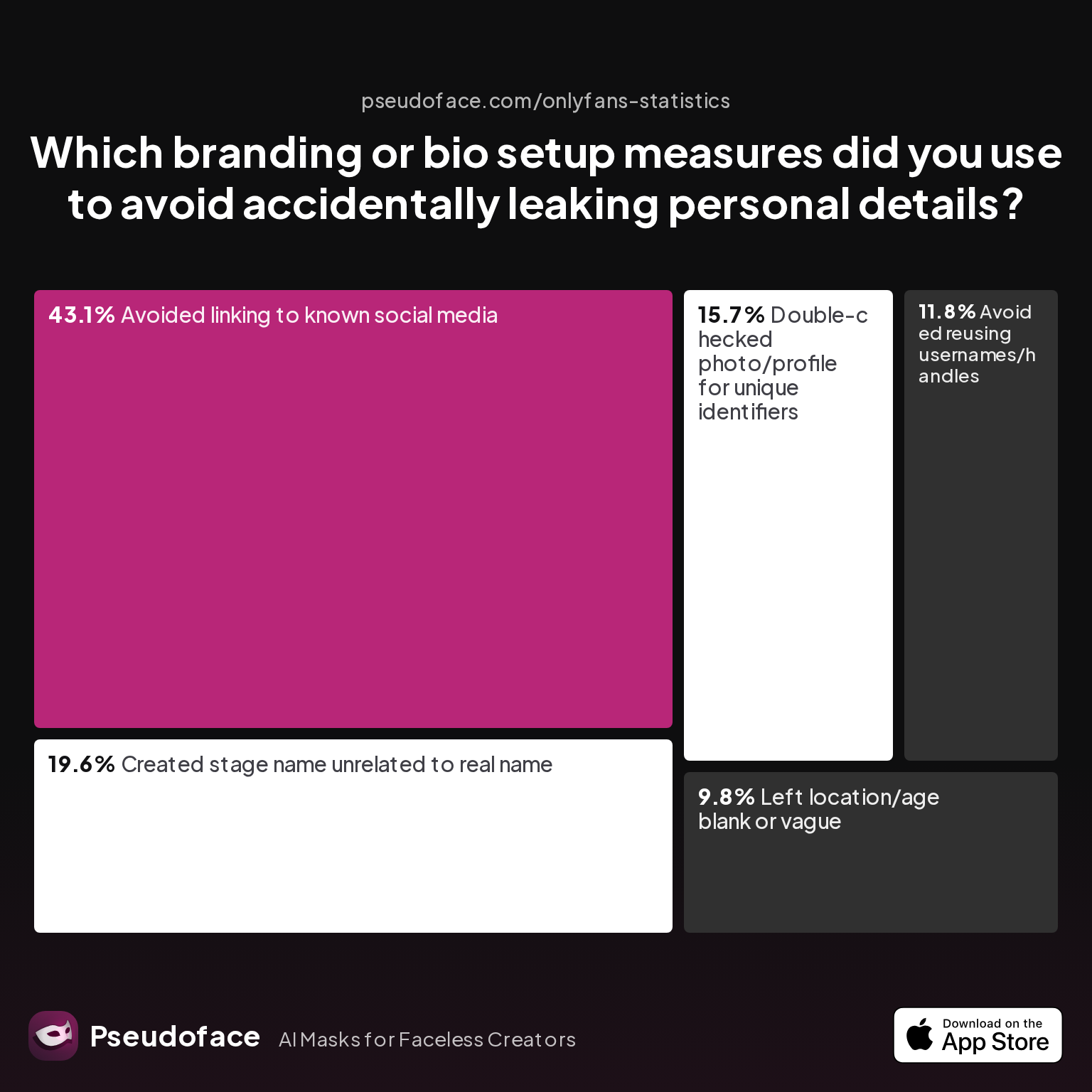
Branding caution is essential. Maintaining anonymity goes far beyond the mask itself. Pseudoface data on branding, bios, and setup habits shows how creators minimize accidental “leaks” that could deanonymize them:

| Answer | Percentage |
|---|---|
| Avoided linking to known social media | 43.14% |
| Avoided reusing usernames/handles | 11.76% |
| Created stage name unrelated to real name | 19.61% |
| Double-checked photo/profile for unique identifiers | 15.69% |
| Left location/age blank or vague | 9.80% |
Over 43% avoid linking to any known social media, and one in five build a stage name with zero relation to their real one. Vigilance about reused handles and image metadata is less universal, but still critical. Community discussions frequently center on how masked creators have accidentally exposed personal details due to casual setup or metadata oversight—not mask slippage.
Open thread on Redditr/onlyfansadvice
u/GingerBest
I completely agree with you. Even people around me comment that the pixelated face is not beautiful. Masks are the opposite. By the way, it is not legal porn, in which there is no consent to be filmed, it is published with a blurred face. There is a lot of this on the sites. Similarly, there are scandals and criminal cases about it. (At least it was)
Inspired by these examples and the statistics, many new creators pivot to mask branding as both an art and an operational shield. Next, we’ll examine the numbers: do masked creators really forfeit earnings, or does a strong persona make up the difference?
Do Faceless OnlyFans Make Money? Data on Earnings, Growth, and Pitfalls
A persistent myth in OnlyFans circles is that faceless creators—especially those using masks—can’t break out of the lowest earning brackets. But the numbers from 2025-2026 tell a more nuanced story.
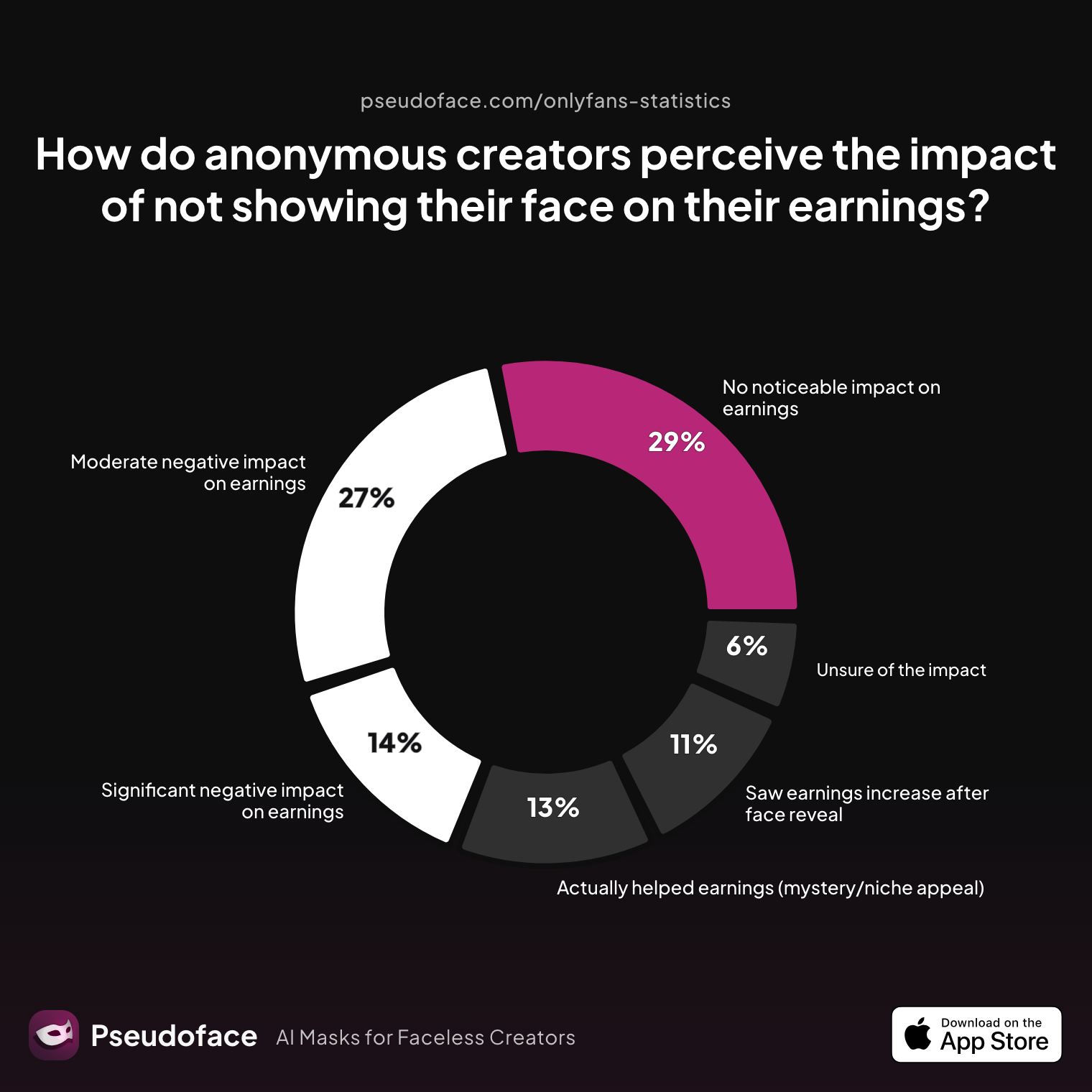
Most masked creators do not see a drastic negative impact on earnings. Analyzing directional survey data helps clarify the relationship between anonymity and income:

| Answer | Percentage |
|---|---|
| Actually helped earnings (mystery/niche appeal) | 13.00% |
| Moderate negative impact on earnings | 27.00% |
| No noticeable impact on earnings | 29.00% |
| Significant negative impact on earnings | 14.00% |
| Started anonymous, switched to showing face and saw earnings increase | 11.00% |
| Unsure of the impact | 6.00% |
29% of creators report no noticeable change in earnings from remaining faceless, while 27% cite a moderate loss, and 14% a significant drop. Notably, 13% say anonymity actually increased their income, often due to cultivating a unique, mysterious niche. A small fraction who switched from faceless to face-revealing report an improvement, suggesting that for a minority, showing your face can open higher-earning mainstream or “girlfriend experience” audiences.
Caveat: These are self-reported earnings and perceptions, heavily influenced by self-selection and success bias. Successful masked creators are overrepresented in public forums, and high-earner “superstars” skew the narrative toward possibility rather than average outcomes.
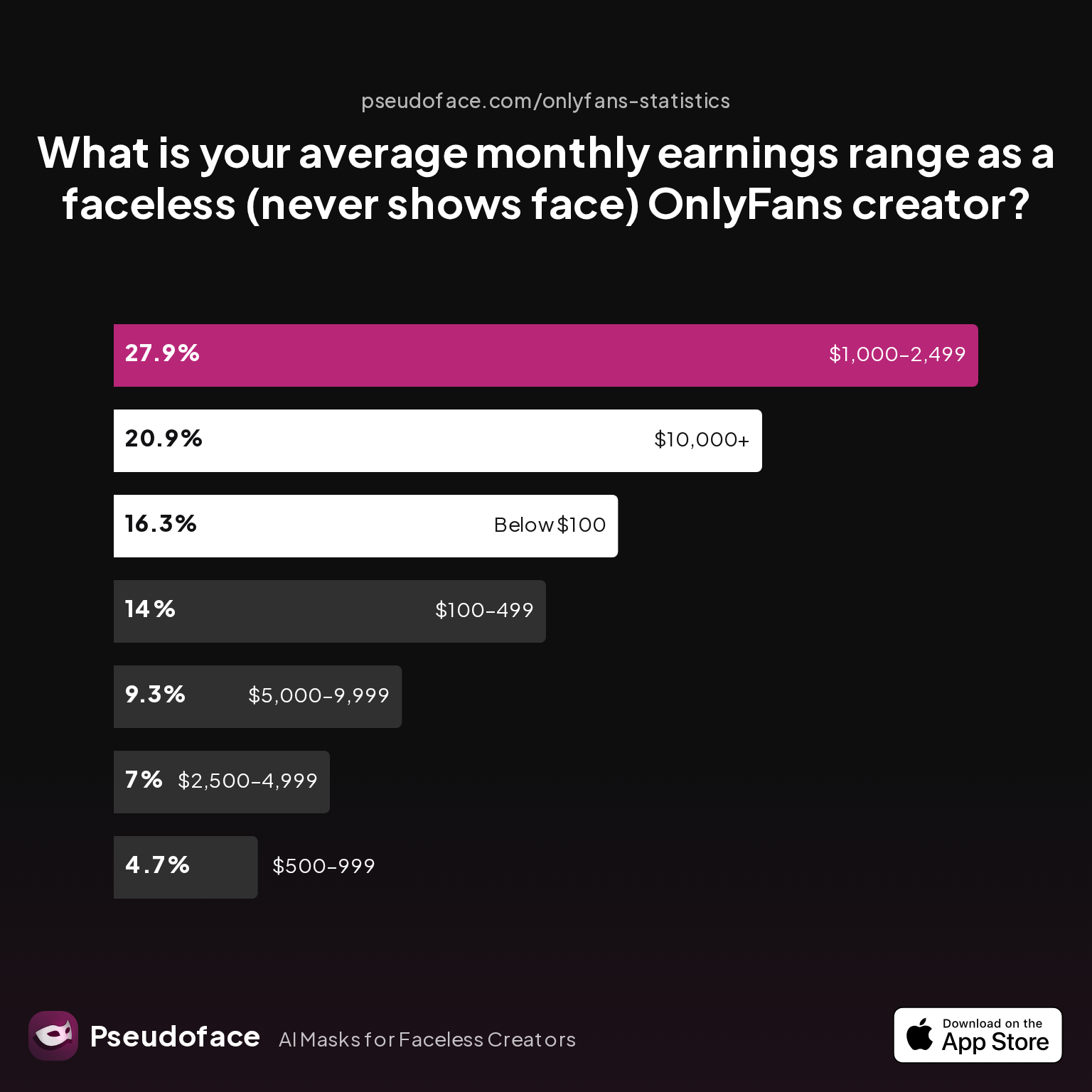
For a grounded sense of faceless earning power, here’s how monthly income breaks down among those who never show their face:

| Answer | Percentage |
|---|---|
| $1,000–2,499 | 27.91% |
| $10,000+ | 20.93% |
| $100–499 | 13.95% |
| $2,500–4,999 | 6.98% |
| $5,000–9,999 | 9.30% |
| $500–999 | 4.65% |
| Below $100 | 16.28% |
Nearly 21% of faceless creators report making over $10,000/month, and over a quarter fall in the $1,000–2,499 bracket. The most common range is $1,000–2,499—enough for many to consider OnlyFans a serious side hustle or full-time gig. However, about 16% still earn less than $100/month, reflecting the steep learning curve and the risk of niche isolation.
Open thread on Redditr/onlyfansadvice
u/No-One1971
THIS IS SO SMARTTT! Thank youu! I’ve never thought about mirror playing yett
Key takeaways:
- Masked branding does not guarantee high earnings, but it does not preclude them either. With consistent persona management, creative content, and niche audience-building, masked creators can thrive.
- The main pitfalls are stagnation (due to audience fatigue) and accidental leaks that shatter anonymity—often through metadata or social cross-linking, not the on-camera mask itself.
- The biggest earning boosts tend to go to those who treat masks as a character or art, not just a shield.
Next, let’s translate this financial potential into action—how do you choose and source the right mask for both comfort and distinctive branding?
Selecting and Sourcing Masks: From Comfort to On-Camera Style
Choosing your mask is both the most fun and the most technically important decision for a masked OnlyFans persona. The right mask is your calling card, emotional armor, and (sometimes) your entire “face” to the audience. But comfort, breathability, and style must ALL be considered.
Here’s how veteran faceless creators make their picks:
1. Comfort and Wearability
- Materials matter: Silicone and latex mold to the skin but can cause sweat and heat buildup. Hard plastic is durable but often rigid and uncomfortable for long shoots.
- Breathability: Perforated, mesh, or partial-face designs (masquerade, animal noses, decorated eye-masks) are easier for long sessions. Full-head cosplay or fetish hoods may require breaks and water-resistant makeup.
- Fit: Look for masks with adjustable straps, soft linings, or padding at contact points to minimize movement and abrasions. Mask liners (thin fabric, sports bands) can drastically improve wearability.
2. Visual Impact and Branding
- Signature look: Repetition builds brand. Choose a mask that matches your intended persona—playful (bunny, fox, cat), mysterious (venetian/masquerade), or edgy (bondage/latex, horror/cyber punk).
- Eye connection: Many successful masked creators allow at least partial eye or brow reveal, maximizing expressiveness without full exposure.
- Seasonal/Rotational options: Creators recommend having 2-3 “core” masks (main, backup, themed for holidays or sales events) for visual variety without diluting identity.
3. Sourcing and Customization
- Best sources: Amazon for budget-friendly bulk, Etsy for handcrafted originals, cosplay suppliers for character accuracy, or local party/costume stores for last-minute needs. Custom mask makers on Reddit, Discord, and Telegram have also emerged post-2025.
- Try before you film: Comfort can’t be faked. Many Redditors suggest short test shoots and full makeup/hair run-throughs before a paid session.
Open thread on Redditr/onlyfansadvice
u/u349754906
We’re definitely shopping around for some pretty masks. Found some lace blindfolds she likes
Open thread on Redditr/onlyfansadvice
u/Alicyn_sin
Halloween just ended so theres a BUNCH of mask costumes on sale right now, pretty much endless possibilities, cute things like bunny, cat, fox (I did a bunny one)...
- Practical mods: Punch extra air holes, add sweat liners, reinforce weak straps—Reddit is full of DIY tweaks that turn off-the-rack masks into pro-grade long-term gear.
Remember, even the most beautiful mask is useless if you can’t actually perform in it for 20+ minutes. Prioritize comfort, then style and branding, in that order.
With your mask selected, what does it actually take to produce, maintain, and thrive as a masked creator—for months and hopefully years?
Shooting and Thriving: How to Stay Comfortable and Consistent as a Masked Creator
Mask-wearing transforms daily content creation. Small discomforts, airflow issues, or visibility glitches become big productivity-killers across multiple shoots. Sustaining a masked persona demands both technical fixes and mental adjustments.
Common challenges and solutions heard in 2025-2026 creator forums:
- Heat and sweat: Use breathable masks for longer shoots. Silicone and latex require breaks—even pros limit these to 10–15 minute bursts. Mask liners, talc powder, or sweat-wicking caps under full hoods are popular comfort hacks.
- Fogged lenses/eyeholes: Anti-fog wipes (for cosplayer helmets), cut-out eye sections, or mesh overlays reduce steam buildup. Some creators use transparent film or anti-fog spray on inside of mask lenses.
- Claustrophobia/breathability: Practice with the mask off-camera first. Use “crop” shots with the mask halfway on for variety, or intersperse maskless body shots that never show the face.
- Makeup and hair integration: Water-resistant makeup and wigs/hairpieces attached to the mask help maintain the look through sweat. Try to secure hair fully inside or behind the mask for clean lines on camera.
Small ritualized prep before each shoot—hair gelled back, face dried, mask fitted, quick range of motion test—becomes the norm. With time, these habits foster both physical and emotional ease.
Open thread on Redditr/onlyfansadvice
u/No-One1971
You’re a GENIUS! I’ll definitely start looking into cheap masks :3
Content variety and consistency:
- Alternate between full-body, POV, and detail shots to avoid audience fatigue.
- Adjust lighting to minimize glare or shadow caused by the mask.
- Use mask as a prop in “tease” sequences: pulled halfway down, fingered, or playfully removed (without full face reveal) to generate audience anticipation.
Mental stamina matters. No matter how comfortable the mask, long sessions can drain focus or confidence. Experienced masked creators recommend:
- Shorter, focused session blocks
- Pre-planned shot lists
- Hydration and rest breaks
- Emotional detachment between performance and off-camera life—masks as a literal and figurative boundary
For many, the mask unlocks a more playful, uninhibited performer’s side—a “stage self” distinct from the everyday person.
Masking vs. Other Faceless OnlyFans Strategies: What Works Best for You?
While masks are the most popular face-hiding method in 2026, some creators blend or swap face-obscuration techniques depending on content, comfort, or brand intent. Understanding the comparative data helps clarify which method—or hybrid—best suits your journey.
Let’s revisit the key stats on face-hiding method usage and satisfaction:
Open thread on Redditr/onlyfansadvice
u/MysteryP_
On a PC, although a little more advanced, Davince Resolve is amazing.
Masks are chosen more than any other individual faceless technique. Cropping and blur are simpler but limit content variety and emotional expressiveness. AI substitution and digital filters remain niche due to barriers in accessibility and realism.
From the satisfaction angle:
Combined “very” and “somewhat” satisfied responses dominate for mask users, with most reporting higher confidence and emotional safety than with cropping or heavy blurring. However, 16% are somewhat dissatisfied, usually citing discomfort in hot weather or creative restraint from audience types that demand “the real face.”
Hybrid approaches abound: pairing a mask with strategic cropping (top of head out of frame), or occasionally using a digital blur for especially risqué content. Remember, the best solution is one that aligns with your personal comfort, your brand vision, and your mental health over months and years—not just what’s easiest today.
As you plan your journey, weigh the practical pros, social impacts, and sustainability of each method. Community support and inspiration are never more than a forum away.
FAQ: Masked OnlyFans Creators
Can you get verified on OnlyFans if you wear a mask in your ID photos?
No, verification requires a clear, unmasked photo matching your legal ID.
OnlyFans’ financial partners require strict KYC (Know Your Customer) compliance. The mask can only go on after you’re approved—never during the ID or selfie phase.
What types of masks work best for faceless OnlyFans creators?
Masks that balance breathability, comfort, and strong visual identity work best—masquerade, animal, and custom cosplay options are most popular.
Masquerade and animal masks offer partial face coverage while allowing easy breathing and facial expressiveness. Custom masks (silicone, latex, resin) provide a signature look but check for comfort and adjustability before committing to long shoots.
Do masked OnlyFans creators make less money?
Most faceless creators report only minor or no negative earnings impact, and some see gains from niche branding, but results vary widely.
According to 2025-2026 survey data, just under one-third reported no difference, one quarter saw a moderate drop, and over one in ten experienced higher earnings from the mystique of anonymity. Survivorship bias may skew these figures toward more successful masked creators.
How do I keep my mask comfortable during long shoots?
Use mask liners, anti-fog wipes on lenses, break up long sessions, and pick breathable designs for extended comfort.
Redditors often recommend powdering your face, using absorbent sports bands inside masks, and taking hydration breaks to avoid sweat and overheating. Always test new masks in a short practice session first.
How do masked creators build distinctive brands?
Consistency, creative integration, and bio/branding hygiene are the keys—signature masks, stage names, and persona-appropriate storytelling set the most memorable creators apart.
Most top faceless brands stick with 1–2 signature masks and build a distinct visual and narrative world (“seductive fox girl,” “cyberpunk temptress,” “masked dominatrix,” etc.). Avoiding real-life linkage in bios and metadata is equally crucial.
Can you combine masks with other faceless techniques?
Yes, many creators pair masks with cropping, digital blur, or filters for added privacy or creative variety.
Blended methods are common in themed content or when different boundaries are needed for certain shoot types. Just check that style shifts don’t confuse your audience or dilute your brand.
Will fans be turned off by never seeing your face?
Most fans accept masked or faceless creators as long as the persona is compelling and interactive, though certain audiences may prefer full facial exposure.
Reddit and survey data show strong audience segments drawn to the “mystery” of masked branding—in some cases, it’s a selling point, not a drawback. Strategic teasing (partial reveal, creative lighting) keeps fans engaged.
How do I avoid accidentally revealing my identity while wearing a mask?
Use a non-overlapping stage name, scrub all media for metadata, and never cross-link to real-world social accounts.
Most accidental leaks happen through bio mishaps, re-used usernames, or unnoticed geotagging—review every public element before launch and after significant updates.
Where do most masked OnlyFans creators source their masks?
The most popular sources are Amazon (budget), Etsy (custom/unique), and specialist cosplay/costume sellers.
Community advice favors buying multiple options and modifying as needed for comfort and fit. Scarcity events (post-Halloween, pop culture releases) are also prime times to snag memorable mask styles.
Are there legal risks to masking on paid content?
No specific legal risk exists if your content complies with all TOS and was verified properly; masking is allowed after registration.
The only restriction is at KYC verification—maskless ID required. Paid content can be as masked or faceless as you wish, assuming all other platform/community rules are followed.
What privacy steps should I take before launching as a masked OnlyFans creator?
Create new emails/stage names, remove metadata from all uploads, and consider geo-blocking or VPN usage for added anonymity.
Survey data shows over 40% of faceless creators use these steps, but lapses in setup or habit can still expose personal details, so ongoing vigilance is vital.
With these insights and tactics, you can confidently launch and sustain a masked, faceless OnlyFans persona—combining privacy, comfort, and recognition in the era of digital creators.
Related guides
How to Disguise Your Face With Makeup: Data-Backed Strategies for Faceless Creators on Reels and TikTok
This guide explores proven makeup techniques and disguise strategies for creators who want to appear on Reels and TikTok without revealing their identity.
Snapchat Filters for PC: Data-Backed Guide to Using AR Masks for Anonymous, High-Quality Video Content
This guide explores how creators can use Snapchat AR filters and similar tools on PC to produce anonymous, high-quality video content, examining technical limitations, workflow challenges, and key strategies for maximizing both privacy and professionalism.
The Best Masks for OnlyFans Creators: A Data-Backed Guide to Sourcing, Comfort, and Brand Identity
This guide explores how OnlyFans creators can select the best masks for privacy, comfort, and memorable branding, with insights on sourcing, practical use, and maintaining a consistent brand identity.


13,805 masks used by 5,522 creators
Stop being faceless
Multiply your income and your fan base while keeping your identity safe


Which one would you subscribe to?