
TL;DR
Each face-hiding method—masks, cropping, blur, filters, and AI face swaps—offers unique trade-offs for OnlyFans creators wanting to stay anonymous. According to Pseudoface’s analysis of insights from more than 250,000 public Reddit creator threads (spanning 2025–2026), cropping is most popular for speed, while masks, blur, and AI tools offer varying balances of privacy, brandability, and audience response. Data reveals most fans are neutral, but creativity (especially with masks and AI swaps) can attract positive attention. Ultimately, no method is universally “best”—the right choice depends on your comfort, workflow, and content goals.
The Rise of the Faceless OnlyFans Creator: Who, Why, and How?
There’s a major shift underway on OnlyFans: more and more creators are choosing to stay anonymous, never showing their faces in content. The reasons aren’t just about shyness or self-consciousness—today, privacy, career safety, and control over personal branding are driving a new wave of faceless creators, both newcomers and seasoned pros.
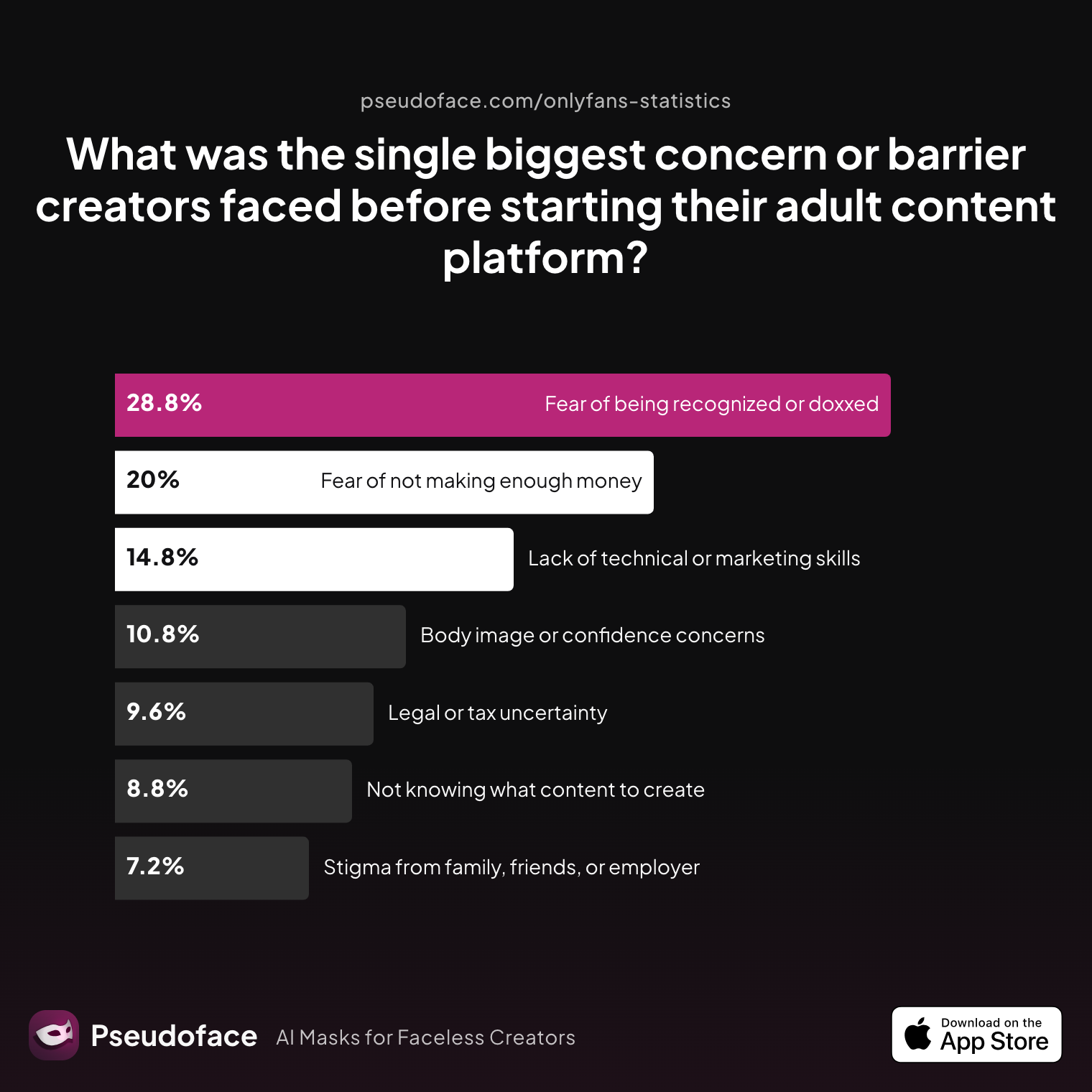
For many, the main motivator is simple: protecting their personal lives. According to Pseudoface’s 2025–2026 data, fear of real-life recognition is the number one concern for those considering adult content platforms. It outweighs even body image worries or doubts about making enough money.
| Answer | Percentage |
|---|---|
| Body image or confidence concerns | 10.80% |
| Fear of being recognized or doxxed | 28.80% |
| Fear of not making enough money | 20.00% |
| Lack of technical or marketing skills | 14.80% |
| Legal or tax uncertainty | 9.60% |
| Not knowing what content to create | 8.80% |
| Stigma from family, friends, or employer | 7.20% |
Nearly one in three cite “fear of being recognized or doxxed” as their main barrier—a reminder that for many, anonymity is the difference between creating and not creating at all.
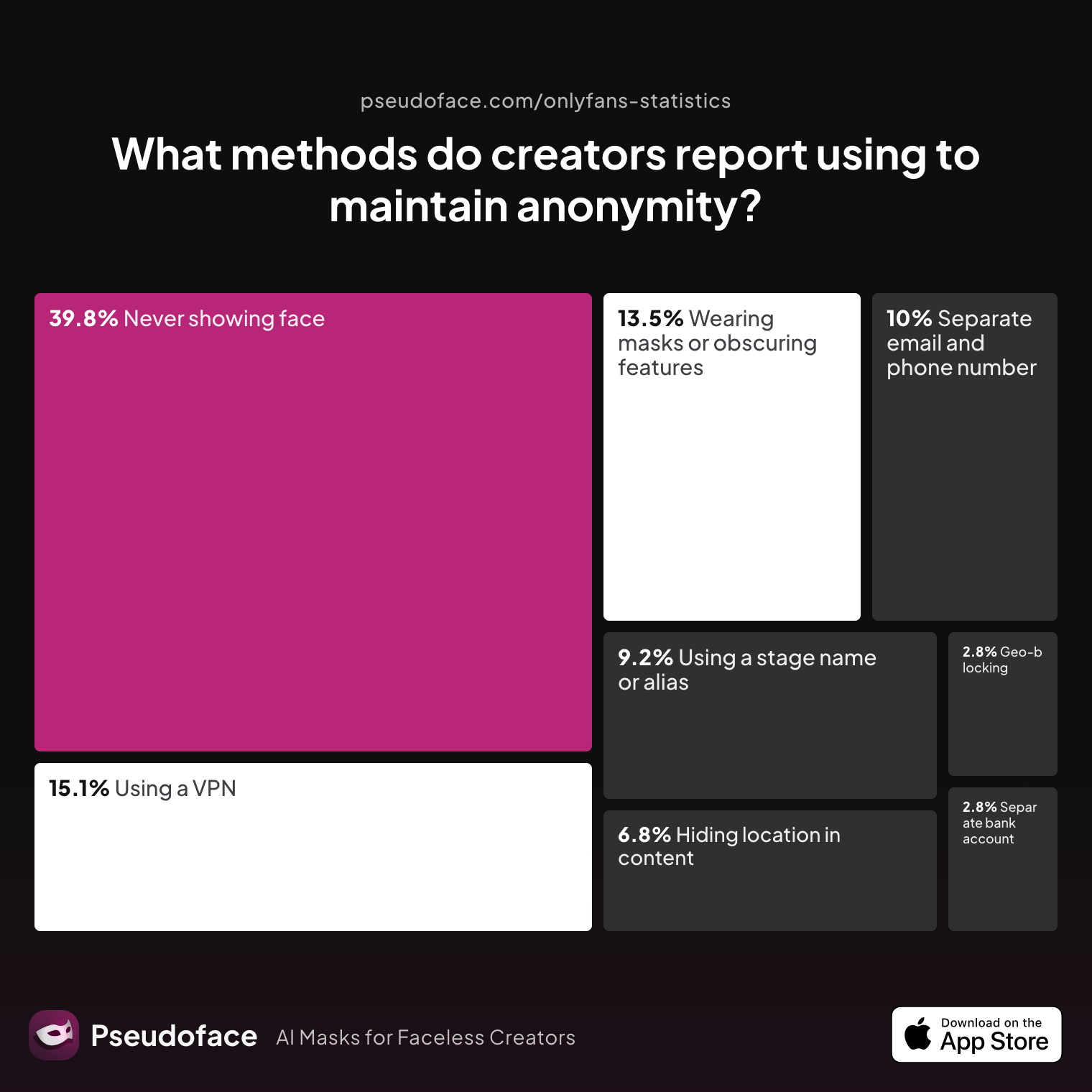
But how do creators actually achieve this privacy? The most common technique is simply never showing their face, but many layer multiple strategies:
| Answer | Percentage |
|---|---|
| Avoiding location-specific details in content | 6.77% |
| Geo-blocking specific regions | 2.79% |
| Never showing face | 39.84% |
| Using a separate bank account/business entity | 2.79% |
| Using a separate email and phone number | 9.96% |
| Using a stage name or alias | 9.16% |
| Using a VPN or privacy tools | 15.14% |
| Wearing masks or obscuring identifying features | 13.55% |
By 2026, almost 40% of OnlyFans creators who discuss anonymity online report “never showing face” as their top privacy measure. Physical and technical safeguards—like masks or VPNs—are still important but secondary for most. Face-hiding is only one layer, though: our full guide to staying anonymous on OnlyFans covers the rest of the stack, from stage names to payment separation.
What emerges is a portrait of creators who want to participate fully, yet retain a strong degree of personal security. And as faceless creators carve out their place in the industry, they’re normalizing anonymity for a new generation.
The urge to protect your identity is only the start—let’s explore what being faceless actually looks like in practice, and which methods creators rely on most.
Faceless OnlyFans Examples: What Methods Really Get Used?
Not all face-hiding techniques are equally popular. Some are easy, others require more effort, and each comes with its own trade-offs around privacy, branding, or audience impact.
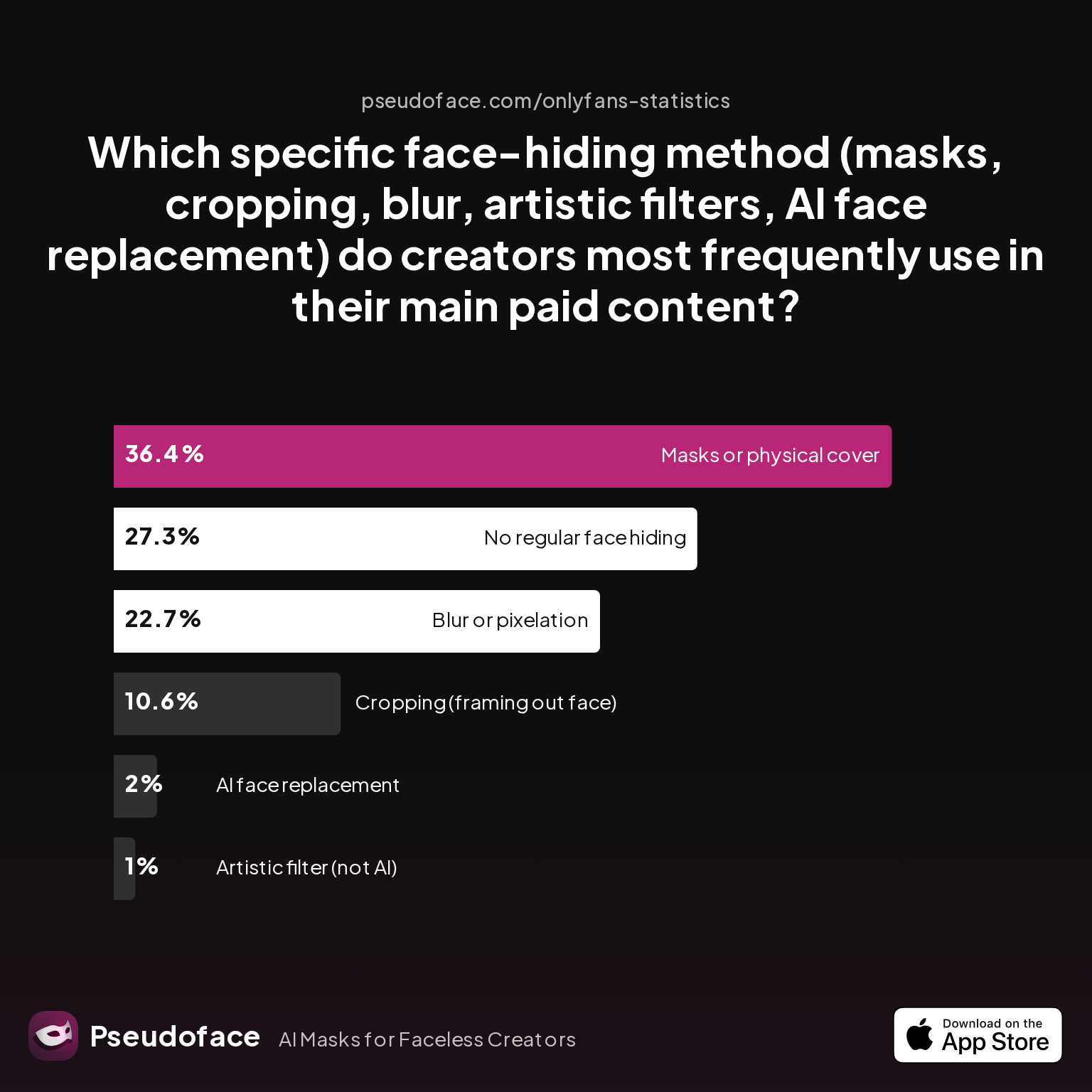
So, of all the methods available, what do OnlyFans creators actually use most?
| Answer | Percentage |
|---|---|
| AI face replacement | 2.02% |
| Artistic filter (not AI) | 1.01% |
| Blur or pixelation | 22.73% |
| Cropping (framing out) | 10.61% |
| Masks/physical cover | 36.36% |
| No regular face hiding | 27.27% |
Physical masks and face covers are the most used face-hiding method in paid faceless OnlyFans content, with over one-third of faceless creators choosing this route. Blurring and pixelation come next, utilized by roughly one in five; straightforward cropping (framing the face out of shot) is also common, while AI swaps and artistic filters remain rare.
Why is this the case? Framing (cropping) is quick and doesn’t require special gear or editing skills. Masks, on the other hand, add a layer of performance—and for some, an instant brand; wearing a mask on OnlyFans is fully within the rules and a proven branding play.
AI face swaps are still a minority tool, likely due to the technical learning curve and inconsistent results with current-generation consumer apps. Yet some creators see its promise, especially as apps improve.
As of early 2026, the field is moving quickly but with clear dominant approaches: physical concealment and post-production editing outrun high-tech solutions for sheer practicality.
Reddit creators frequently discuss the real-world workflow impacts behind these choices—especially for blurring:
Open thread on Redditr/Fansly_Advice
u/Miss-Meringue
My top FYP videos are ones I downloaded from my Instagram. What do you use for blurring? I use InShot, which has a tracking feature. It’s still not a negligible amount of time but I find it worth it compared to a picture. For the FYP, I do 5 seconds from the same scene (compared to a PPV, where I like to show the video) to make it easier. When I do include scene cuts, I blur a larger area to make the scene cuts easier. That said, I don’t often blur my true PPV previews because I have those set as subscriber only as a second set of media on the post. Then for both the preview and PPV I do a one scene cut for the FYP.

What stands out from 2025–2026 Reddit posts is that the choice of method is about workflow as much as privacy. Quick cropping is simplest; masks turn privacy into a feature; blurs and filters straddle the line. AI is catching up, but most stick with what they can control.
But not every method is equally easy—or comfortable—to use. Let’s look at what creators experience behind the scenes when they go faceless.
How Each Face-Hiding Method Feels: Comfort, Confidence, and Control
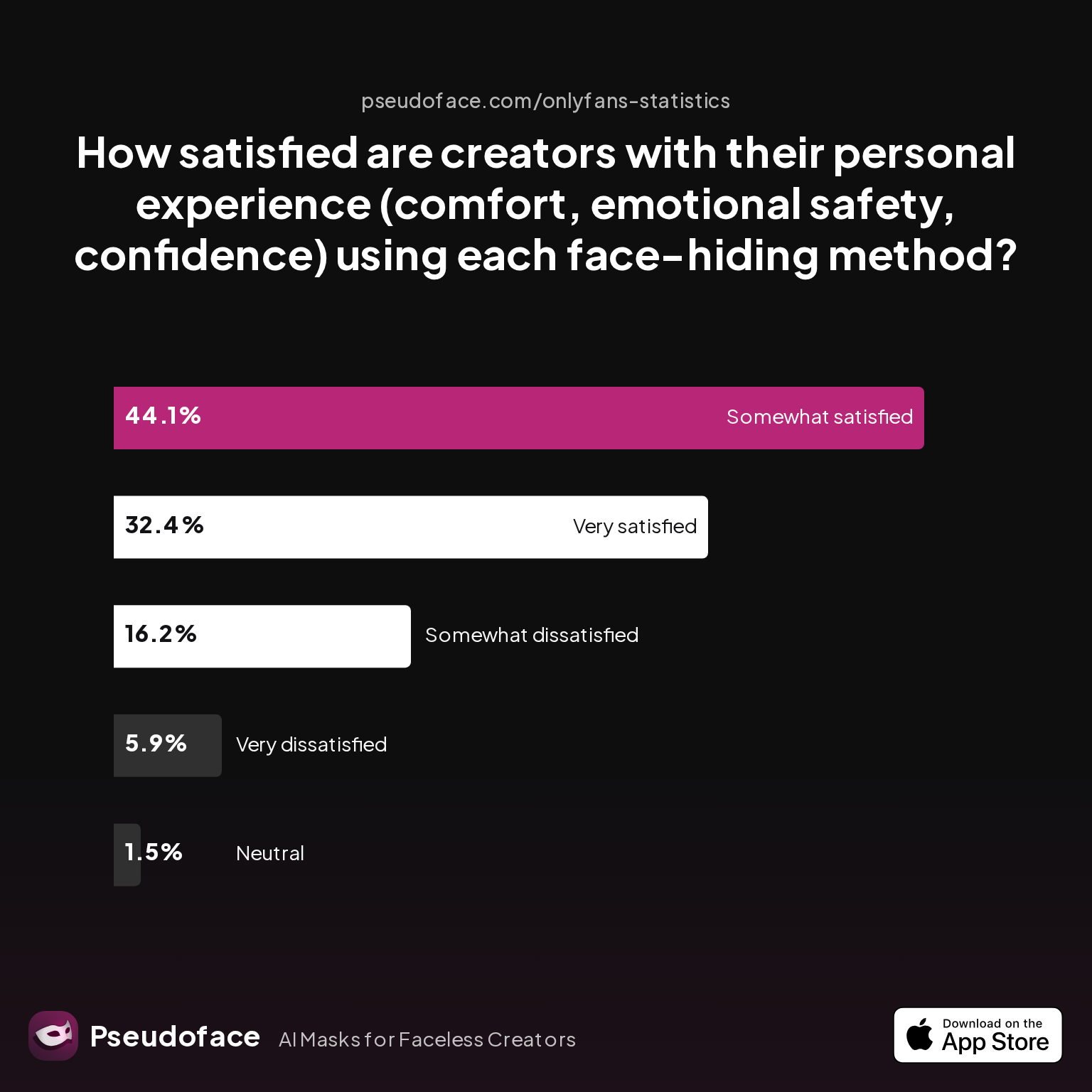
You might assume that hiding your face would always make creators feel safer or more confident. But the reality, according to recent Pseudoface data and public threads from real creators, is more nuanced.
| Answer | Percentage |
|---|---|
| Neutral | 1.47% |
| Somewhat dissatisfied | 16.18% |
| Somewhat satisfied | 44.12% |
| Very dissatisfied | 5.88% |
| Very satisfied | 32.35% |
More than three out of four faceless creators report being “somewhat” or “very” satisfied with their chosen face-hiding method. However, about one in five feel dissatisfied, reflecting real friction: technical hassles, constant editing, or doubts about audience connection.
Workflow matters. Blurring or cropping can add substantial editing time, especially for video, which can mean burnout or mistakes:
Open thread on Redditr/onlyfansadvice
u/Janeonfans
I use the free version and I'm not complaining, I like it
While some find blur apps like InShot tolerable or even enjoyable, others stress over quality loss or tedious frame-by-frame editing.
Masks offer another emotional profile. Some creators feel empowered and even emboldened by donning a physical disguise; others find them hot, itchy, or alienating over time. AI swaps, when they work, can provide a strong sense of protection but sometimes introduce a feeling of artificiality or disconnect from the end product.
Ultimately, “comfort” is a moving target—what one person finds freeing, another finds frustrating. The good news is that, based on 2026 self-report trends, tailoring your method to your comfort zone (instead of chasing what’s trendy) is more likely to deliver lasting satisfaction.
Next, let’s flip perspectives and see how subscribers react when your face disappears.
Audience Perceptions: What Do Fans Really Think of Faceless OnlyFans Creators?
Does hiding your face drive fans away, or could it boost your brand with a touch of mystery? The reality for faceless OnlyFans creators is surprisingly positive, shaped by audience expectations, the creator’s niche, and the creativity of their chosen method.
Recent data from Pseudoface’s analysis offers a clear look:
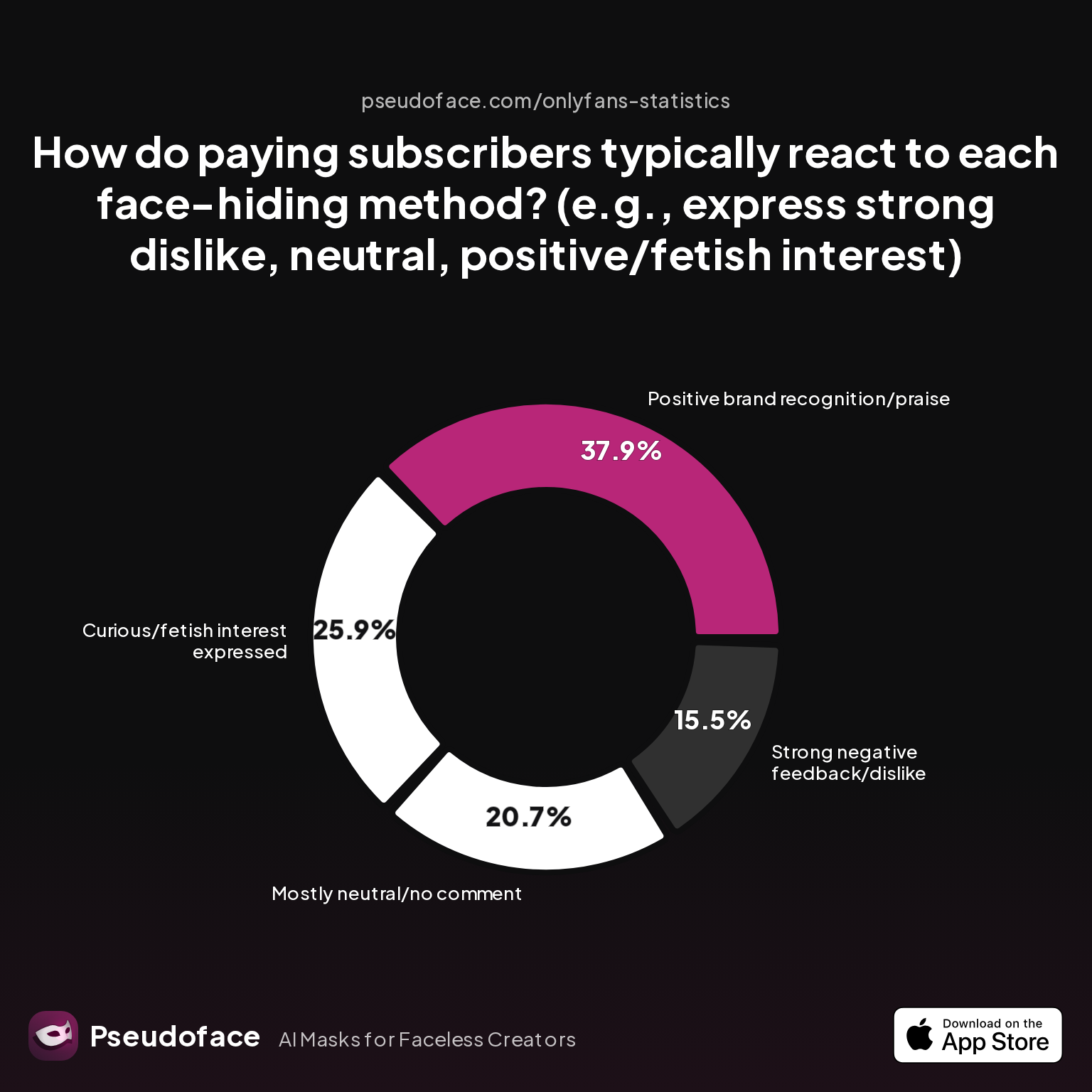
| Answer | Percentage |
|---|---|
| Curious/fetish interest expressed | 25.86% |
| Mostly neutral/no comment | 20.69% |
| Positive brand recognition/praise | 37.93% |
| Strong negative feedback/dislike | 15.52% |
Over 60% of fans are either neutral or openly positive about face-hiding methods. A significant 37.9% shout out unique branding or creative approaches—think signature masks, artistic blurs, or highly convincing AI swaps. About a quarter specifically express curiosity or even fetish interest in facelessness itself, especially in certain genres.
Meanwhile, less than one in six report strong negative opinions. This feedback is often directed at uncreative, lazy, or poorly executed methods (like inconsistent cropping, low-res blur, or “glitchy” AI faces), or from fans seeking highly personal connections.
To put a human face (or mask) on these numbers, consider the discussion in Reddit forums:
Open thread on Redditr/Fansly_Advice
u/Miss-Meringue
My top FYP videos are ones I downloaded from my Instagram. What do you use for blurring? I use InShot, which has a tracking feature. It’s still not a negligible amount of time but I find it worth it compared to a picture. For the FYP, I do 5 seconds from the same scene (compared to a PPV, where I like to show the video) to make it easier. When I do include scene cuts, I blur a larger area to make the scene cuts easier. That said, I don’t often blur my true PPV previews because I have those set as subscriber only as a second set of media on the post. Then for both the preview and PPV I do a one scene cut for the FYP.
Here, workflow and technical planning directly shape not just creator comfort, but also how fans perceive content quality and style.
The real takeaway is that creative effort matters more than simply “hiding your face.” A thoughtfully chosen mask or imaginative style can attract loyal fans—and even inspire niche followings—but neglecting visual coherence or using blurry imagery as an afterthought risks turning subscribers off.
This also explains the subgenre explosion: “masked” and “faceless” have become search terms, not just concealment tactics. In certain categories—BDSM, cosplay, roleplay, even “mystery woman” content—concealment is embraced as a feature, not a bug.
Of course, not all niches align. If your audience seeks highly personal connection or emotional intimacy, remaining faceless may require even more creative compensations (voiceovers, storytelling, body language).
Privacy might be your motivation, but what about your bottom line—can you make serious money while staying faceless?
Do Faceless OnlyFans Creators Make Money? Earnings, Anonymity, and Real-World Outcomes
Perhaps the most persistent question among new and established creators alike is simple: Do faceless OnlyFans creators make as much money as those who show their faces?
According to Pseudoface’s 2025–2026 aggregate earnings reports, the answer is complex but surprisingly optimistic—especially for those who lean into branding or mystery. For the tactics behind the numbers, see our guide on how to make money on OnlyFans without showing your face.
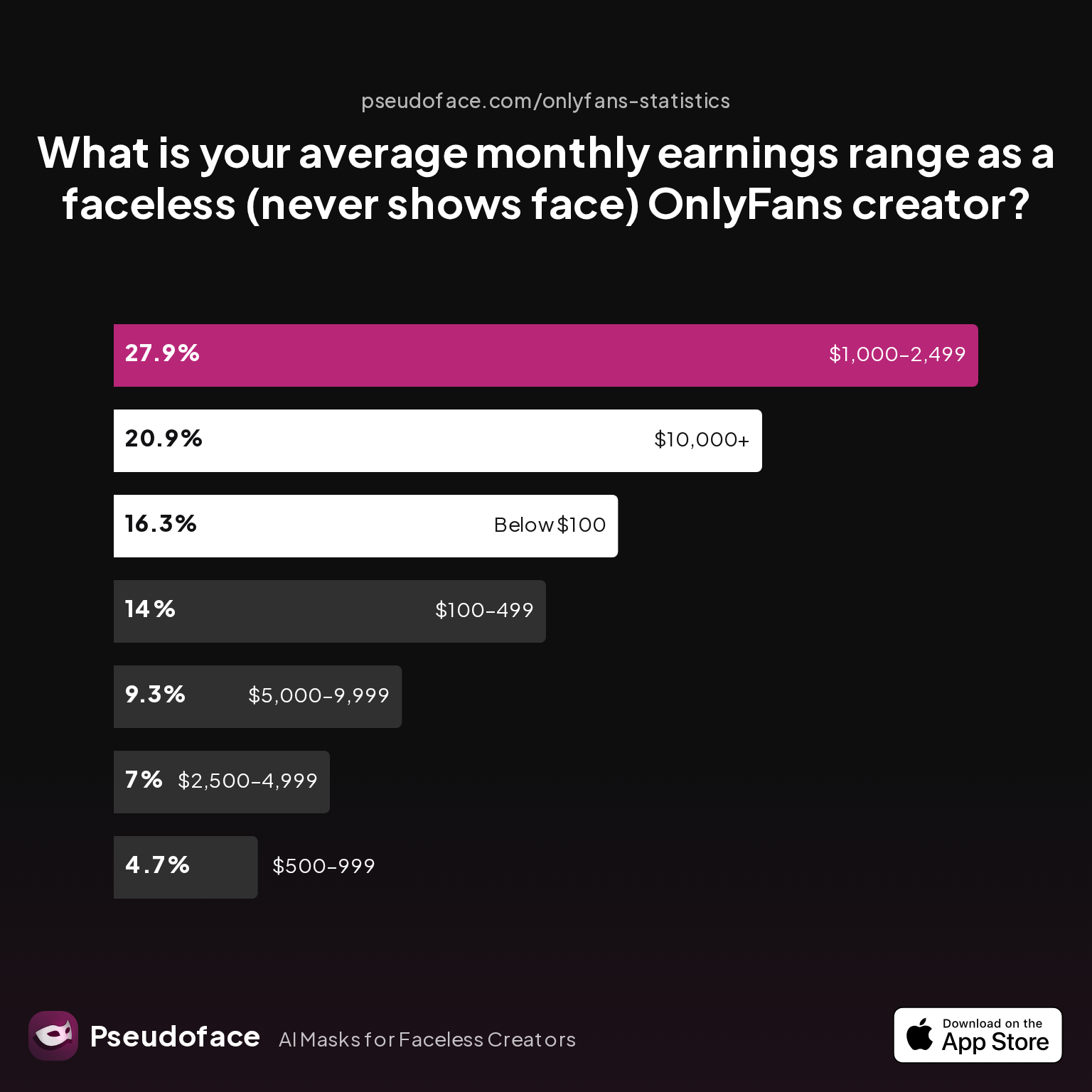
| Answer | Percentage |
|---|---|
| $1,000–2,499 | 27.91% |
| $10,000+ | 20.93% |
| $100–499 | 13.95% |
| $2,500–4,999 | 6.98% |
| $5,000–9,999 | 9.30% |
| $500–999 | 4.65% |
| Below $100 | 16.28% |
A substantial segment—more than 20%—of faceless creators report $10,000 or more in monthly earnings, disproving the myth that showing your face is absolutely necessary for financial success. Still, the largest single category falls in the $1,000–$2,499/mo range, with a notable portion earning under $500, reflecting the broad earnings spectrum.
So how does anonymity impact creator earnings on average?
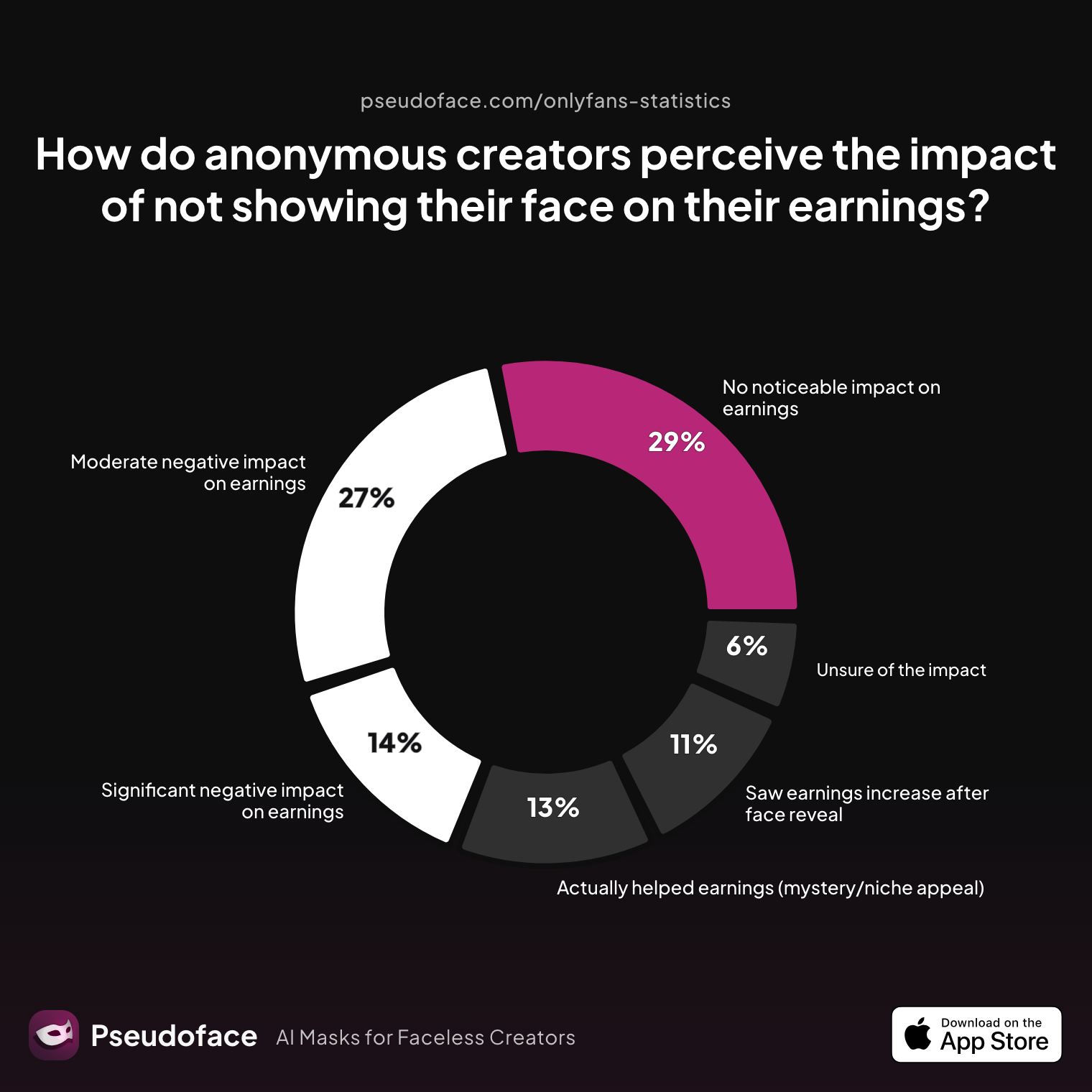
| Answer | Percentage |
|---|---|
| Actually helped earnings (mystery/niche appeal) | 13.00% |
| Moderate negative impact on earnings | 27.00% |
| No noticeable impact on earnings | 29.00% |
| Significant negative impact on earnings | 14.00% |
| Started anonymous, switched to showing face and saw increase | 11.00% |
| Unsure of the impact | 6.00% |
Around 30% of faceless creators perceive no impact on their income, while 13% say anonymity has helped thanks to a unique niche or “mystery” branding. Conversely, about 41% (combining “moderate” and “significant” negative impact) say not showing their face has hurt, most often citing missing out on “parasocial” connections or premium custom content requests.
The real-world stories echo these numbers. Many who succeed financially either double down on creative branding (masks, persona, storytelling) or cater to subgenres that specifically seek faceless or masked content. Those who struggle often do so in highly saturated “girl/guy next door” niches, where personal connection is a core value.
It’s crucial to note: self-selection bias is strong in this data—creators who continue posting to Reddit and reporting earnings are likely those who have either found a groove or are still motivated to try. Many who quietly leave the platform may never report back. Likewise, earnings can leap or contract based on promotion strategy, collaborations, or timing.
Reddit’s open forums, even in 2026, reflect a wide range of outcomes. Some creators quietly “unmask” after reaching a subscriber plateau and report income bumps—others remain masked for years and maintain steady, sometimes lucrative, audiences.
For those choosing this path, which specific visual approach best aligns with your goals—and how do their practical trade-offs stack up?
Face-Hiding Methods Compared: Masks vs Cropping vs Blur vs Filters vs AI
The battle of “faceless” methods isn’t just about which one hides your face better—it’s about how each approach shapes workflow, audience reaction, accidental reveal risk, branding, and professionalism. Based on 2025–2026 self-reported user data and hundreds of detailed Reddit testimonials, here’s how the leading methods compare:
Masks/Physical Covers:
Masks top the usage chart for a reason. They’re instantly effective, require no post-processing, and can become a creative calling card. High-quality masks (fashion, cosplay, or simply sexy) tend to boost audience reaction, with positive niche-fandom feedback. Downsides? Comfort and physical restriction; some report feeling hot, uncomfortable, or unable to portray natural emotion.
Cropping/Framing:
Cropping is the beginner favorite—cheap, fast, and requires only camera planning. It suits static content perfectly. But with video, angle restrictions can feel limiting, and mistakes (e.g., in mirrors, reflections, or accidental camera bumps) are not uncommon.
Blur/Pixelation:
Blurring is a flexible, retroactive solution. Apps like InShot or Blur Video make it possible to rescue usable footage or images where your face slipped into frame. Still, many creators complain about workflow drag, quality loss (especially in video), and the constant vigilance required to keep edits consistent:
Open thread on Redditr/onlyfansadvice
u/Janeonfans
I use the free version and I'm not complaining, I like it
Filters (Non-AI):
Standard video and AR filters offer stylized, sometimes “artsy” looks, but are less popular—possibly due to limited privacy (many are easy to reverse-engineer or fail in certain lighting). Few creators rely exclusively on this route for faceless content.
AI Face Swaps:
The newest method, AI face replacement, is rarely used as of early 2026 (just over 2%). When it works, it delivers both privacy and a smooth look—but tech glitches and uncanny valley moments are frequent, and software licensing or privacy terms remain a concern.
Accidental Reveal Rates:
No method is foolproof, but accidental reveals vary sharply by technique.
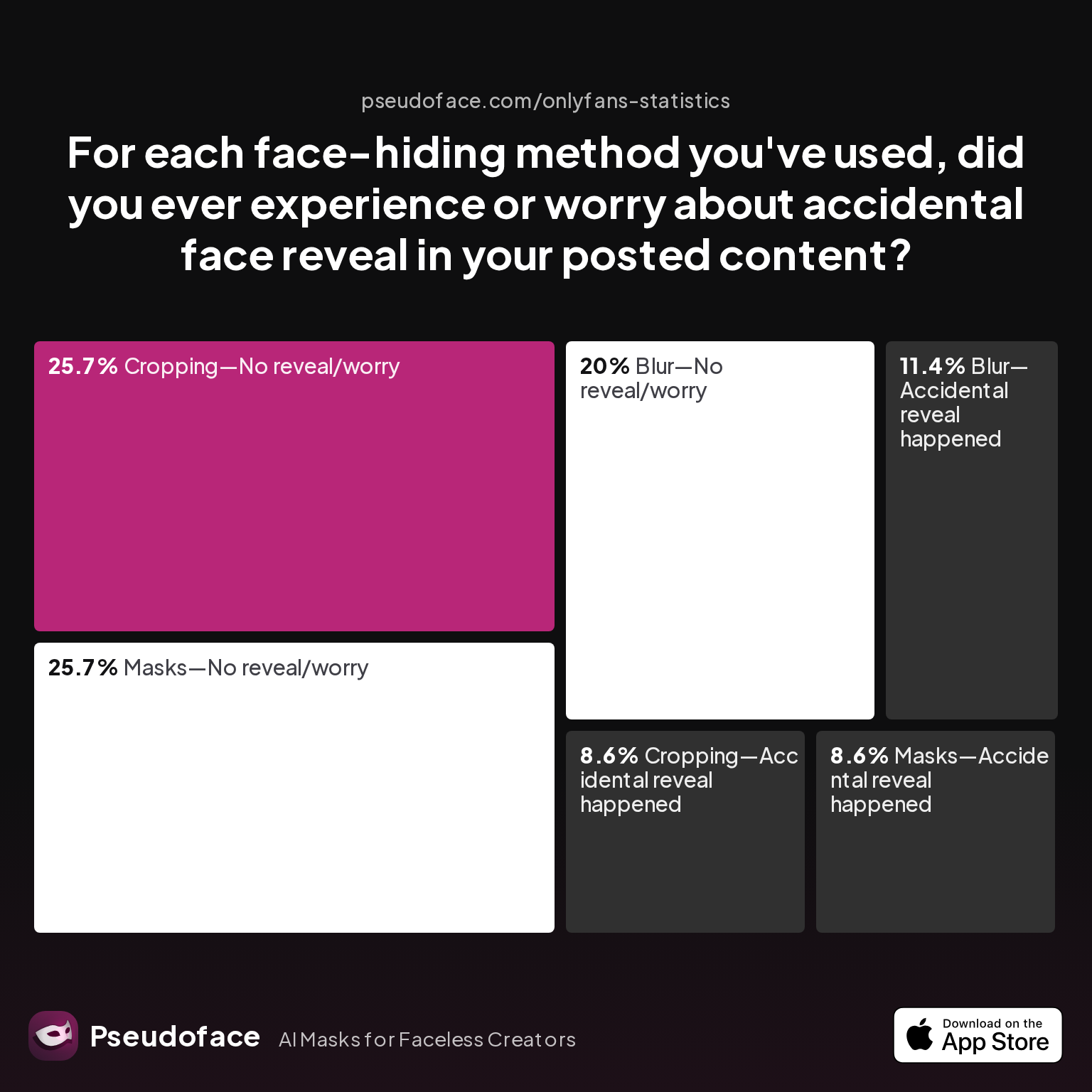
| Answer | Percentage |
|---|---|
| Blur—Accidental reveal happened | 11.43% |
| Blur—No reveal/worry | 20.00% |
| Cropping—Accidental reveal happened | 8.57% |
| Cropping—No reveal/worry | 25.71% |
| Filter—Accidental reveal happened | 0.00% |
| Filter—No reveal/worry | 0.00% |
| Masks—Accidental reveal happened | 8.57% |
| Masks—No reveal/worry | 25.71% |
Blurring and cropping carry real risk—blurred faces can be missed in edits; cropping is defeated by accidental slips in mirrors or setup. Mask users have similar risk to croppers, but normally identify errors before posting. AI’s accidental reveal profile is underreported due to low adoption, but creators recommend reviewing outputs frame-by-frame.
What this chart doesn’t show are the “near-miss” stories, often posted anonymously. Many creators recount almost posting content with an unblurred reflection or face segment visible, underscoring the ongoing need for vigilance—especially as editing fatigue sets in.
When choosing, consider your own workflow and risk appetite. Masks offer immediate reliability but less emotional nuance. Cropping is frictionless but limits camera movement. Blur/AI are saviors for after-the-fact fixes, but require ironclad attention and prompt updates as technology (both for and against privacy) evolves.
To tie it all together, let’s recap and point you toward actionable next steps.
OnlyFans Faceless Creator Names and Branding: Building Identity While Staying Anonymous
Branding as a faceless creator isn’t just damage control—it can turn privacy into a source of mystique and marketability. The most successful “faceless OnlyFans creators” treat their anonymity as an asset, using evocative names, unique aesthetics, and a consistent identity to attract and retain followers.
Many draw inspiration from their chosen concealment method:
- Masks (e.g., “The Velvet Vixen,” “Masked Muse”)
- Artistic blur (e.g., “ObscuraBabe,” “Pixellated Playmate”)
- AI/alter-ego personas
Others lean into the mystery itself: “The Girl Without a Face,” “Unseen Siren,” or “Hidden Desire.”
Promotion and SEO are also tactical. Using “faceless,” “masked,” or “anonymous” in profile names/descriptions captures search volume from anxious browsers or niche fans. Consistency across social, branding colors, watermarking, and props can reinforce your unique presence.
Above all, successful branding is about active connection: responding to DMs, cultivating a storytelling persona, or offering unique content that only an anonymous creator could produce. Done right, your “facelessness” isn’t a drawback, but a signature style.
Can You Be Faceless on OnlyFans, and Should You? Next Steps & Decision Guide
Yes—you can succeed on OnlyFans without ever showing your face, so long as you choose a face-hiding method (or mix) aligned with your comfort, technical ability, and branding vision.
To begin:
- Pick your core method: Try cropping for ease, mask for instant branding and reliability, blur if you need post-production safety net, or AI if you love tinkering and want maximum facial anonymity.
- Test your workflow: Run a private content batch and experiment with editing tools—see what feels most sustainable and repeatable for you.
- Brand for impact: Whether your style is mysterious, artistic, kinky, or just pragmatic, weave your privacy strategy into your Creator Name, bio, and content previews.
- Plan for privacy: Triple-check all content for face leaks (mirrors, shadows, app errors) before posting. Combine methods for extra security if you’re risk-averse.
- Connect intentionally: Use voice, story, physicality, or direct interaction to compensate for reduced facial intimacy.
There’s no universal “best” technique. The right method is the one that supports your goals, keeps your creative juices flowing, and lets you sleep soundly after uploading.
For lingering questions, find fast answers in the FAQ below.
FAQ
Can you make a faceless OnlyFans and get paid?
Yes, many creators run faceless OnlyFans accounts and draw reliable income, though you must verify your identity privately with the platform; fans never need to see your face if your content is carefully crafted.
Which is better for hiding your face—mask, AI face swap, or blur?
Masks offer the strongest privacy with minimal technical fuss, but cropping and well-done AI swaps can be equally secure if executed carefully; audience reaction is often most positive for creative masks.
How do you prevent accidental face reveals in OnlyFans content?
Double-check all media for reflections, missed blur spots, or metadata; use editing apps with robust preview functions and always review uploads on multiple devices before publishing.
Are faceless OnlyFans creators less successful than creators who show their face?
Faceless creators can and do earn thousands per month—sometimes more—but those who invest in branding and creative interaction generally outperform those relying on anonymity alone.
What apps or software do faceless OnlyFans creators recommend for blurring or AI swaps?
Popular choices for blurring include InShot and Blur Video (with quality caveats); for AI, apps like FaceMagic and Reface are common, but check terms of service for privacy assurances.
Is it against OnlyFans rules to hide your face?
No, OnlyFans requires face verification during account setup but does not mandate face-revealing public content; just ensure ID uploads are accurate and private.
How much extra time does face-hiding editing add to your workflow?
Blurring and AI swaps typically add 10–20 minutes per video (sometimes much more for perfectionists), while masks and cropping can keep editing to a minimum.
Can I combine multiple face-hiding methods for better privacy or style?
Absolutely—stacking masks with cropping or blurring can offer layered protection and unique visual branding, but consider workflow complexity and audience clarity.
How do fans find and connect with faceless creators?
Smart branding, strategic keyword/tag use (“faceless,” “masked”), teaser content, and regular interaction in DMs or live shows help bridge the emotional gap.
What are some catchy faceless OnlyFans creator names?
Names like “MaskedGoddess,” “The Hidden Muse,” “AnonLover,” or “BlurryBelle” are effective; choose something memorable, descriptive, and easy to spell/share.
According to Pseudoface's analysis of more than 250,000 public Reddit threads from real adult content creators (2025–2026), these self-reported insights illuminate the real-world trade-offs and creative opportunities in going faceless on OnlyFans. All data is subject to self-selection, survivorship, and reporting biases, but offers a snapshot of what actual creators experience and prioritize today.


