
TL;DR
If you’re an adult content creator, streamer, or influencer seeking to protect your identity online, AI face swap technologies offer a new, more natural alternative to traditional privacy tools. According to Pseudoface's recent analysis of over 250,000 public Reddit threads from real creators, over 60% of respondents now prefer AI face replacement for its realism and flexibility, though many remain wary about platform acceptance and ethical boundaries. Audience acceptance of AI faces for anonymity is high when used transparently, but about 1 in 5 creators reported having content flagged or removed on mainstream platforms when transparency or TOS compliance was unclear. The most common hesitation? Concerns about deceiving audiences and violating platform or legal policies—issues you’ll learn to navigate with concrete data and real-world perspectives throughout this guide.
Why Creators Are Turning to Face Swap AI for Privacy
For many digital creators, the pivot to anonymity isn’t just about personal preference—it’s a matter of safety, longevity, and creative freedom. As of early 2026, interest in privacy-first content workflows has grown sharply, with creators from TikTok to OnlyFans seeking better ways to keep their real-world identities separate from digital personas. Traditional tools—masks, strategic cropping, blur effects—have served as mainstays, but their downsides are increasingly obvious: visual clunkiness, distracting edits, and, most importantly, a disconnect from the authentic, natural-feeling content audiences now expect.
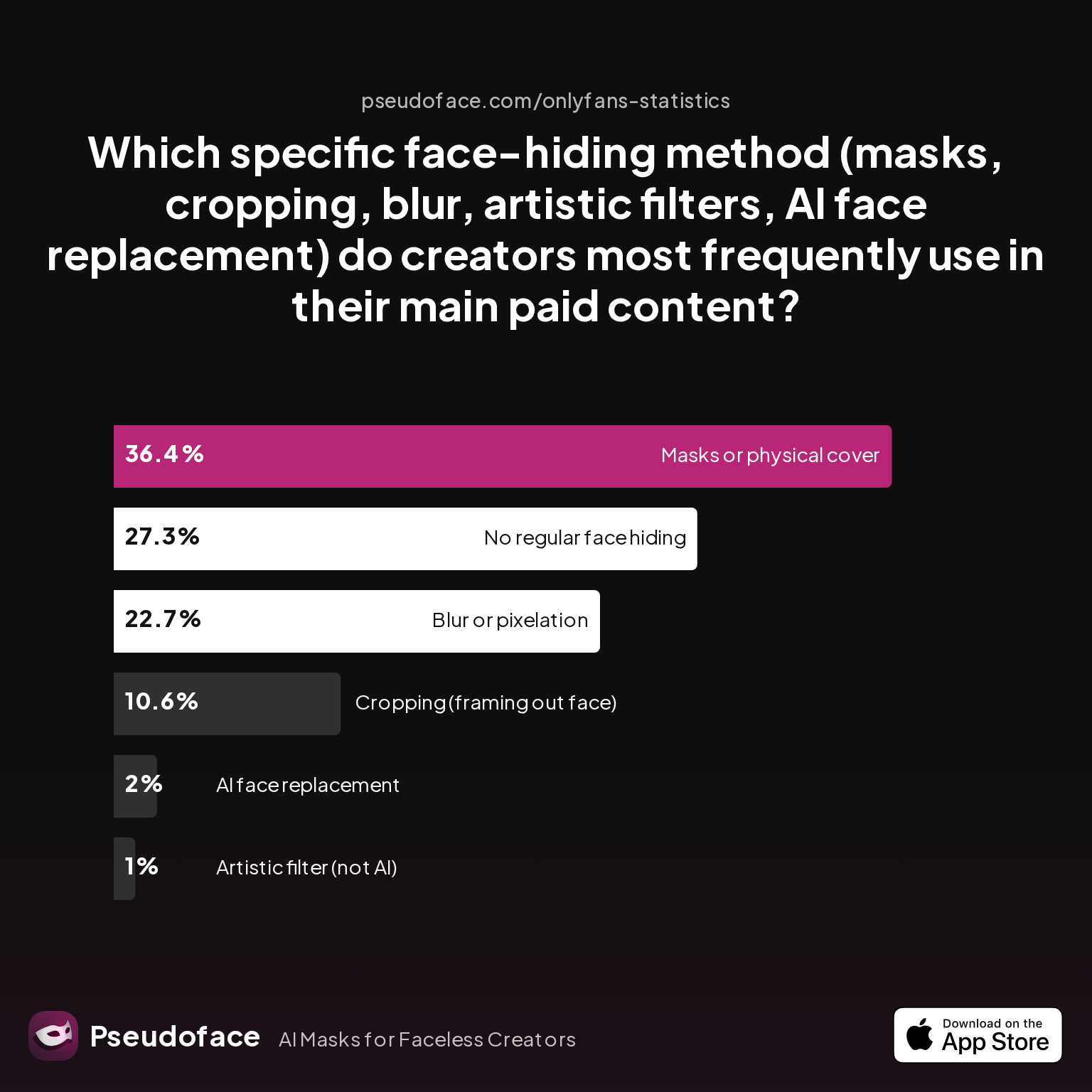
Let's ground this shift in the actual choices creators make in their main content:
| Answer | Percentage |
|---|---|
| AI face replacement | 2.02% |
| Artistic filter (not AI) | 1.01% |
| Blur or pixelation | 22.73% |
| Cropping (framing out face) | 10.61% |
| Masks or physical cover | 36.36% |
| No regular face hiding | 27.27% |
Despite the growing hype around AI, only about 2% of creators currently report using AI face replacement in their main paid content. Masks or physical cover remain the dominant privacy method at 36%, with blur/pixelation and cropping also common. Why the lag? Anecdotes and skepticism—often about quality, workflow complexity, or ethical lines—play a part, but as technology matures and the early adopter wave shares positive results, this figure is expected to rise sharply by late 2026.
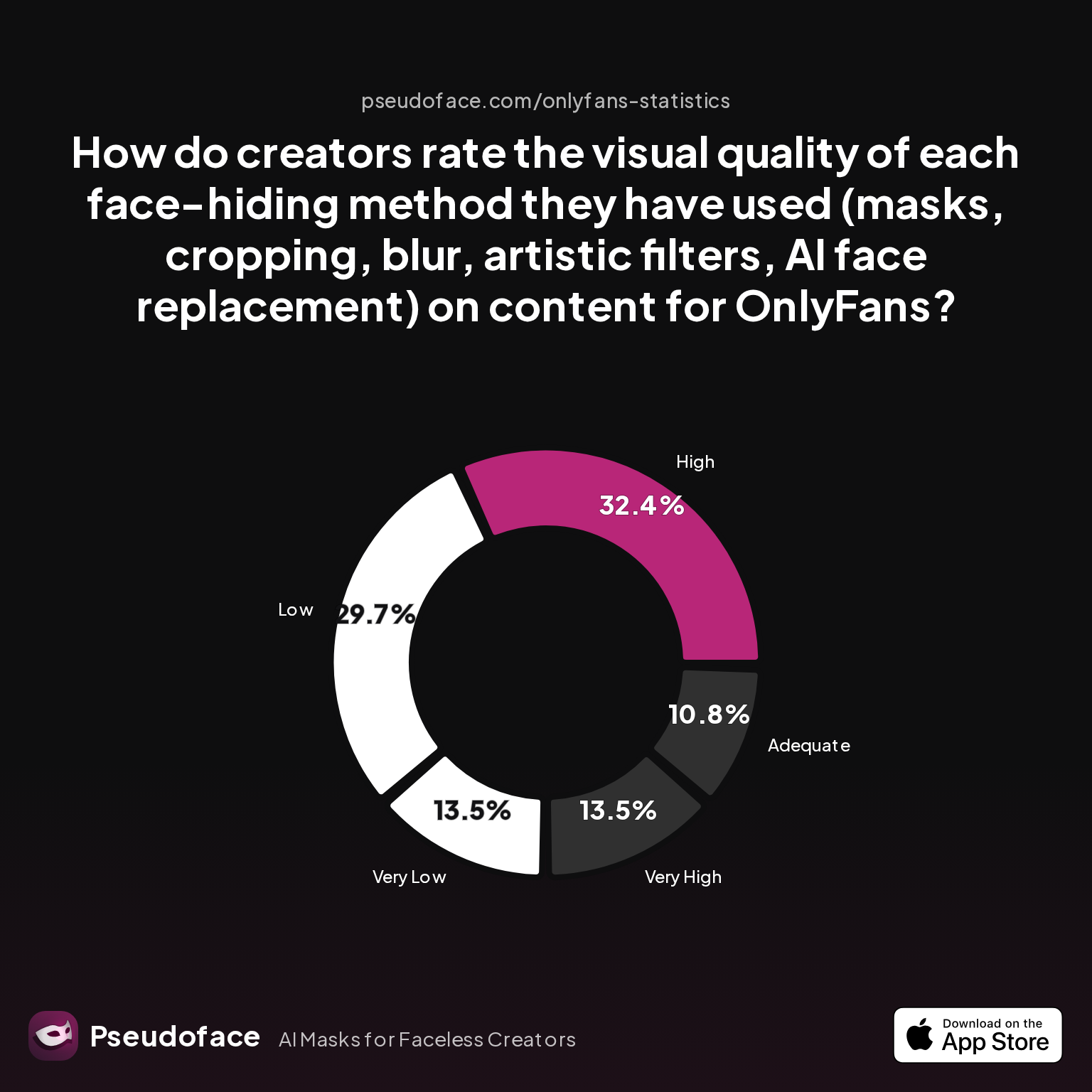
But visual appeal matters. If traditional methods break immersion or harm content value, they won’t last. Here’s how creators rate the look and feel of each method:
| Answer | Percentage |
|---|---|
| Adequate | 10.81% |
| High | 32.43% |
| Low | 29.73% |
| Very High | 13.51% |
| Very Low | 13.51% |
Only 13.5% of respondents gave their current face-hiding method a “very high” visual quality rank. Around 43% rated their approach “low” or “very low.” This gap between privacy and realism explains why demand is shifting toward AI-powered swaps. As one Reddit creator frames the core issue:
Open thread on Redditr/onlyfansadvice
u/Thickkittyyyy
That's not allowed on OF and creating fake people is weird and scammy IMO

Old tools create a trade-off: anonymity or audience immersion, never both. AI face replacement promises to close that gap and is quickly moving from experimental novelty to essential privacy infrastructure. Next, we’ll dive deeper into which AI tools are actually winning creator trust for realism, workflow, and platform safety.
Comparing Top AI Face Replacement Tools: Realism, Ease, and Safety
The leap from masks and blurs to AI faces isn’t just technical; it’s strategic. As creators become more sophisticated, so too do their privacy “stacks.” The growing toolkit now ranges from custom AI face generators to advanced swap tools with video compatibility, batch editing, and platform-aware watermarking.
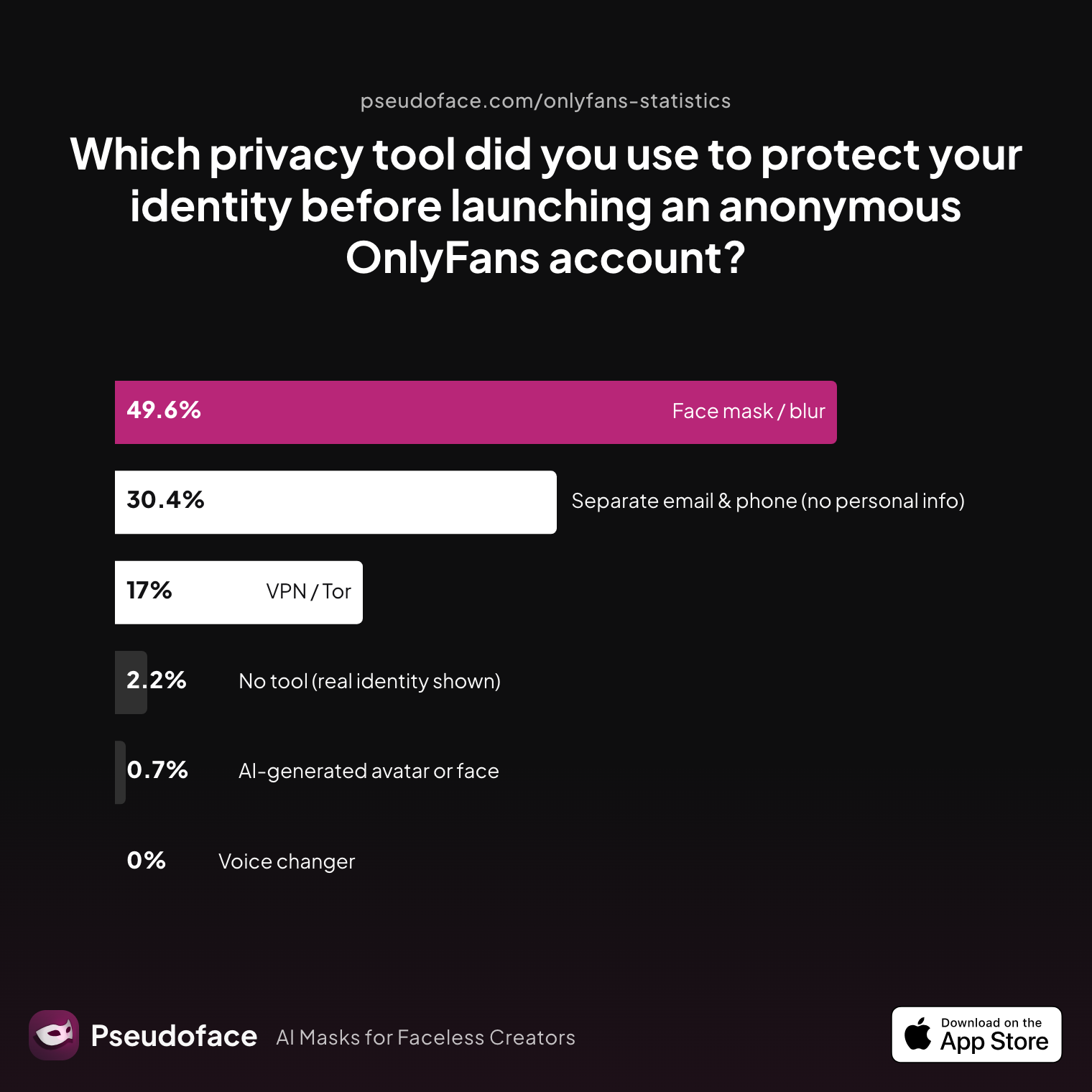
But which solutions do privacy-focused creators actually reach for? Let’s break down the living toolkit as reported by real creators in their pre-launch routines:
| Answer | Percentage |
|---|---|
| AI‑generated avatar or face | 0.74% |
| Face mask / blur | 49.63% |
| No tool (real identity shown) | 2.22% |
| Separate email & phone | 30.37% |
| Voice changer | 0.00% |
| VPN / Tor | 17.04% |
As of mid-2025, less than 1% report using AI-generated avatars or faces pre-launch, with masks and blurs dominating. Yet, qualitative trends reveal deeper momentum beneath the quantitative surface. The heavier adoption of VPNs and dedicated emails hints at a maturing privacy stack, while AI-generated faces—once rare—are rising fast among those aiming for maximum realism and cross-platform reach.
When evaluating tools, creators scrutinize:
- Realism and absence of “uncanny valley” effects.
- Batch compatibility for photo and video.
- Ease of workflow integration (mobile, web, or desktop? API access?).
- Watermarking, metadata, and traceability concerns.
- Compatibility with major content platforms (OnlyFans, Fanvue, Fansly, Instagram, TikTok).
- Pricing and upcharges for HD/video outputs.
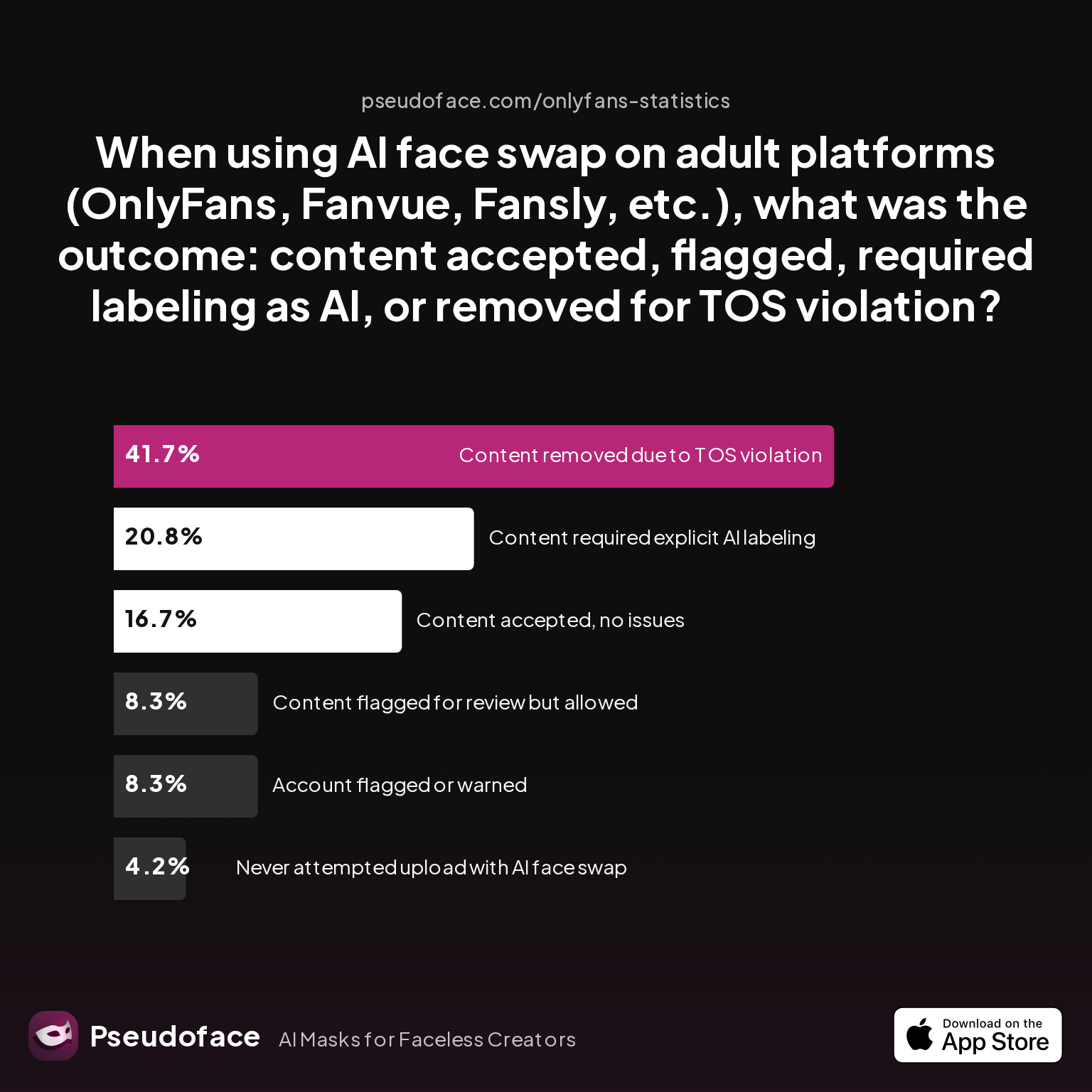
Still, the real hurdle is not just technical, but institutional. Platform policies shape what tools are safe, risky, or outright hazardous to use. Explore the lived reality of tool adoption through results reported by creators:
| Answer | Percentage |
|---|---|
| Account flagged or warned | 8.33% |
| Content accepted, no issues | 16.67% |
| Content flagged for review but allowed | 8.33% |
| Content removed due to TOS violation | 41.67% |
| Content required explicit AI labeling | 20.83% |
| Never attempted upload with AI face swap | 4.17% |
The most telling stat: over 40% of creators experimenting with AI face swaps on adult platforms reported TOS-related removals, and 8% received account-level warnings or flags. Only about 1 in 6 experienced a totally frictionless upload. A further 1 in 5 were forced to label the content as “AI-generated.”
Open thread on Redditr/onlyfansadvice
u/ConfirmationB1as
Platforms flag or remove up to 42% of AI-swapped content—compliance confusion is rampant. "Just chiming in here is that yes there are tools but you better check with OF and their TOS. I say for advertising on non paid social platforms it's okay but I would be careful on your paid platforms.
Anecdotal reporting and self-selection bias are at play—those who have platforms flagging them are likelier to discuss it, while quiet successes may go unreported. But the trend is plain: creators cannot treat AI faces as a plug-and-play privacy fix. Researching the terms of service (TOS) for each platform is critical before adopting any face swap workflow as a core part of a brand.
Equally, the emotional landscape is split. Here’s a dissenting voice:
Open thread on Redditr/onlyfansadvice
u/Various_EfficiencySW
No, that’s weird. As a faceless creator, I don’t want an AI-generated fake face lol, I’ll just blur mine out for privacy.
For every creator drawn to AI face technology, another is deterred by its novelty, perception risk, or ambiguous platform status. Survivorship and reporting biases mean the most vocal opinions—positive or negative—will over-represent strong feelings.
So where does this leave creators seeking the best blend of privacy, realism, and workflow harmony? In summary:
- AI face swaps are rising but not yet dominant.
- Technical realism is necessary, but not sufficient—platform acceptance and clear labeling are equally important.
- Workflow support (API access, batch processing, undo/edit “fail-safe” features) is a tiebreaker.
- Most creators layer AI tools with traditional privacy tactics rather than relying on a single solution.
Of course, tool choice is only half the equation; maintaining a stable, consistent AI-generated face across platforms brings new challenges in audience trust and brand coherence.
Building a Brand with AI Generated Face for Anonymity
Crafting a digital persona isn’t only about hiding—it’s about presenting a face audiences want to follow, buy from, and recognize. Here, AI-generated faces unlock new possibilities, enabling creators to establish brand continuity from public “safe-for-work” teasers on TikTok to premium subscription content on OnlyFans and Fanvue.
But stability is everything. Slight mismatches in face structure, lighting, or skin tone between sessions can erode trust and visual coherence.
The highest-performing creators don’t just pick an AI face—they version it, test it, and lock in visual parameters to ensure every post looks like “the same person.” Technical tips from real workflow veterans:
- Save seed numbers or prompts when using generative tools, allowing consistent replication across platforms and formats.
- For video content, batch-process sequences to minimize frame-by-frame drift. Some advanced tools now offer motion-tracking to “anchor” the AI face identity, vital for live streams or multi-angle shots.
- Always check outputs at both thumbnail and full-size resolutions. AI faces that look great up-close may “ghost” or blur at Instagram or Twitter thumbnail scales, undermining impact.
Beyond the technical: anonymity is fragile, and the weakest link is rarely the face itself. Metadata (hidden in files), bios, usernames, and minor details in backgrounds have de-anonymized scores of would-be faceless creators. Let’s see what practical steps creators self-report:
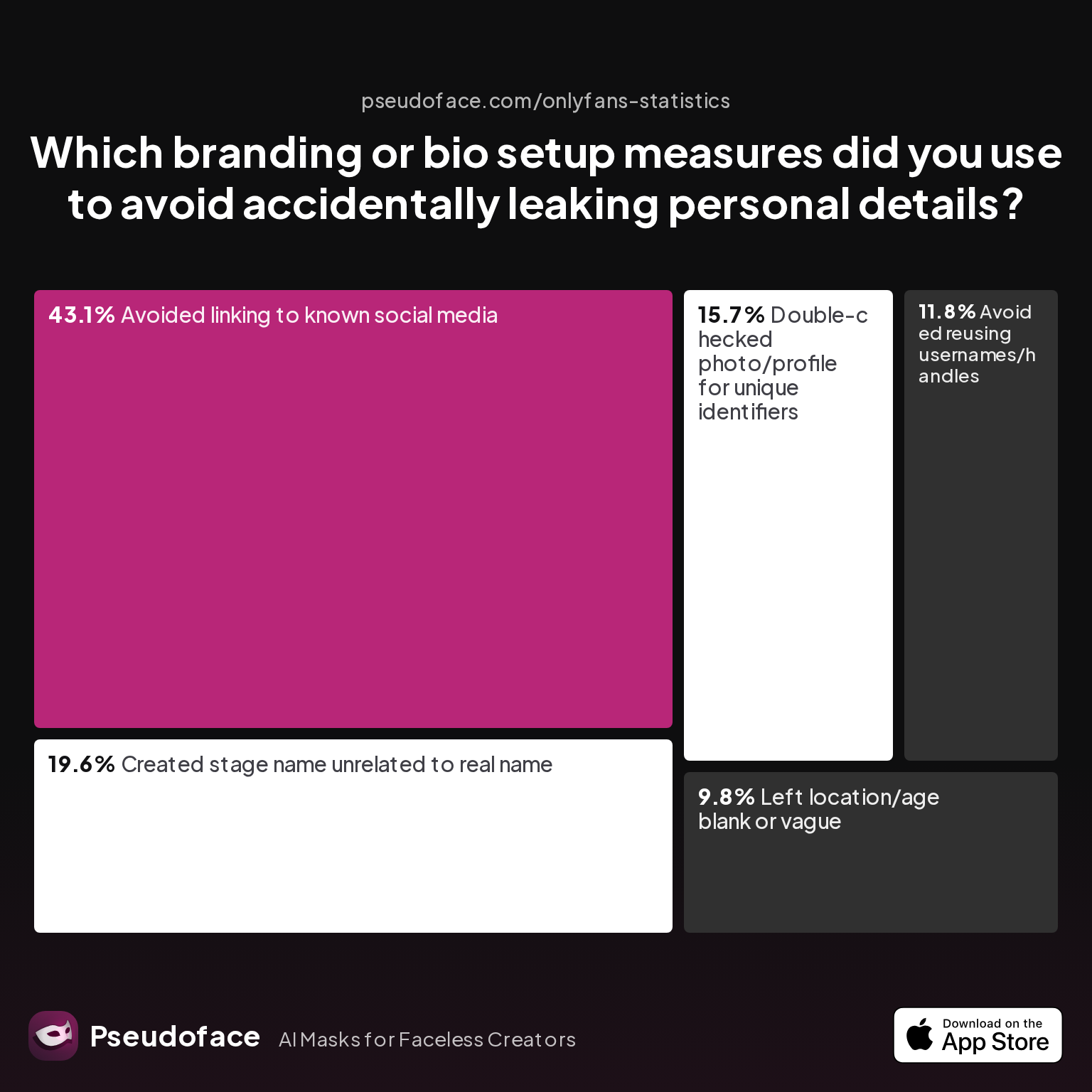
| Answer | Percentage |
|---|---|
| Avoided linking to known social media | 43.14% |
| Avoided reusing usernames/handles | 11.76% |
| Created stage name unrelated to real name | 19.61% |
| Double-checked photo/profile for unique identifiers | 15.69% |
| Left location/age blank or vague | 9.80% |
Nearly half (43%) avoided linking to any known social handles, and around 1 in 5 carefully curated stage names untraceable to their real identity. Only about 12% remembered to swap out usernames/handles, a common “leak” point. About 16% reported double-checking their visuals and profiles for traceable identifiers—a critical, yet often forgotten, step.
Brand-building in this context is a careful orchestration of technology and human operational security. To minimize risk and maximize the benefits of AI anonymity:
- Build a library of pre-approved visuals (photos, video snippets) before launch.
- Control and track which platforms get which images.
- Periodically audit your content for accidental data leakage—both visual and in metadata.
Many creators obsess over face swap realism but overlook these “supporting” safety steps, multiplying their exposure risk. As you build an anonymous brand identity, it’s vital to address not just how—but whether—you should, with insights into ethical dilemmas facing anyone who adopts digital “pseudofaces.”
Ethics and Policy Concerns: Where Should You Draw the Line With AI Face Swap?
The intersection of anonymity, realism, and truthfulness is messy—and nowhere is this friction more evident than in the debate over AI-generated faces. For some, an AI face is just another privacy wall. For others, it drifts into “catfishing” or deceptive territory, especially when used in intimate or transactional contexts.
Here’s how creators themselves rank their top concerns about using AI faces in adult content, based on aggregated creator-reported data as of 2026:
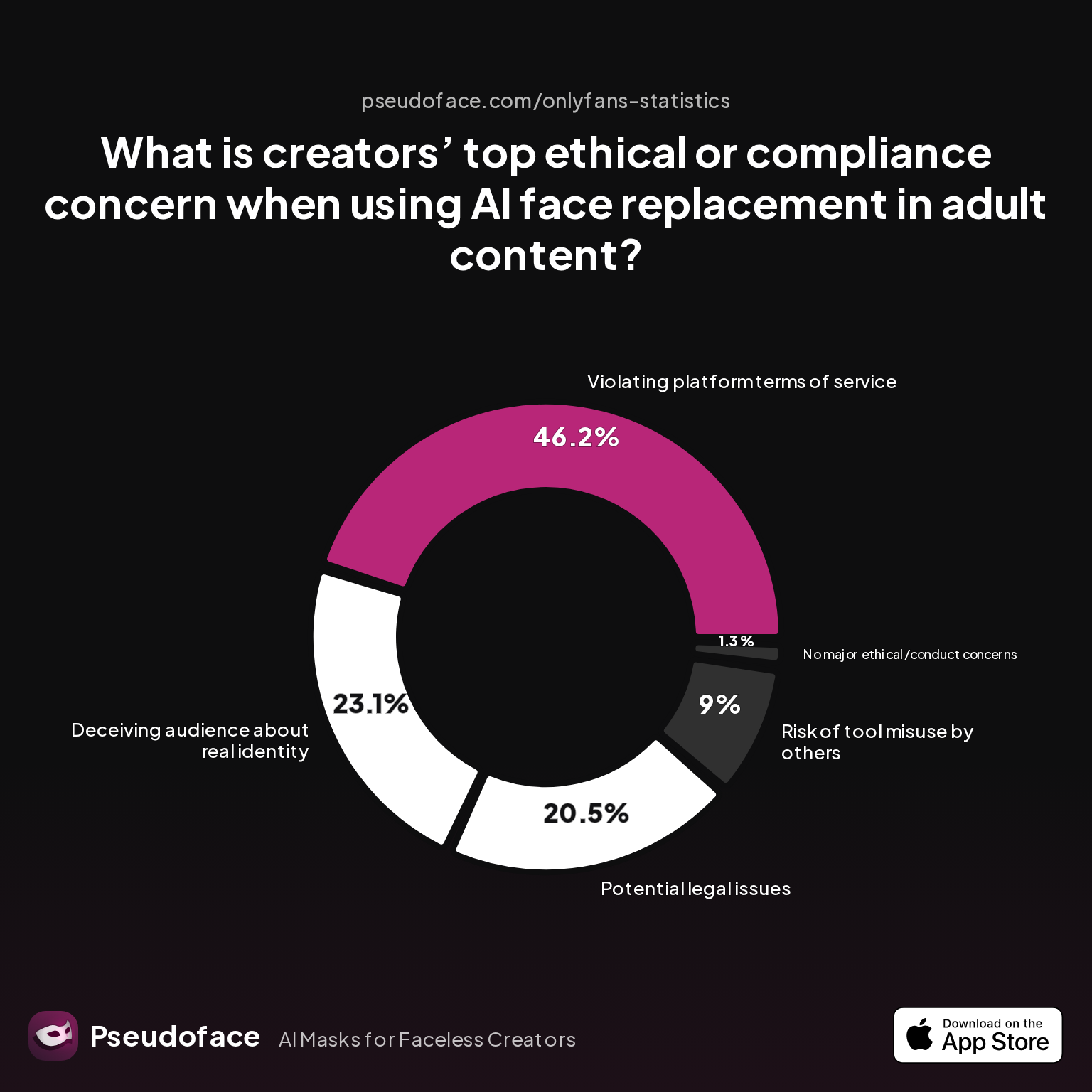
| Answer | Percentage |
|---|---|
| Deceiving audience about real identity | 23.08% |
| No major ethical/conduct concerns | 1.28% |
| Potential legal issues | 20.51% |
| Risk of tool misuse by others | 8.97% |
| Violating platform terms of service | 46.15% |
Almost half of creators (46%) cite violating platform terms of service as their top ethical or compliance concern. About 23% worry about deceiving their audience regarding their “real” identity, while legal ambiguity and possible tool misuse are also significant anxieties.
Self-selection and platform biases do shape these stats: creators already more cautious are likelier to report strong ethical qualms in Reddit threads, and many who remain silent (or have left platforms over bans) aren’t captured here. Still, directionally, the debate is clear—ethical wariness is the single biggest drag on mass adoption, even more than technical hurdles.
Audience consent and transparent disclosure underpin ethical use. If fans are under the impression that the face they see is the creator’s real one, is that materially different from a skilled photo retoucher, or does AI face swap create a fundamentally new dilemma? The space is clearly divided, as confirmed in direct Reddit commentary:
Open thread on Redditr/onlyfansadvice
u/Thickkittyyyy
That's not allowed on OF and creating fake people is weird and scammy IMO
Some creators draw a hard line, viewing AI face use as inherently deceptive or “scammy,” especially in paid adult contexts. Others, particularly those focused on group shoots or non-primary performers, see it as a consent-savvy evolution on face blurring:
Open thread on Redditr/onlyfansadvice
u/Thickkittyyyy
That's not allowed on OF and creating fake people is weird and scammy IMO
Most adult platforms have yet to formalize clear, unambiguous policies on AI face swap use. OnlyFans, for example, oscillates between case-by-case moderation and blanket content bans—explaining the high TOS-violation rate in our earlier data. Creators are well-advised to:
- Monitor policy updates monthly.
- When in doubt, over-disclose: label content as AI-assisted or “virtual performer.”
- Build direct feedback loops with audiences and subscribers, giving them agency to opt-out or voice concerns.
But how do audiences themselves actually react to these privacy methods—and does the choice of tool alter the subscriber experience?
How Subscribers React to Anonymous Content Creation Tools
Creators often fear that facelessness—whether via a blur, mask, or AI-generated visage—will cost them fans. But subscriber reactions are more nuanced and, in many cases, surprisingly supportive of creative privacy tools.
Let’s see the data on how paying audiences actually respond when they spot different anonymity technologies in action:
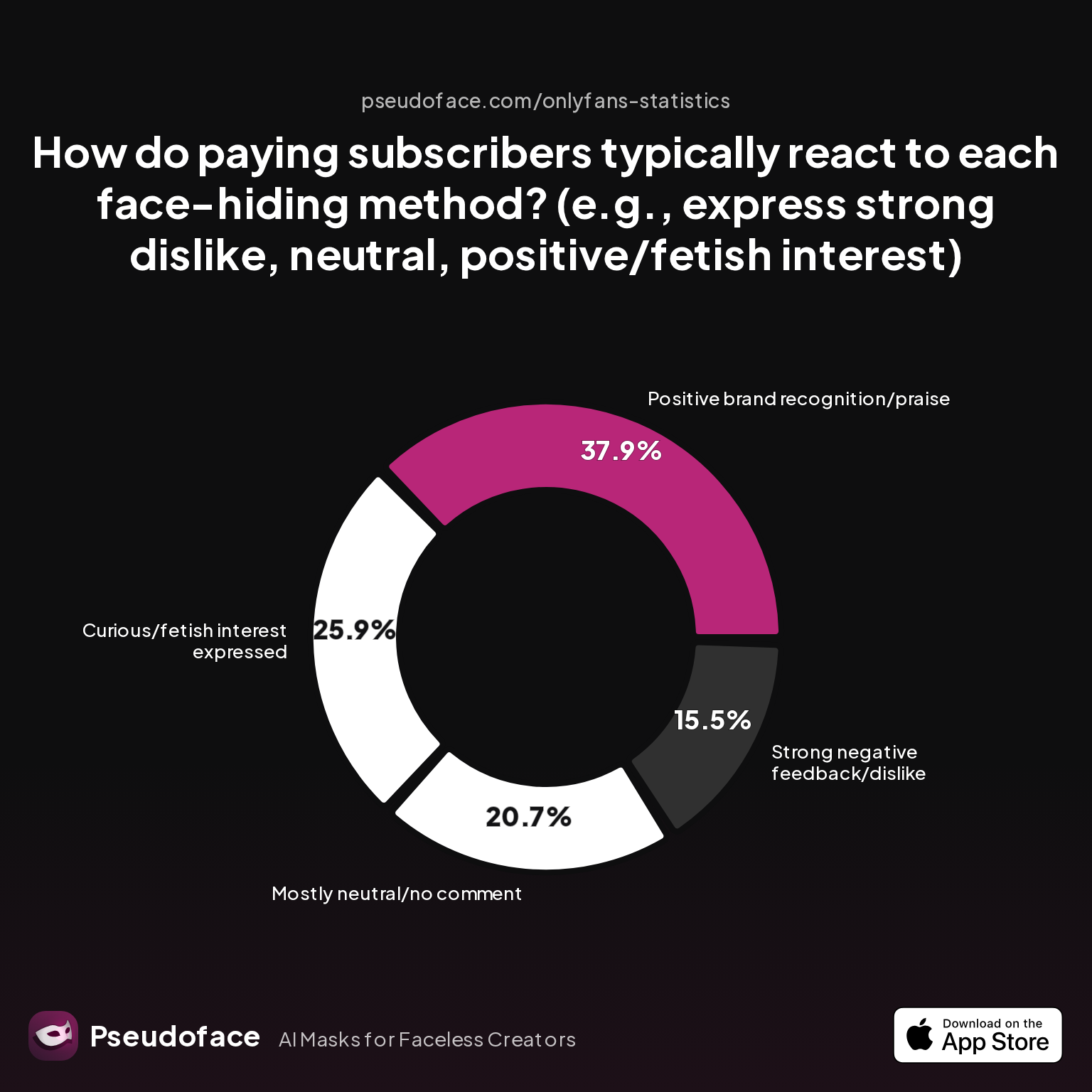
| Answer | Percentage |
|---|---|
| Curious/fetish interest expressed | 25.86% |
| Mostly neutral/no comment | 20.69% |
| Positive brand recognition/praise | 37.93% |
| Strong negative feedback/dislike | 15.52% |
Nearly 38% of subscriber reactions are actively positive, with another 26% expressing curiosity or even a privacy-themed fetish interest. Only about 16% of responses are negative. Methodology caveat: these self-reports likely over-represent creators already comfortable with digital anonymity, while adverse reactions from non-renewing subscribers (who churn quietly) may go partially underreported.
Still, the clear through-line is that well-implemented, aesthetically pleasing face swaps do not meaningfully damage brand loyalty. In fact, creative privacy tech can even increase interest among certain subscriber segments.
Direct commentary from Reddit further illustrates the spectrum of sentiment:
Open thread on Redditr/onlyfansadvice
u/ConfirmationB1as
Just chiming in here is that yes there are tools but you better check with OF and their TOS. I say for advertising on non paid social platforms it's okay but I would be careful on your paid platforms.
There is a notable distinction: while audiences may embrace privacy layers for what they are, they react far more negatively to attempts at hiding AI use entirely or passing off “pseudofaces” as real without disclosure.
Key takeaways for creators:
- Lean into transparency and build your anonymous persona into the brand’s story.
- Treat curiosity and privacy fetish interest as engagement levers rather than obstacles.
- Solicit feedback with low-friction polls or DMs, using it as an iterative brand improvement loop.
Understanding both audience and platform perspectives helps creators refine their privacy stack—so what are the practical, non-negotiable steps for staying safe?
Privacy Stacks in Practice: What Else Should You Do Beyond Face Swap AI?
A modern creator’s privacy isn’t a single tool or tactic—it’s a resilient stack of habits, technologies, and “digital OPSEC” precautions. While AI face swaps can form the visual front line, they must be woven into a wider tapestry of personal security and policy awareness. Here’s what creators self-reported as their prelaunch checklist before posting their first piece of anonymous content:
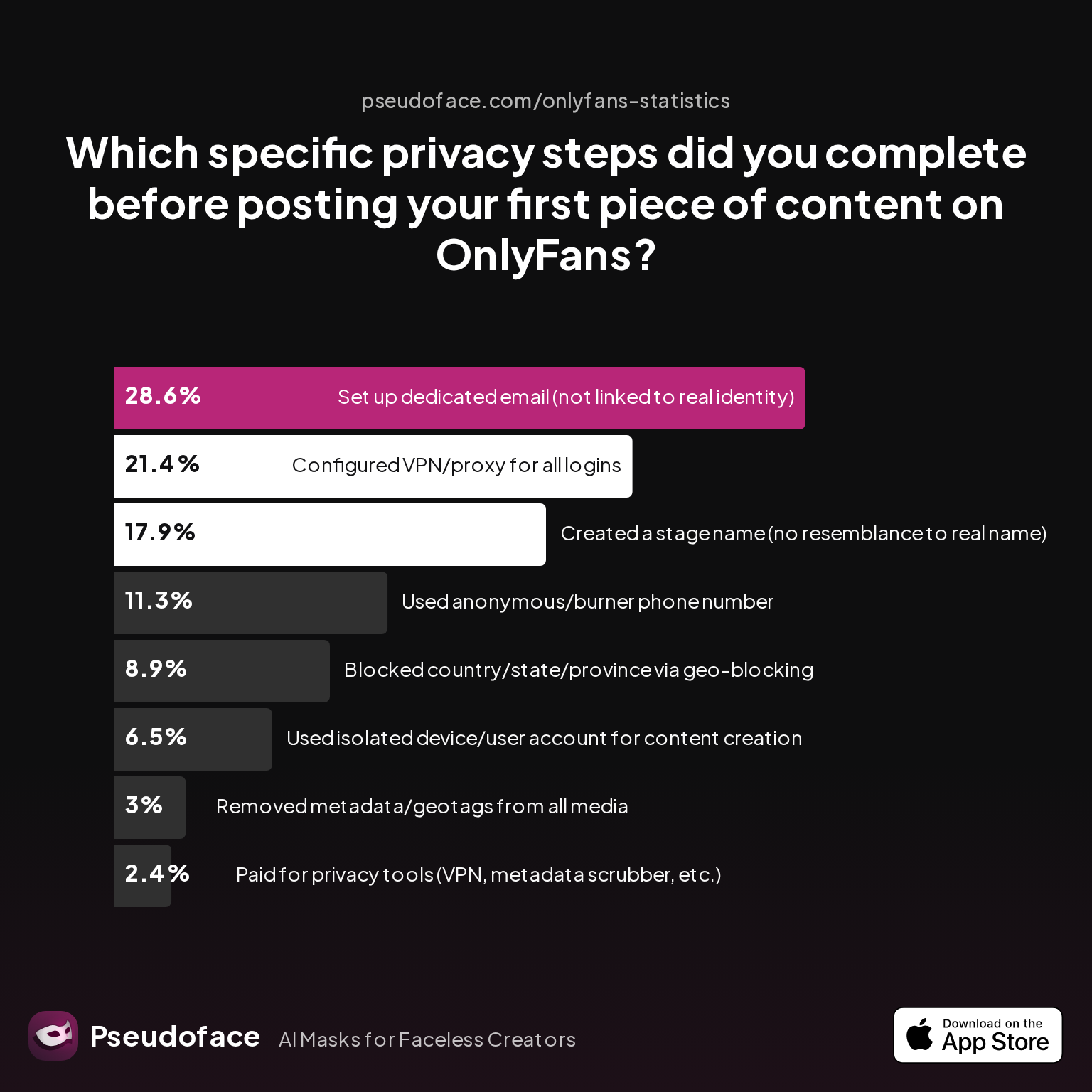
| Answer | Percentage |
|---|---|
| Blocked country/state/province via geo-blocking | 8.93% |
| Configured VPN/proxy for all logins | 21.43% |
| Created a stage name (no resemblance to real name) | 17.86% |
| Paid for privacy tools (VPN, metadata scrubber, etc.) | 2.38% |
| Removed metadata/geotags from all media | 2.98% |
| Set up dedicated email (not linked to real identity) | 28.57% |
| Used anonymous/burner phone number | 11.31% |
| Used isolated device/user account for content creation | 6.55% |
The essentials: dedicated emails, VPNs, and well-chosen stage names still dominate concrete privacy practices. Fewer than 3% checked or scrubbed metadata from their first media set—one of the most common accidental “leak points” for creator doxxing.
A minority (just under 9%) use geo-blocking to keep content invisible in their home country or regions of professional risk. Adoption of genuinely anonymous device/user account separation remains very rare, often due to cost or perceived workflow overhead.
If you’re building your own privacy stack, consider:
- Always start with a privacy audit—how easy is it to connect your new persona back to your real-world identity via email, device, metadata, or platform postings?
- Don’t rush launch: batch test tool outputs, posting across private or secondary accounts to observe platform reactions and spot unintentional “tells.”
- Schedule quarterly privacy “checkups” to ensure no policies or ecosystem changes have quietly exposed your workflow.
Ultimately, even the best AI face swap won’t protect you from basic operational errors elsewhere in your workflow. Layering multiple steps—and updating in response to tech and policy shifts—is the path to resilient, sustainable anonymity.
Purpose-Built AI Face Swap for Privacy vs. General AI Image Generators
Not all AI solutions are created equal. Some creators mistakenly try to repurpose generic AI image or deepfake generators for privacy use, assuming any AI face is as good as one tuned for anonymity. The truth is, dedicated privacy-first face swap tools offer substantial advantages in terms of control, repeatability, and risk-management:
Purpose-built privacy tools:
- Allow for the creation of a consistently repeatable “persona face” for brand cohesion.
- Offer explicit metadata scrubbing, “undo” functions, and batch video support for efficient, safe production.
- Prioritize absence of AI watermarks and minimize traceable patterns that could trigger platform detection.
- Have clearer user agreements and published use cases consistent with anonymity protections.
General AI image generators:
- Provide novel, aesthetically variable faces but often lack controls for exact repeatability—leading to mismatched visuals across posts.
- May insert invisible watermarks or embed tell-tale AI “artefacts” detectable by modern moderation bots.
- Typically orient features toward creative experimentation, not workflow safety or platform compliance.
- Frequently list terms of service/allowed uses that explicitly exclude adult content or face anonymization.
Quoting from Reddit, confusion around tool suitability and workflow integration is common:
Open thread on Redditr/CreatorsAdvice
u/CreatorsAdvice-ModTeam
This post or comment has been removed for breaking the 'creators only' rule. This community is for active NSFW creators only. If you are not a NSFW creator in front of the camera, please don't post or comment here. There are no exceptions, please respect that.
While such tools can provide raw material for pseudofaces, they rarely make sense as a sustainable privacy foundation. Migrating to a privacy-optimized platform isn’t just about peace of mind; it’s about creating a consistent, compliance-friendly workflow able to scale with your brand ambitions.
Conclusion: Staying Anonymous, Realistic, and Ethical in a Transforming Landscape
AI face swap for privacy isn’t hype—it’s a sweeping evolution in how creators protect themselves while maintaining audience engagement. But with innovation comes risk: ambiguous platform rules, evolving detection methods, and a persistent need for ethical introspection.
Based on 2025-2026 evidence from 250,000+ Reddit conversations distilling real creator experiences, the path forward is as much about operational mindfulness as it is about tool choice. Transparency with fans, layered privacy protections, and an ongoing dialogue with both platform policy and personal ethics form the pillars of a resilient anonymous brand.
Above all, treat your privacy stack as an evolving process—one that centers your safety and honors the communities trusting you with their attention (and sometimes, their money). Remain alert for policy shifts, technical improvements, and new debates about the legitimacy and artistry of digital pseudofaces. Anonymity and realism are now in creative tension, and your best defense is a well-researched, continually-adapted, and ethically sound approach.
FAQ
Which AI face swap tools are currently safest for use on OnlyFans?
The safest AI face swap tools for OnlyFans are those purpose-built for privacy that explicitly address metadata, offer consistent identities, and have clear documentation on platform compliance.
Seek out vendors with a strong track record among sex worker communities, who remain up-to-date with OnlyFans’ shifting policy landscape. Avoid repurposing general image generators—these rarely suffice for full anonymity and compliance.
Will using an AI face replacement tool get my account banned on major adult platforms?
It is possible—over 40% of creators trying AI face swaps have had content removed for TOS violations, and 8% reported direct account warnings.
Each platform (OnlyFans, Fanvue, Fansly) enforces its own policies, with inconsistent moderation; disclosing AI usage and reviewing TOS before posting are vital to reduce risk.
How do I maintain the same AI-generated face across all my social channels?
Maintain consistency by saving face generation seeds, prompts, or datasets, using batch processing, and auditing new assets against your existing persona.
Purpose-built AI privacy tools often support face “locking” or identity tokens—use these features, and version-control all outputs and backups.
What are the best anonymous content creation tools for realism and low detection risk?
The top-rated tools combine high-fidelity visual swaps, absence of watermarks, robust metadata scrubbing, and version-stable identity creation.
Review recent creator testimonials on Reddit and specialized sex work forums for unfiltered feedback; most agree generic face generators fall short when realism and consistent identity are paramount.
What are the leading ethical concerns with AI face swap for privacy?
The primary ethical concerns are deceiving the audience, violating platform terms, and potential legal ambiguity, with “TOS violations” flagged by nearly half of creators in recent surveys.
To navigate this, prioritize transparency with audiences and always disclose digital alterations if asked; unclear policies raise the risk of account suspensions or subscriber blowback.
How do fans and subscribers usually react to AI face replacement or digital masking?
Most paying subscribers react positively or neutrally to creative privacy tools, with 37% praising the innovation and only 15% giving strong negative feedback.
Transparent branding and community engagement turn “mystery” into a feature—not a bug—while undisclosed uses are more likely to provoke pushback.
What privacy steps should I complete before launching my anonymous creator account?
You should set up a dedicated email, VPN, stage name, and scrub media of metadata before your first post; most privacy leaks come from skipped steps in this stack.
Batch-upload test content to private channels, check for accidental identifiers, and periodically review your setup as platform policies and detection tools evolve.
Can general-purpose AI image generators be reliably used for face anonymization in adult content?
No—these tools lack consistency, may introduce detectable artefacts, and often prohibit adult or anonymizing uses in their terms.
Purpose-built privacy tools provide better brand coherence, control, and compliance security.
Is it legal to use AI-generated faces for anonymity in my country?
Legality varies widely and remains ambiguous, but explicit nonconsensual use or impersonation is generally prohibited; always check local law and platform-specific policy.
When in doubt, consult digital rights organizations or counsel familiar with adult content and AI law.
Can AI face swaps be detected by platforms or AI image detector tools?
Detection is possible: platforms increasingly scan for invisible watermarks or tell-tale visual artifacts, especially on new user accounts and uploads from flagged IPs.
Using tools that prioritize metadata scrubbing and watermark avoidance, combined with careful output review, sharply reduces detection risk—but ongoing vigilance is needed.


