
TL;DR
If your parents (or anyone close) have discovered your OnlyFans, you’re not alone—and recovery is possible. According to Pseudoface’s analysis of over 250,000 public Reddit threads from real adult content creators, most report the first hours are the hardest, but what you do next can make all the difference. Open, honest communication led to reconciliation in more cases than silence or denial, though not all families respond the same. The most helpful practical step, creators say, is regaining a sense of control—whether by changing privacy settings, pausing or deleting accounts, or simply taking a tactical break. While outcomes vary and emotional fallout is real, quantitative data and lived stories both point to hope, perspective, and a path forward.
When You’ve Been Discovered: Inside the Panic and First Response
It starts with a message, a comment, or maybe an awkward look: the realization that someone—from a parent to a coworker—has found your OnlyFans. The adrenaline spike, the mental replay of “what did I leave visible,” and the sinking dread are nearly universal. As of early 2026, anonymous creators regularly discuss this gut-wrenching exposure panic in creator spaces. This section dissects the scale of the problem and what creators actually do in the first 24 hours.
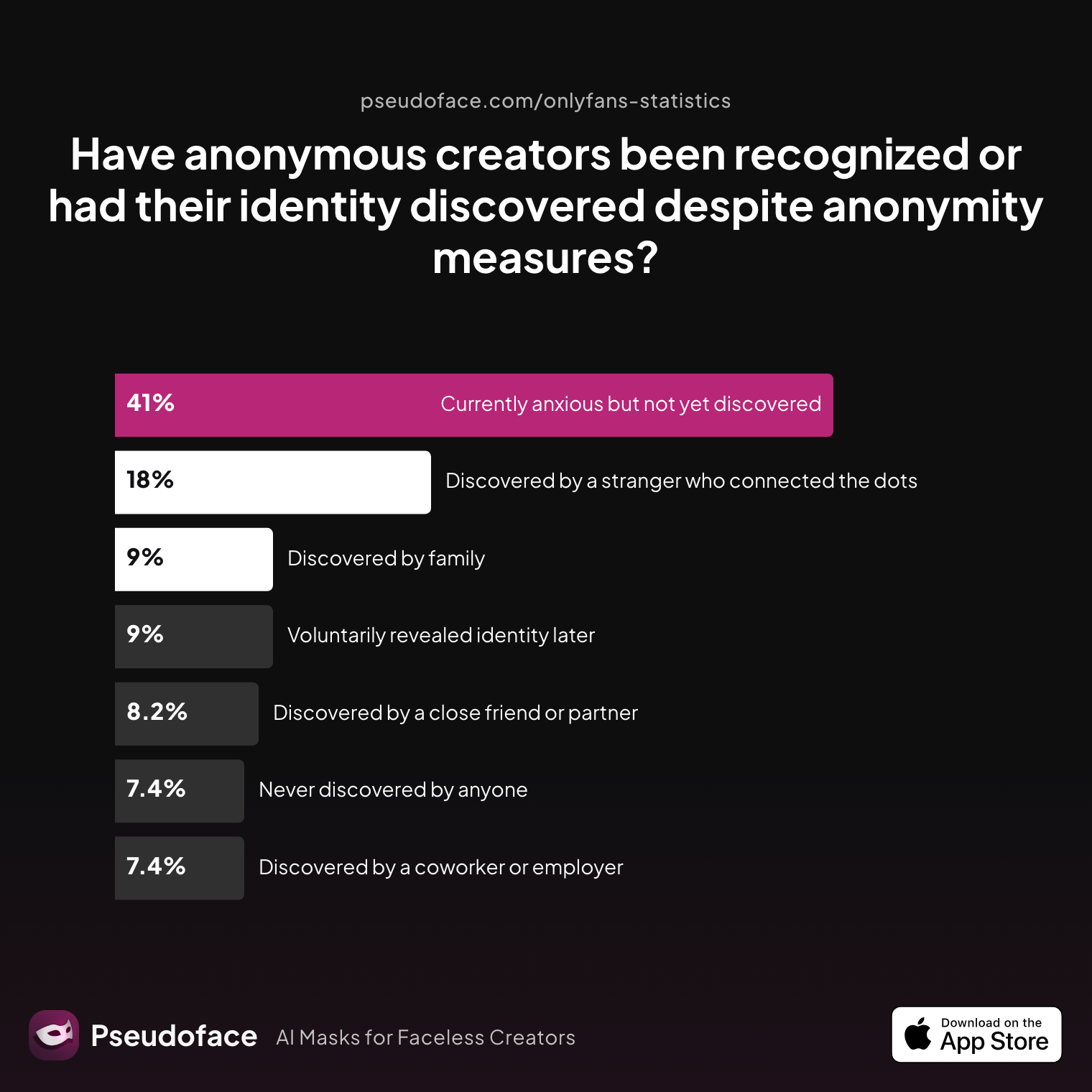
| Answer | Percentage |
|---|---|
| Currently anxious but not yet discovered | 40.98% |
| Discovered by a close friend or partner | 8.20% |
| Discovered by a coworker or employer | 7.38% |
| Discovered by a stranger who connected the dots | 18.03% |
| Discovered by family | 9.02% |
| Never discovered by anyone | 7.38% |
| Voluntarily revealed identity later | 9.02% |
Nearly one in ten anonymous creators report being discovered by family, and even more have been found out by friends, coworkers, or strangers piecing together clues. The largest single group—over 40%—exists in a state of ongoing anxiety about potential discovery. Only a small minority report escaping unscathed, never discovered by anyone. According to Pseudoface’s dataset, these numbers reflect self-reporting bias: more vocal risk-takers, trauma survivors, and those active on advice forums are overrepresented here. But the directional trend is clear—the fear and reality of exposure are both widespread.
So what do creators actually do, immediately after being outed?
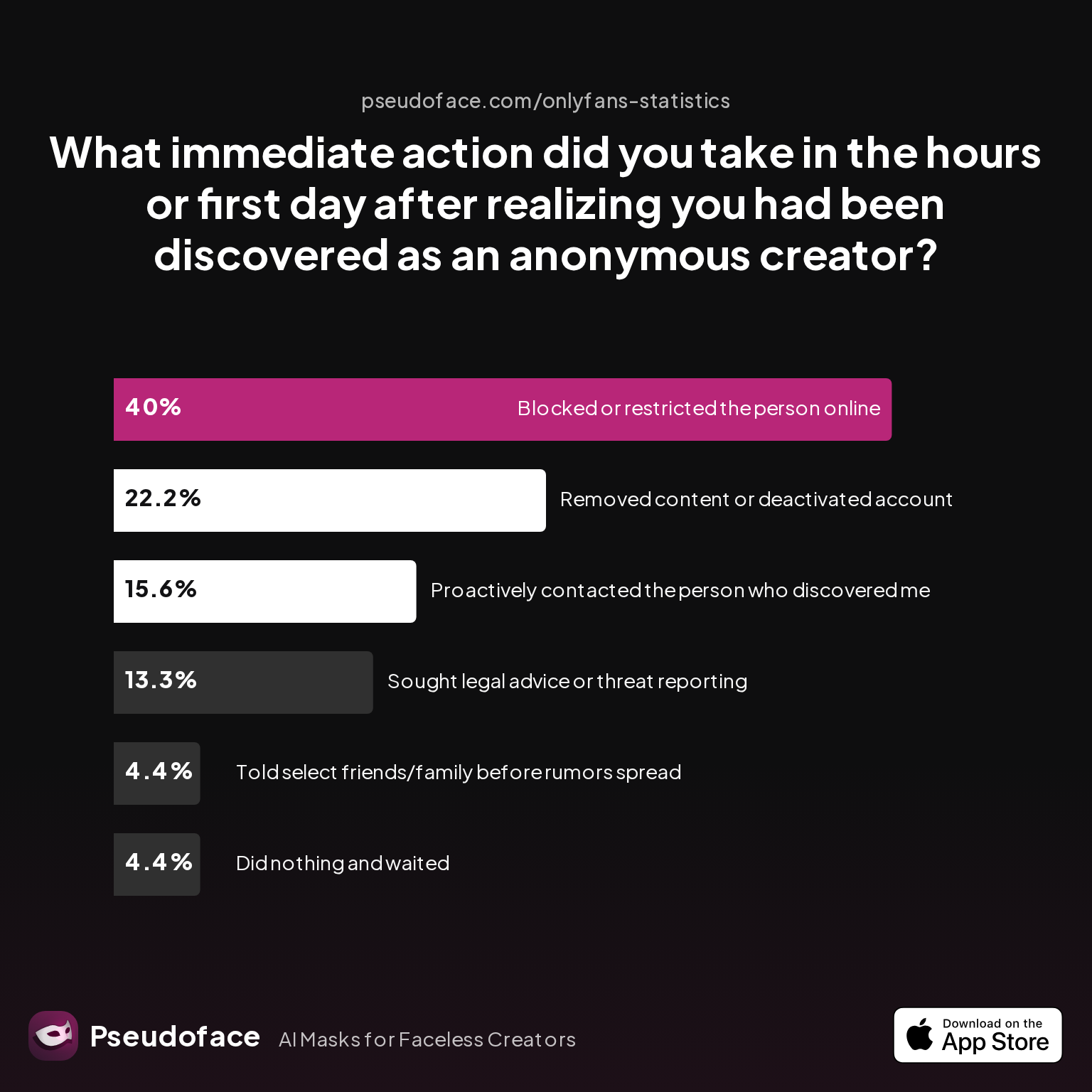
| Answer | Percentage |
|---|---|
| Blocked or restricted the person online | 40.00% |
| Did nothing and waited | 4.44% |
| Proactively contacted the person who discovered me | 15.56% |
| Removed content or deactivated account | 22.22% |
| Sought legal advice or threat reporting | 13.33% |
| Told select friends/family before rumors spread | 4.44% |
Blocking or restricting access is the most common immediate move, taken by 40% of creators who’ve just been discovered. Around one in five delete content or deactivate their account—it’s the “panic button” approach. Only a minority take proactive communication steps, outpacing those who wait and see or who immediately escalate to legal advice. Though, as we’ll see later, this first scramble isn’t always the most effective for long-term healing.
Reddit abounds with accounts of panic and snap actions. Sometimes, acting quickly is essential for safety or emotional preservation. But it’s also common for creators to later regret fast deletion or stonewalling, especially if it means losing control of their own narrative.
Open thread on Redditr/onlyfansadvice
u/alittlebrat
Tbh- Doesn’t sound like it worth the risk if you’re unable to make a good income with it. Can always try again when you’re out from under your parents house.
In reality, the first day is about emotional survival and preventing escalation. Blocking, pausing, or simply not responding can buy time—but the need to regain agency, rather than react, quickly takes over.
Next, let’s turn to concrete recovery steps: what creators reported as most helpful when the fallout started unraveling.
Practical Fallout: What To Do If Someone Finds Out About Your OnlyFans
After the first shock, creators face hard choices. Should you scrub your digital presence? Announce to your network, or double down on privacy? The data from thousands who’ve gone through this sheds light on practical steps that work best.
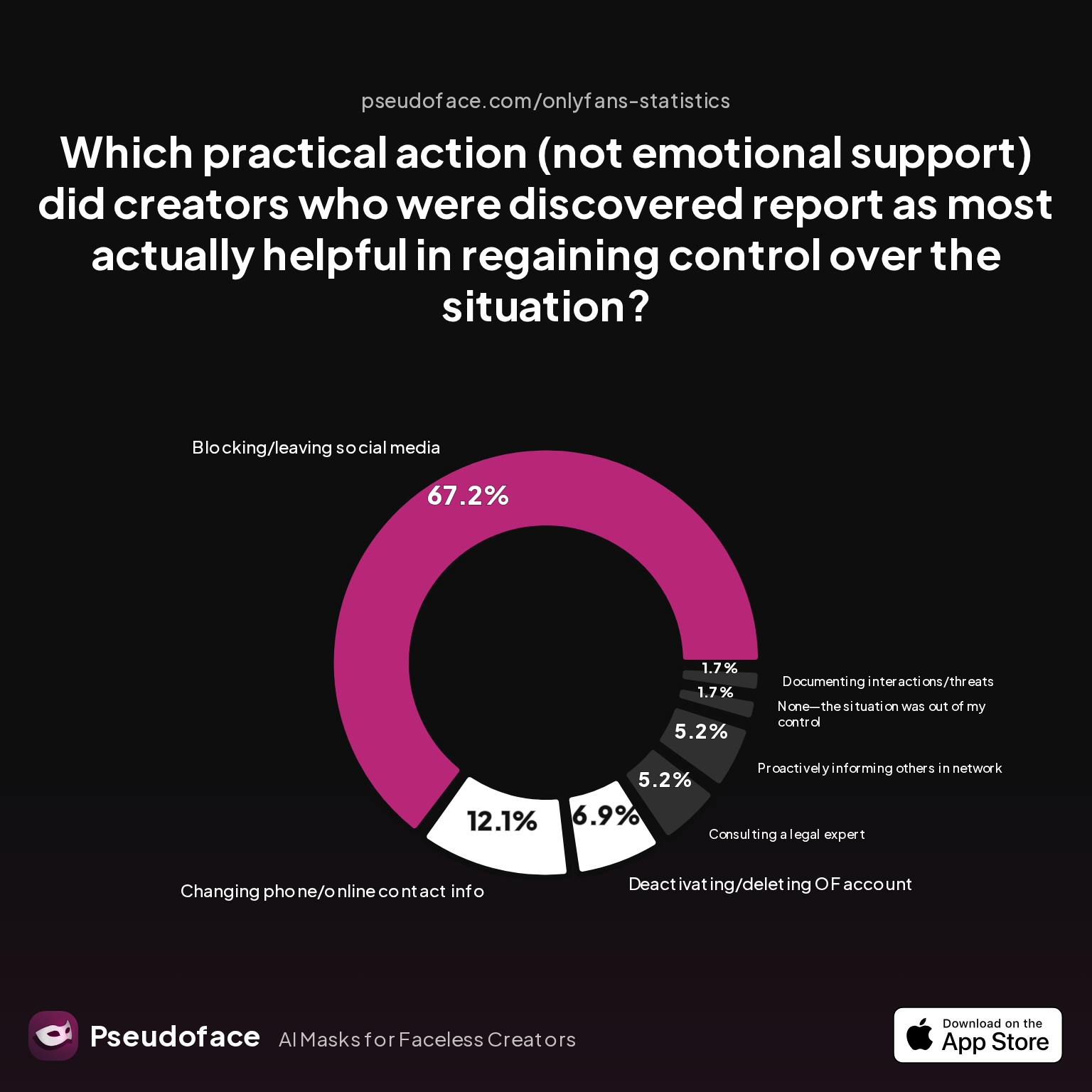
| Answer | Percentage |
|---|---|
| Blocking/leaving social media | 67.24% |
| Changing phone/online contact info | 12.07% |
| Consulting a legal expert | 5.17% |
| Deactivating/deleting OF account | 6.90% |
| Documenting interactions/threats | 1.72% |
| None—the situation was out of my control | 1.72% |
| Proactively informing others in network | 5.17% |
More than two-thirds of creators said that blocking or leaving social media was the most impactful action in regaining control after being discovered. Changing contact info came a distant second, while deleting or deactivating OnlyFans was seen as the most helpful by fewer than one in ten creators. Legal consultation and proactive outreach barely registered by comparison.
This reflects a sharp psychological reality: most creators, when exposed, are reacting to a breach of boundaries. The proven remedy? Reinforce those boundaries—immediately, wherever possible.
A series of Reddit threads echo this:
Open thread on Redditr/onlyfansadvice
u/CannaCuddleCum
I'd say block her/his account on your platforms. There are some unhinged spouses/partners out there. Don't read any of the messages they send you. It's not your issue, it's theirs. Big hugs to ya, because I know it's not easy ♥️
Open thread on Redditr/onlyfansadvice
u/WhispyWhispWhip
Best to block her on everything. It's weird that she's bothering you when her husband was the one cheating on her.
In practice, blocking doesn’t just provide digital distance—it buys emotional breathing room. Yet creators warn against a total retreat:
- Blocking and disappearing may feel safest in the moment, but ghosting everyone (including allies, customers, or supportive family) can isolate you more.
- Changing contact info is most effective if harassment or blackmail is involved.
- Deleting your account is a nuclear option—irreversible, and sometimes regretted if it was made in panic rather than strategy.
Open thread on Redditr/onlyfansadvice
u/LexieClark
I’d just ignore her or tell her you’re not interested in her husband and any transactions have been purely business
Privacy comes first, but regaining control is often not just about technology. It's about setting clear boundaries and protecting your mental health, too. If your family or network is especially judgmental or aggressive, stepping back from social platforms—or using tools to control who can see or contact you—can be life-saving.
Once the scramble to secure your digital “perimeter” is complete, the next challenge emerges: emotional survival.
Emotional First Aid: “OnlyFans Ruined My Life”… Or Did It?
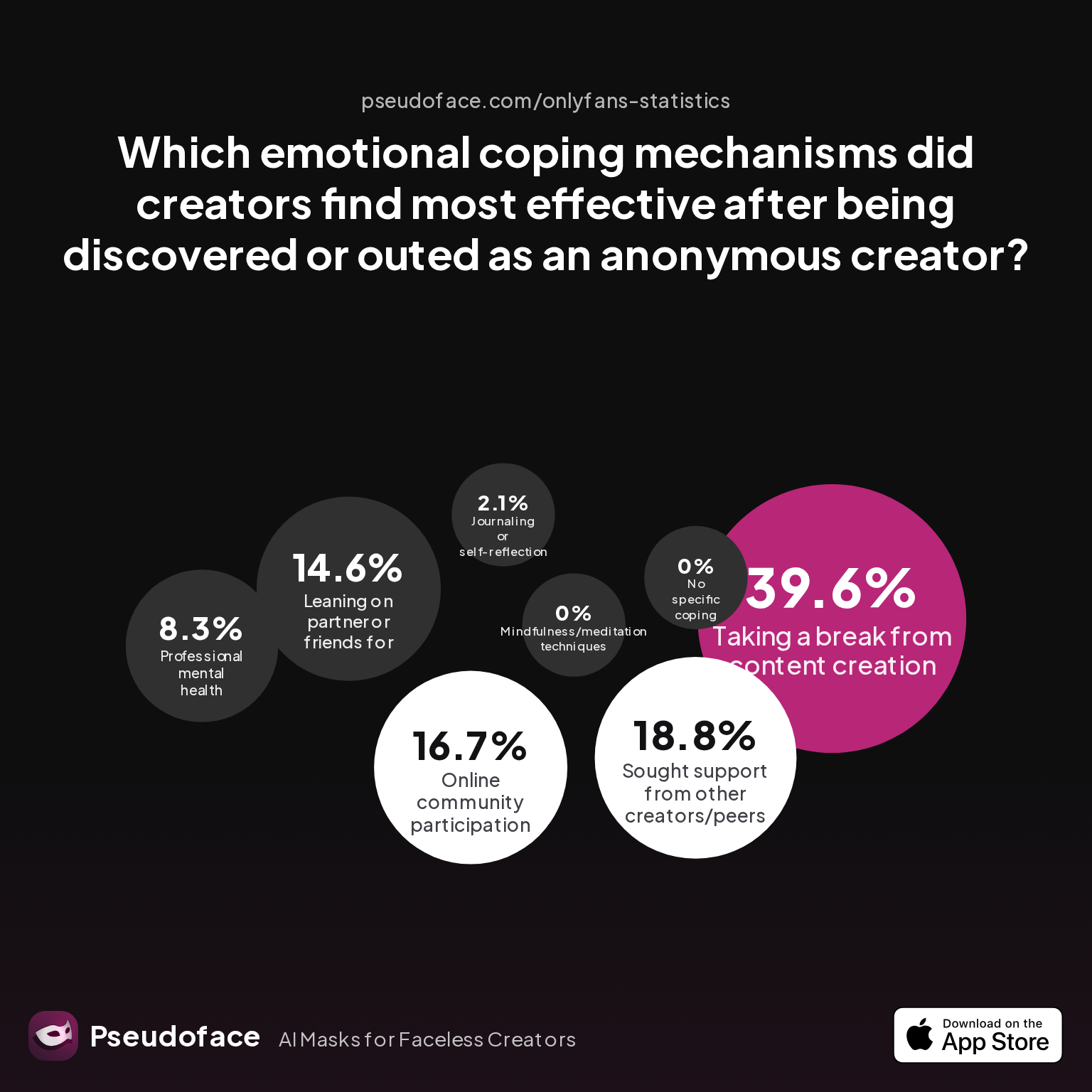
To speak bluntly, a significant number of creators—especially in the days after being outed—believe they’ve ruined their lives. Shame, panic, and regret are dominant themes in these raw threads. But does the data support the sense of irreversible disaster? Not entirely. Let’s look at which coping mechanisms people actually leaned on, and what helped the most.
| Answer | Percentage |
|---|---|
| Journaling or self-reflection practices | 2.08% |
| Leaning on partner or friends for support | 14.58% |
| Mindfulness/meditation techniques | 0.00% |
| No specific coping strategy used | 0.00% |
| Online community participation | 16.67% |
| Professional mental health support (therapy, counseling) | 8.33% |
| Sought support from other creators/peers | 18.75% |
| Taking a break from content creation | 39.58% |
Taking a break from content creation was the single most effective coping strategy after discovery, according to nearly 40% of creators. Online community participation and support from other creators came next, followed by leaning on personal friends or partners. Professional support, like therapy or counseling, was reported as helpful by about 8%, and solo strategies like journaling played only a minor role.
Here’s one way creators described this emotional whiplash:
Pausing content is a self-protective step, not an admission of defeat. It gives creators room to process, reset boundaries, and decide on a next move from a place of strength, not crisis.
But “onlyfans ruined my life” is most often a reflection of shock, not the literal end of one’s world. Communities exist for precisely this—reminding you that the path out is rarely straightforward, but almost always possible. The data exposes another truth: creators who turned to online communities or peers for support adjusted faster than those who suffered in silence or relied on “grit.”
Of course, the numbers don’t capture the full force of parental shame, social stigma, or cultural fallout. But even for those reporting the most anguish, strategies that combined personal support, deliberate breaks, and community connection enabled healthy adjustment over time.
Next, amid this recovery, comes the hardest—and often most pivotal—decision: how to actually communicate with those who found out, especially parents.
How to Talk to Parents: “Best” Communication Approaches After Being Discovered
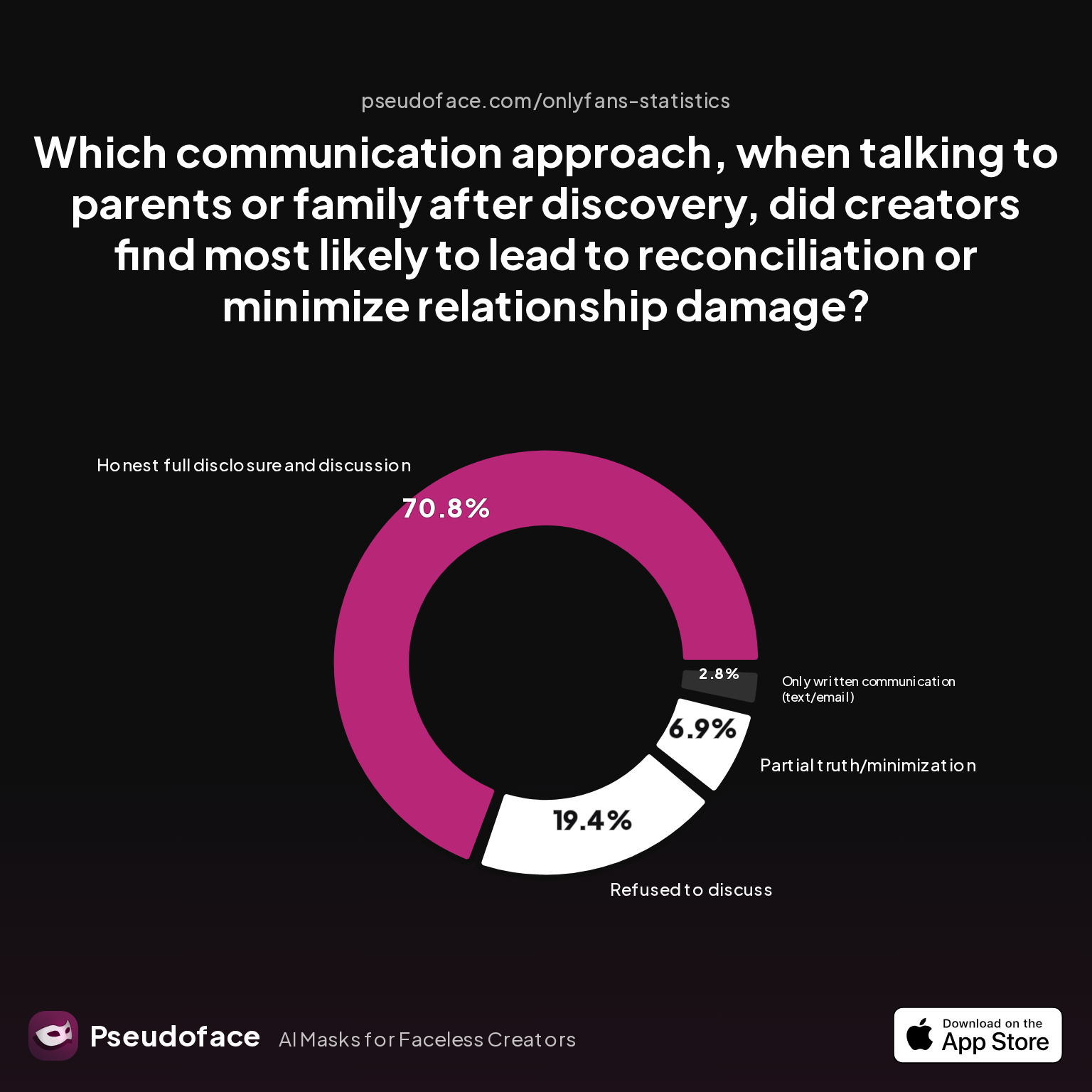
No conversation is quite as fraught as explaining your OnlyFans to your parents. What do others do, and what “works” in terms of healing relationships? Data from 2026 shows a surprisingly nuanced picture—full transparency beats “damage control,” but not every creator feels safe enough to go that route.
| Answer | Percentage |
|---|---|
| Apology and promise to stop | 0.00% |
| Asked a mediator (friend/family/therapist) to help | 0.00% |
| Directed to third-party info/resources | 0.00% |
| Honest full disclosure and discussion | 70.83% |
| Only written communication (text/email) | 2.78% |
| Partial truth/minimization | 6.94% |
| Refused to discuss | 19.44% |
Honest, full disclosure is by far the most effective communication strategy for minimizing relationship damage or achieving reconciliation with parents. Nearly 71% of creators who directly discussed their work (rather than deflecting, refusing, or minimizing) reported better outcomes. Apologies or promises to stop, as well as “mediator” approaches, were uniformly ineffective in this dataset.
To be clear, this does not mean it’s safe or wise for every creator to bare all—especially in strict or hostile families. Self-selection bias is at work: those who felt able to communicate directly may already have more open, less punitive families. Still, the message is clear—honest discussion changes the odds.
Reddit creators detail the agony and relief that comes with varying approaches:
Open thread on Redditr/onlyfansadvice
u/GwenAnne
If you stick with the Online Marketing story, just say you signed non-disclosure agreements. If she wants details, say writing copy, researching topics for posts, tailored search engine optimization, etc. If she wants you to elaborate on how you do those things, just say that it's really involved and varies from client to client and you can't elaborate without giving concrete examples that might reveal who your clients are. That's essentially what I told my parents
But the data shows that elaborate minimizations or half-truths rarely improve outcomes long term. Written communication (text/email) offers little extra protection. Complete avoidance (“refused to discuss”) may limit immediate conflict, yet often leaves relationships brittle and unresolved.
Even snarky strategies—like the “I’m an accountant” meme—may not withstand parental scrutiny.
Open thread on Redditr/onlyfansadvice
u/NestofUsefulness
Rumor has it you just say you're an accountant
For many, the most sustainable answer is honest dialogue—preferably delivered calmly, with an emphasis on one’s need for autonomy, safety, and planning, not rebellion or shame.
This isn’t a universal prescription. For those at risk of violence, coercion, or financial retaliation, safety and self-preservation should come first, even if it means short-term avoidance. But for the median case, full communication offers a path to reconciliation—or at least, to retaining dignity and some control.
With that in mind, you face a crossroads: do you double down, delete, or adapt? Here’s how those choices stack up, long-run.
Comparing Paths: “I Deleted My OnlyFans Account” vs. Owning the Fallout
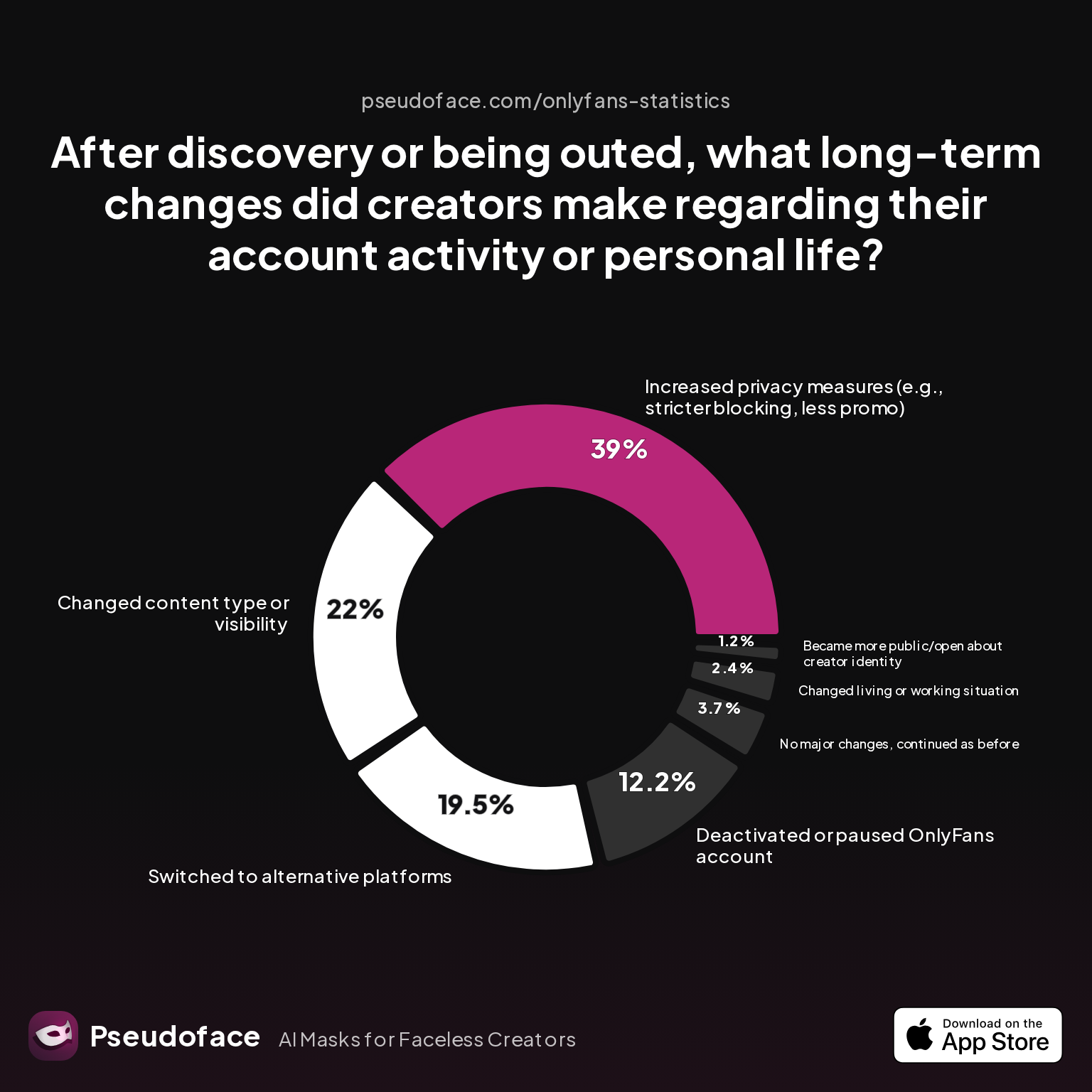
One of the highest-stress dilemmas is whether to delete your OnlyFans account entirely after discovery, or to “own” the situation and adapt. The long-term data from outed creators shows a more complex—and hopeful—spectrum of life after exposure.
| Answer | Percentage |
|---|---|
| Became more public/open about creator identity | 1.22% |
| Changed content type or visibility | 21.95% |
| Changed living or working situation | 2.44% |
| Deactivated or paused OnlyFans account | 12.20% |
| Increased privacy measures (e.g., stricter blocking, less promo) | 39.02% |
| No major changes, continued as before | 3.66% |
| Switched to alternative platforms | 19.51% |
Most discovered creators don’t immediately delete their account—instead, 39% increase privacy measures, and about 22% modify their content visibility or form. Just over 12% deactivate or pause their OnlyFans entirely, while another 20% switch to alternative platforms. Only 1% embrace the exposure and become openly public about their identity.
This suggests the “all or nothing” reaction is the exception, not the rule. Creators who responded to discovery by adapting—tightening security, switching genres, or moving to less personally identifiable platforms—reported regaining a greater sense of agency and, with time, reduced distress.
Reddit advice echoes this balance:
Open thread on Redditr/onlyfansadvice
u/alittlebrat
Tbh- Doesn’t sound like it worth the risk if you’re unable to make a good income with it. Can always try again when you’re out from under your parents house.
For some, especially those who live at home or are financially dependent on parents, deactivation feels like the only real option. But many others “tier down” their involvement or move to platforms with tighter access controls. In practice, impulsive deletion is sometimes regretted later, as little context or closure is offered to incoming messages, fans, or social circles.
If you do stop, do so as a conscious decision—not just to appease others, but because it aligns with your personal safety and mental health. For everyone else, doubling down on privacy (blocking, scrubbing, less promo) is a flexible survival tactic, not a cop-out.
The next greatest fear after any of these choices? That discovery will escalate—through leaks, or by others being able to “find you” online with ease. Let’s ground those anxieties in the numbers.
Worries About OnlyFans Leaks and “Can Someone Find Me?”: Myth vs. Reality
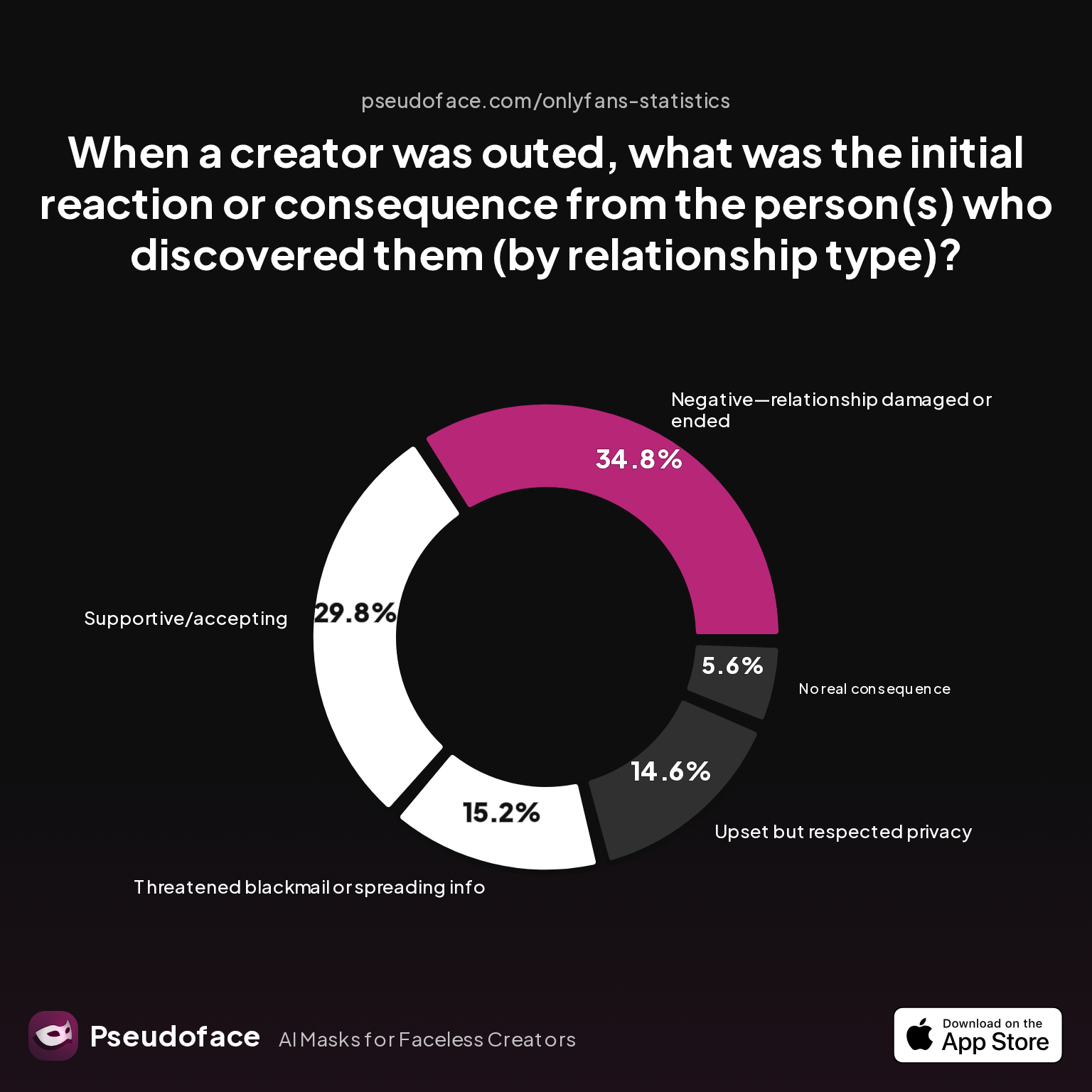
“OnlyFans leaks” and anxieties about acquaintances searching for content have become headline fears. As of mid-2025, creators still ask: Can people really “find someone you know on OnlyFans” so easily—and what usually happens after a leak or exposure, especially from family?
| Answer | Percentage |
|---|---|
| Negative—relationship damaged or ended | 34.83% |
| No real consequence | 5.62% |
| Supportive/accepting | 29.78% |
| Threatened blackmail or spreading info | 15.17% |
| Upset but respected privacy | 14.61% |
Outed creators report that about 35% experience immediate negative fallout such as relationship damage or even a cut-off. But nearly 30% report supportive or accepting responses, and another 14% see people upset but ultimately respecting privacy. Threats of blackmail or wider exposure, while not rare (15%), are still the minority.
How does this relate to worries about leaks and being “found”? The data—backed by Pseudoface’s thread analysis—suggests most leaks or exposure events are interpersonal, stemming from people who already know or can recognize you from context, rather than strangers “searching” OnlyFans effectively. Discovery most often happens via offline clues, social crossovers, or being sent links—not by search engines or random web-surfing.
When it comes to career or neighborhood fallout, most severe consequences come from people you already know and interact with, not distant strangers.
Open thread on Redditr/onlyfansadvice
u/arielhartlett
That alone sounds like a fireable offense. You don’t even need to mention the onlyfans stuff. Sending pics of your boss in a group chat is insane
Importantly, the dataset likely overemphasizes severe negative experiences (as users in crisis are more likely to seek advice) but provides invaluable warnings. Proactive privacy actions—like regularly blocking suspicious accounts and not using identifying information—can buffer much of the random exposure anxiety.
Most creators will never encounter mass leaks or targeted search “gotchas.” But if you’re in the unlucky minority, documented boundaries, digital hygiene, and clear response practices aid both short-term containment and possible legal recourse.
This brings us to the true arc of post-crisis healing: reclaiming your power, reputation, and peace of mind, one step—and one boundary—at a time.
From Disaster to Aftermath: How Creators Reclaim Control
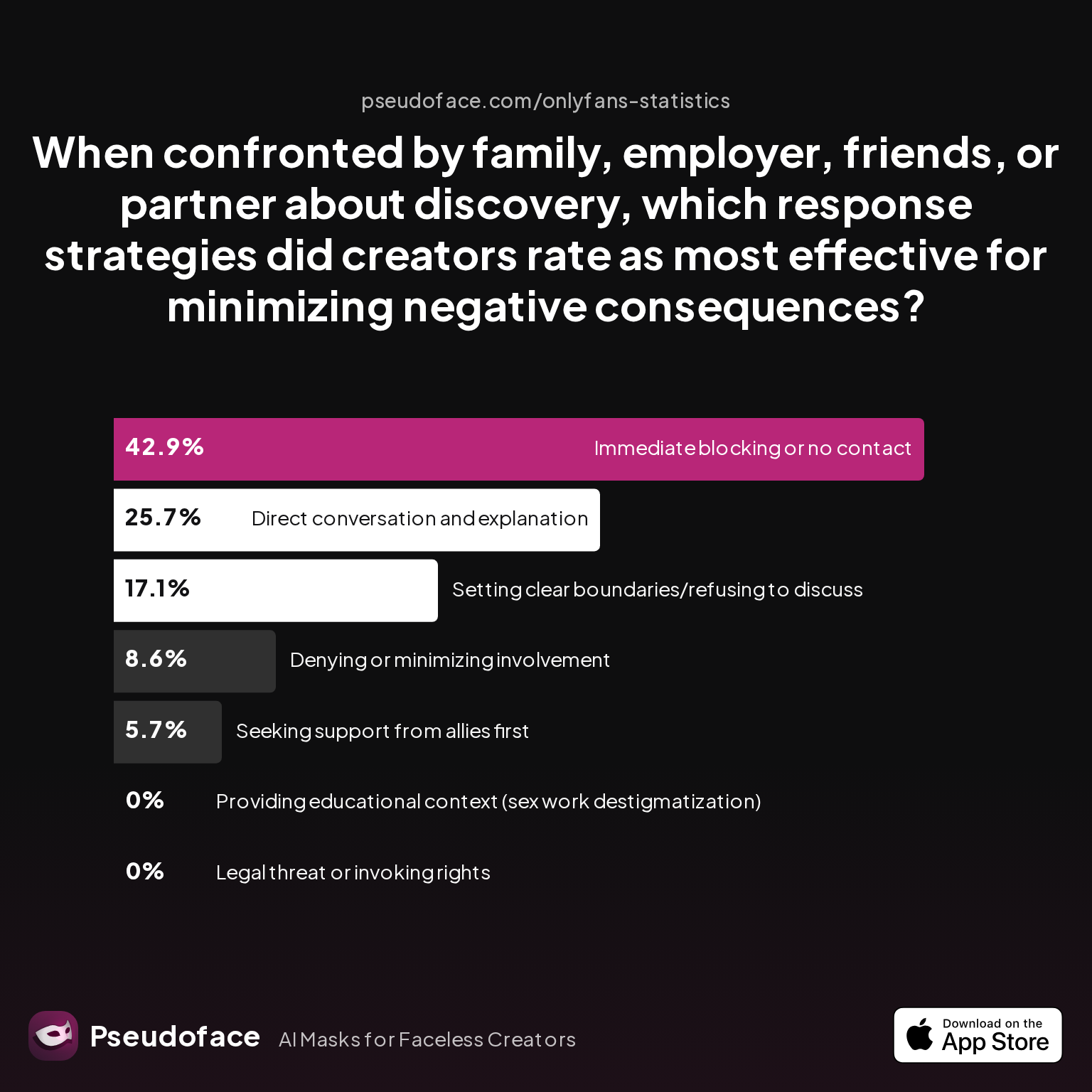
After crisis, life continues—sometimes forever changed, sometimes not at all. What are the most effective response strategies for minimizing negative consequences and starting over, according to actual creators who navigated fallout with family, friends, and employers?
| Answer | Percentage |
|---|---|
| Denying or minimizing involvement | 8.57% |
| Direct conversation and explanation | 25.71% |
| Immediate blocking or no contact | 42.86% |
| Legal threat or invoking rights | 0.00% |
| Providing educational context (sex work destigmatization) | 0.00% |
| Seeking support from allies first | 5.71% |
| Setting clear boundaries/refusing to discuss | 17.14% |
Immediate blocking or no contact remains the most effective single strategy overall, at 43%, especially for keeping further escalation in check—mirroring earlier findings about taking back digital/physical space. Yet a full quarter of creators said that direct conversation and explanation achieved the best long-term stability, especially with family and close friends. Denial, minimizing, or half-truths worked for fewer than one in ten.
Setting clear boundaries—explicitly stating what you will and won’t discuss, when confronted—had better results than simply avoiding, especially after things cooled down.
Open thread on Redditr/onlyfansadvice
u/greenstrawberry_
I’d continue to block any accounts of theirs and I would take it to HR because it’s sexual harassment and if any of it’s happening at work that’s extremely inappropriate.
Moving forward, creators advise:
- Take a tactical break, even if temporary, to gather yourself after being outed.
- Lean on, or build, your own trusted support network—this can be one friend, a partner, or an online group.
- Don’t rush to delete or explain; it’s OK to pause, plan, and only re-engage when ready.
- If needed, use organizational resources (HR, legal advice) to protect your rights and privacy at work or in the community.
Ultimately, post-discovery life often divides into two broad paths: one where the creator reclaims the narrative, either by adapting or setting fierce boundaries, and another where they make a clean break from content creation to protect well-being. Both are legitimate, both can carry you forward.
FAQ: Real Answers to Your Most Pressing Questions
What should I say to my parents if they confront me about my OnlyFans?
Direct, honest communication is statistically the most likely to lead to repair or reconciliation, but should be tailored to your safety and family values. Emphasize your autonomy, planning, and why you made your choices—while remaining calm. Scripts from the community suggest minimizing shame and focusing on responsibility, not rebellion or secrecy.
Is deleting my OnlyFans account the best thing to do if I’ve been outed?
Deleting is rarely the most effective first move—more creators regain control with privacy adjustments and breaks than with outright deletion. Immediate deletion often causes regret and rarely resolves reputation issues; decide based on your specific safety and support situation.
How can I minimize digital traces and prevent further leaks now that I've been discovered?
Your best move is to block/report harassers, maximize privacy settings, and limit any personally identifiable info on all platforms. Change your contact details if you’re being harassed, and remove links between accounts. In rare leak events, document interactions and seek help if blackmail or mass sharing occurs.
How did anonymous creators get recognized even after taking precautions?
Most exposures come down to real-life clues (items left out, money patterns, mutual friends) or accidental slip-ups, rather than technical tracing or hacking. Photos, backgrounds, shared metadata, and even promotional crossovers are common culprits—so double check all content for identifying details.
What percent of creators reconciled or repaired family relationships after discovery?
About 30% reported supportive/accepting responses from those who discovered them, and an additional 15% experienced privacy-respecting (if upset) reactions; this suggests nearly half avoid permanent relationship breaks, especially when communication is open and honest. Self-report bias: those with positive outcomes report more often.
Can family or acquaintances “find someone on OnlyFans” easily, or is it a myth?
It’s mostly a myth. The majority of discoveries result from personal connections, word of mouth, or accidental exposure—not direct search on OnlyFans. Platform search features are limited; unless someone knows your screen name or has outside clues, random discovery is very unlikely.
What practical steps helped creators regain a sense of control after being discovered?
Blocking/leaving social platforms and increasing privacy measures top the list, followed by taking tactical breaks and, for some, switching platforms. Leaning on peer or community support is the biggest single emotional recovery hack.
Will being outed on OnlyFans ruin my career or future job prospects?
Consequences vary widely. While some have lost jobs—especially in conservative industries—others have reported little to no fallout, and some even found support. Being proactive, documenting any workplace harassment, and seeking legal advice can mitigate some risks.
If someone finds out about your OnlyFans, are you likely to lose friends?
About a third of creators experience some relationship fallout, but a roughly equal portion report support or eventual acceptance. Open conversation, empathy, and time often help.
How do I cope with the shame or anxiety after my OnlyFans account is discovered?
Taking a break from content creation, seeking support from peers or creator networks, and, if needed, professional therapy are the most effective, according to community data and Reddit testimonials.
No matter the specifics of your “outed” story, the arc is clearer than the fear makes it seem. Discovery can be harrowing. The day after can feel like drowning. But from both quantitative patterns and lived accounts, most creators find ways—sometimes slow, sometimes abrupt—to reclaim their power, relationships, and self-worth. If you’re reading this in crisis, take a breath: you have options, you have company, and you have a future beyond this moment.


