
TL;DR
You can design an OnlyFans profile picture and banner that look polished, professional, and trustworthy—without ever showing your face. According to Pseudoface's analysis of over 250,000 public Reddit threads from real creators, as of mid-2026, roughly 3 in 10 faceless creators report a positive impact on subscriber trust when they use on-brand, niche-relevant avatars and uncluttered banners. Compliance rates for faceless creators remain high when avoiding nudity and personal identifiers, and the most successful anonymous profiles focus on creative cropping and subtle branding over generic avatars. These findings are self-reported—so they may over-represent the experiences of vocal or more successful faceless creators—but they highlight actionable patterns for standing out and staying safe.
Why Go Faceless? The Real Motivations of Anonymous OnlyFans Creators
The faceless revolution on OnlyFans didn’t start as a trend—it grew out of necessity. For many, the answer is simple: anonymity means control. It is not just about avoiding recognition; it is a business lever almost half of modern creators actively pull to protect their lives and livelihoods.
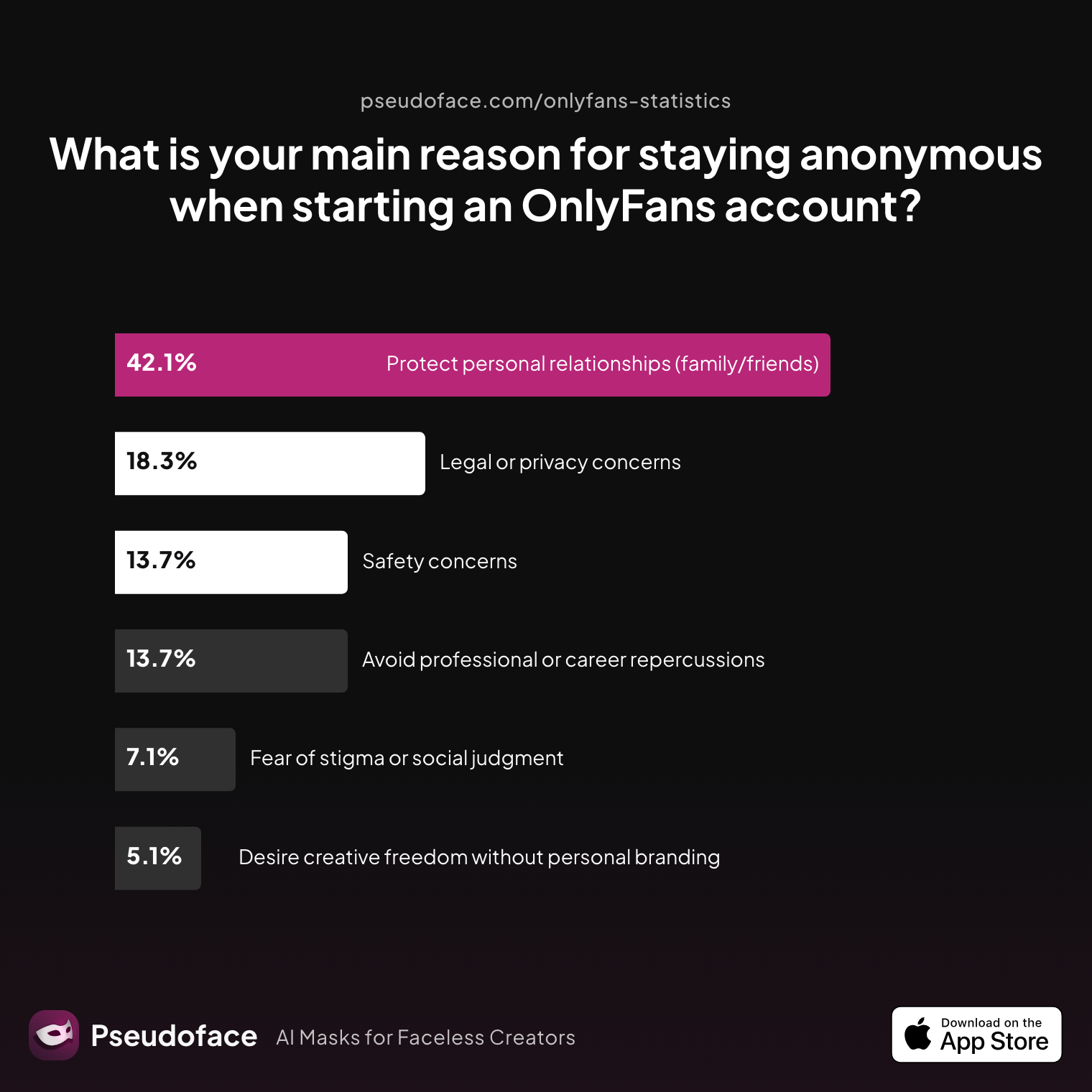
Let’s look at the primary motivations that drive the choice to go no-face:
| Answer | Percentage |
|---|---|
| Avoid professional or career repercussions | 13.71% |
| Desire creative freedom without personal branding | 5.08% |
| Fear of stigma or social judgment | 7.11% |
| Legal or privacy concerns | 18.27% |
| Protect personal relationships (family/friends) | 42.13% |
| Safety concerns | 13.71% |
The single biggest force? Protecting personal relationships, named by over 42% of creators. Legal/privacy fears and safety each drive around 1 in 7, while career implications remain top of mind for 13%. The story is clear: faceless branding is not a fallback; it’s a rational, often protective, business choice. That’s especially true in regions like the US, where even a whisper of adult work can risk jobs or social standing.
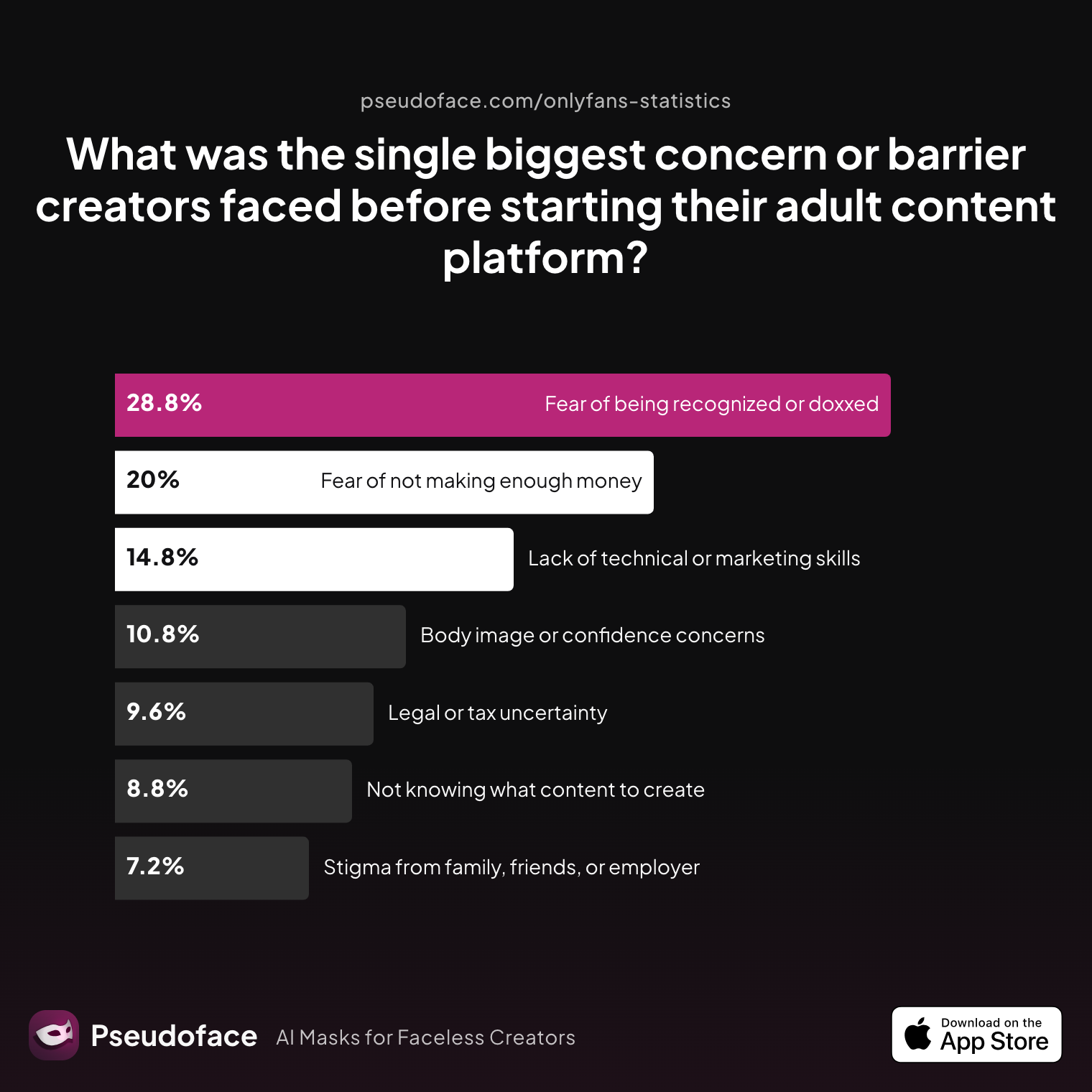
But deciding to go anonymous is only the first hurdle. Before even launching, most creators grapple with two main blockers: fear of being recognized or doxxed, and anxiety about making enough money.
| Answer | Percentage |
|---|---|
| Body image or confidence concerns | 10.80% |
| Fear of being recognized or doxxed | 28.80% |
| Fear of not making enough money | 20.00% |
| Lack of technical or marketing skills | 14.80% |
| Legal or tax uncertainty | 9.60% |
| Not knowing what content to create | 8.80% |
| Stigma from family, friends, or employer | 7.20% |
Nearly 29% cite fear of being recognized or doxxed as their top pre-launch concern—double the proportion worried primarily about body image. That makes anonymity not just a preference, but often a barrier to entry or even a dealbreaker. Working through an OnlyFans anonymity checklist before you launch is the most direct way to defuse that fear.
This daily tension is palpable in creator forums. For many, faceless content is the only way they’d enter the industry at all:
Open thread on Redditr/onlyfansadvice
u/anyamicengo
hi, as I started recently and I don’t know how think will work out, I chose not to show my face. So my content is everything but my head 😂 I usually take naked pictures or videos, or just in lingerie (you could do teasing and stripping) or feet ;) just do what you feel doing, it’s your page and you decide what to put out 🌸
Anonymity, then, is not just about whether you can make faceless work—it's about enabling people to create at all. But how much does this choice cost you down the line in terms of trust, earnings, or growth? The next section grounds this tradeoff with hard data.
Does Going Faceless Really Hurt—or Help? Trust, Compliance, and Subscriber Perceptions
Nearly every aspiring anonymous creator asks: does not showing your face make it harder to earn, or does it actually help by making you mysterious? The answer, based on 2025–2026 Reddit pool data, is: the impact is real but not one-dimensional.
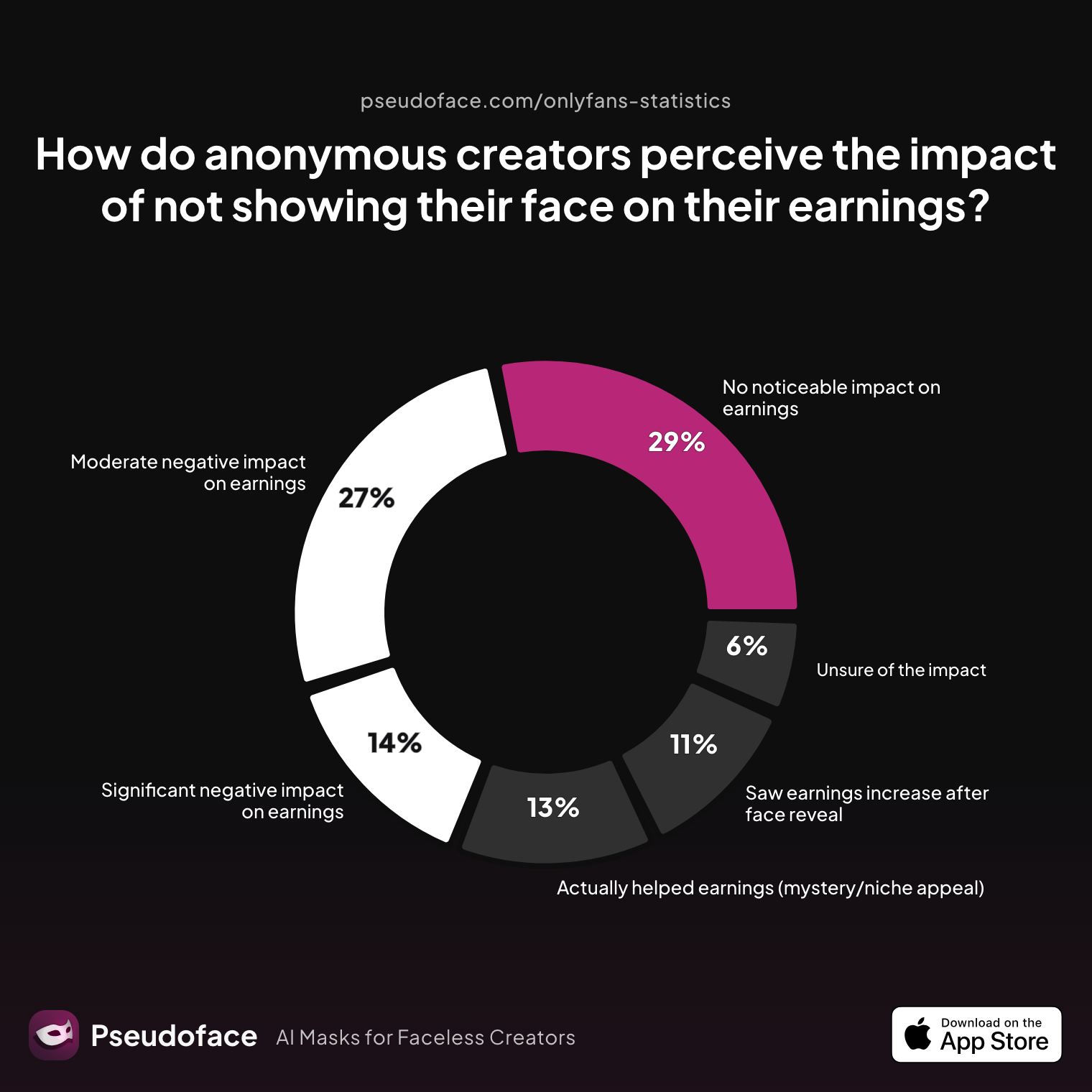
Let’s break down what creators report about earnings effects when they go faceless:
| Answer | Percentage |
|---|---|
| Actually helped earnings (mystery/niche appeal) | 13.00% |
| Moderate negative impact on earnings | 27.00% |
| No noticeable impact on earnings | 29.00% |
| Significant negative impact on earnings | 14.00% |
| Started anonymous, switched to showing face and saw earnings increase | 11.00% |
| Unsure of the impact | 6.00% |
Roughly 29% of anonymous creators detect no impact on earnings, while 13% actually report higher earnings from mystery/niche appeal. But the most common experience (27%) is a moderate drop, fitting with what many sex worker forums echo: subscribers often see a visible face as a mark of authenticity and trust, but compelling faceless branding can absolutely overcome that gap.
Open thread on Redditr/onlyfansadvice
u/sansa-starkers-
For the most part showing face does make creators more appealing to subs. Plenty of no face creators are successful on onlyfans with good marketing though. If you’re considering it, it’s something to think long and hard about because you can take it back once it’s out there.
What isn’t captured by these numbers are the survival biases: those most active in anonymous-creator Reddit threads often are the ones who’ve cracked the code, not those who gave up early for lack of traction or after an accidental reveal.
Subscriber trust also maps closely to consistency and the “polish” of your visuals. Many buyers are savvy—spotting a generic avatar or disjointed banner as “possibly a scam” signal. In the eyes of most buyers, a well-lit, branded, clear image (even if faceless) feels safer than pixel-blurred anonymity or obvious stock art.
And what about the lurking nightmare: being discovered? Here’s what creators report about actual identity breaches:
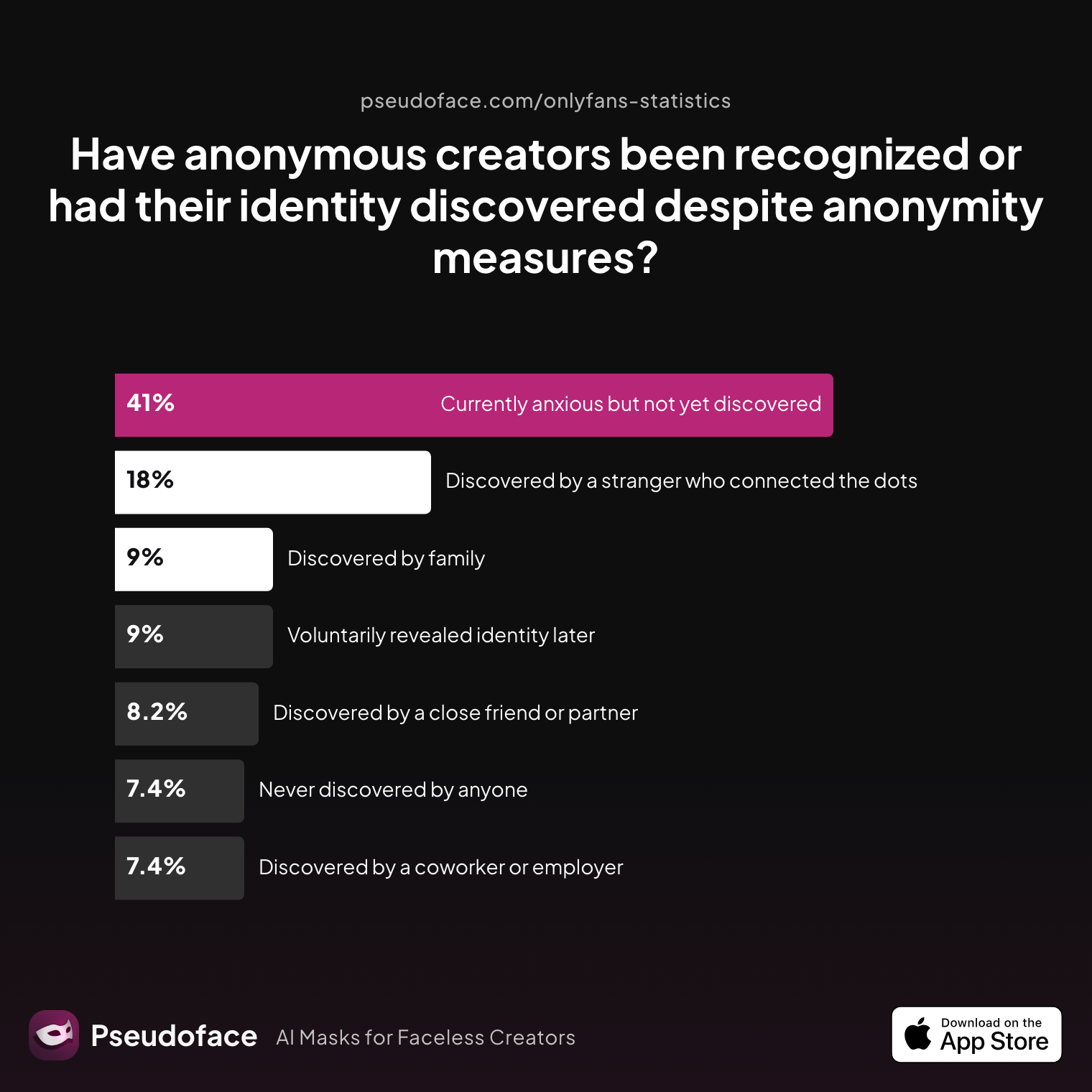
| Answer | Percentage |
|---|---|
| Currently anxious but not yet discovered | 40.98% |
| Discovered by a close friend or partner | 8.20% |
| Discovered by a coworker or employer | 7.38% |
| Discovered by a stranger who connected the dots | 18.03% |
| Discovered by family | 9.02% |
| Never discovered by anyone | 7.38% |
| Voluntarily revealed identity later | 9.02% |
Discovery is a risk, but only about 1 in 5 anonymous creators report being outed by a stranger connecting the dots; most stay hidden, though anxiety is high. On public forums, stories lean toward anxiety and rare slip-ups. Most accidental discoveries aren’t from facial recognition, but small accidental clues: backgrounds, tattoos, regional cues, or cross-posted content with weak separation from personal branding.
As one creator bluntly put it:
Open thread on Redditr/onlyfansadvice
u/lilykawaiiii
it's not a matter of if, it is when people will find out. the risk is large and it's always going to be there. that's just how this sort of thing goes. if you cant bare the consequences and the possibility, then it wont be worth your time
That said, these are self-selected stories—many never get discovered, and some risk is simply unavoidable in the digital age.
Bottom line: Going faceless on OnlyFans creates friction but does not guarantee lower earnings or constant exposure paranoia—the data on faceless OnlyFans earnings spans the full income range. Visual consistency and polish close most trust gaps for buyers. Nowhere is this truer than in your profile picture—the front door of your brand.
Designing the Perfect OnlyFans Profile Picture—Without Showing Your Face
So what actually works as a profile picture if you’ll never show your face? Over the past year, creator advice has crystalized into a few evidence-backed pillars: lighting, clear niche hints, and strategic cropping/composition.
Let’s spotlight the single most consistent professional signal—lighting:
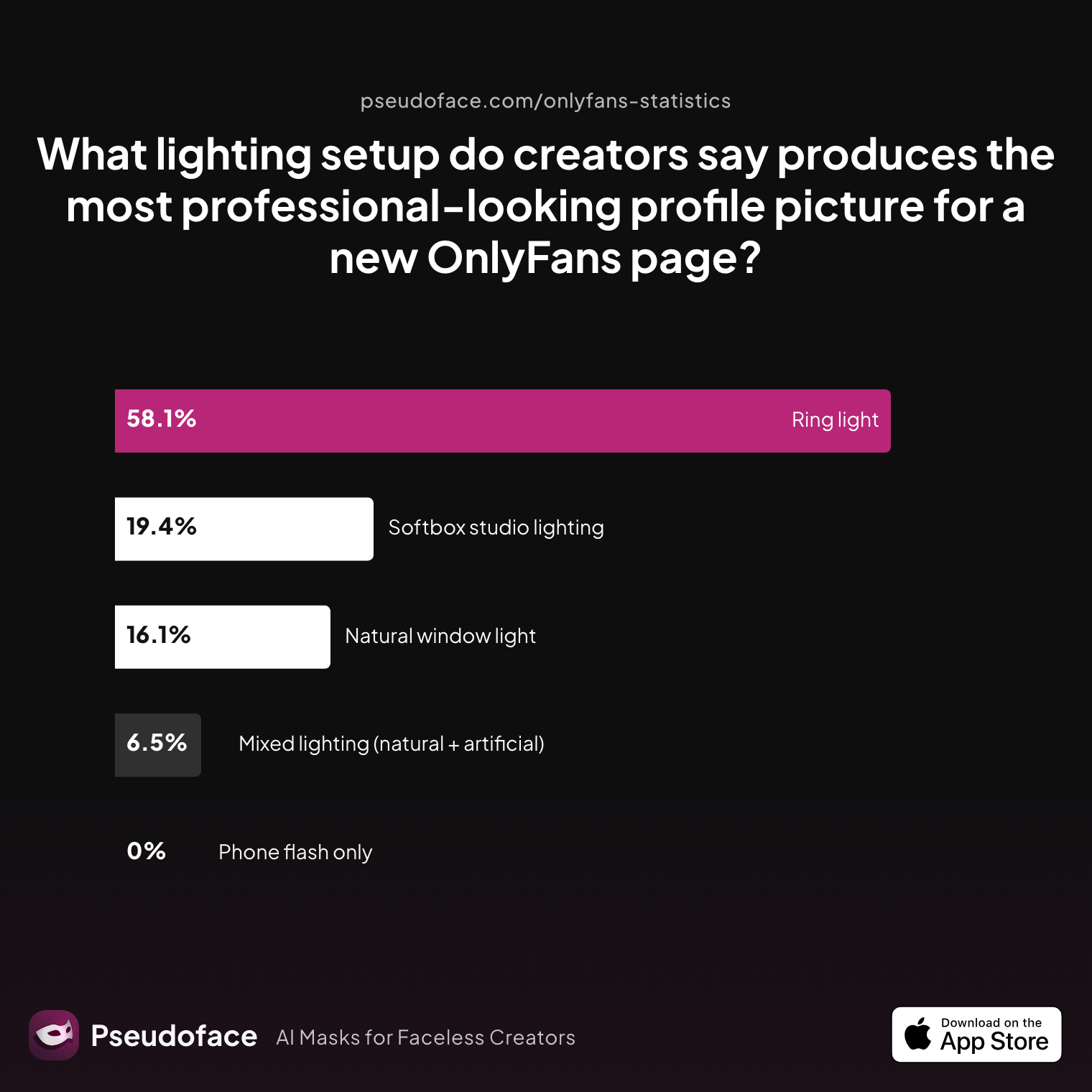
| Answer | Percentage |
|---|---|
| Mixed lighting (natural + artificial) | 6.45% |
| Natural window light | 16.13% |
| Phone flash only | 0.00% |
| Ring light | 58.06% |
| Softbox studio lighting | 19.35% |
Over 58% of successful faceless creators use a ring light for their profile image—with another 19% using full softbox/studio setups. The old advice about “natural light is best” lags behind: natural is nice, but ring lighting guarantees pop, even skin tone, and a professional look regardless of your pose, prop, or cropping choice.
For nudity, most creators err on the side of modesty; even in adult work, suggestiveness trumps explicitness for profile images:
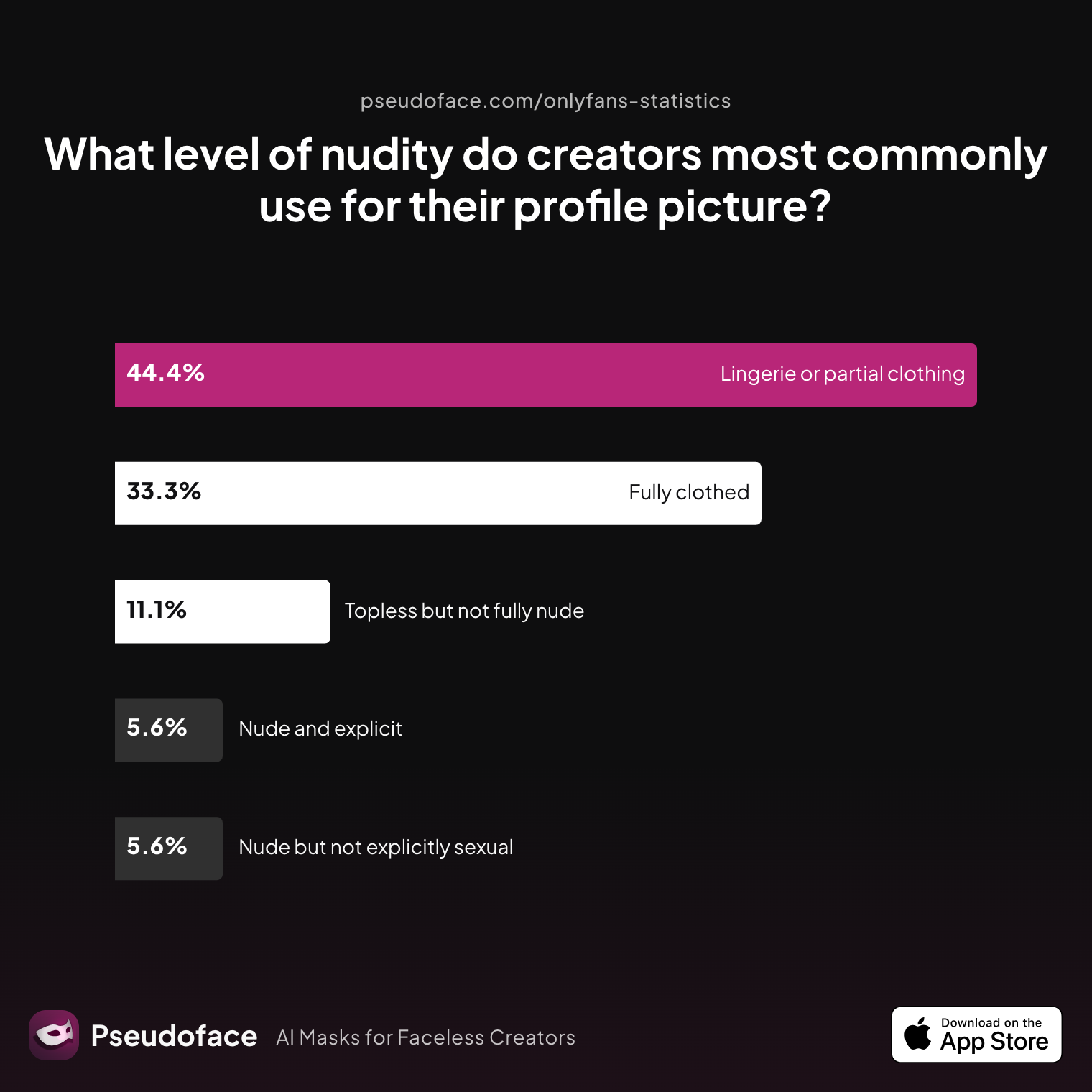
| Answer | Percentage |
|---|---|
| Fully clothed | 33.33% |
| Lingerie or partial clothing | 44.44% |
| Nude and explicit | 5.56% |
| Nude but not explicitly sexual | 5.56% |
| Topless but not fully nude | 11.11% |
78% of creators use either clothing or lingerie/partial clothing in their profile pictures, avoiding both total nudity and even “implied nude” shots. This is both about compliance—OnlyFans and promo platforms crack down hardest on profile nudity—and trust. A little tease, in high-quality lighting, signals more than raw explicitness.
Reddit threads are full of practical faceless hacks:
Open thread on Redditr/onlyfansadvice
u/ladyabigaelle
I am a faceless creator and I don’t show much face on my profile! Just make sure it’s just no nudity! Bikini or non sheer lingerie should work just fine!
Open thread on Redditr/onlyfansadvice
u/Jadebabygal
Check out mine! Mirror selfie with my phone covering my face. You can add black bars or mosaic to cover your face
Open thread on Redditr/onlyfansadvice
u/Competitive-Debt-540
I took my photo, used the markup feature on my phone- color matched my face skin tone in the picture, and colored all over my face to make it blank. I didn’t have issues!
For differentiation, consider:
- Props: masks, hats, sunglasses, gloved hands, body chains.
- Creative cropping: lips-down, hips-up, over-the-shoulder, blurred face, back-turned.
- Branded details: tattoos cropped, colored wigs, holding a signature object—so long as it does not tie to your real identity.
One note: overuse of filters or artsy black & white can backfire on some buyers (“doesn’t look real,” “too much to hide”). As one creator warns:
Open thread on Redditr/onlyfansadvice
u/mysecretadvice
Guys generally don’t tend to like artsy, b/w, and filters.
In summary: Your profile image should be clean, lit like a pro, and give clear, safe cues about your niche—even with zero face shown. Next, your banner can reinforce that message (or sink it, if it looks low-effort).
Elevating Your OnlyFans Banner and Header Image: Subtle Branding That Converts
While profile images are all about trust and first impressions, your banner or header acts as your big, visual pitch. For faceless creators, it’s a chance to show personality and niche—without revealing identity or breaking house rules.
The single most important rule: No nudity, even implied, and no identifying backgrounds or text. Anecdotally, banners with heavy filters, watermarks, or obvious stock art have lower conversion and are more likely to be flagged by OnlyFans or promo channels.
Moderators and platform reviewers are stricter with banners than most new creators expect. One common tale:
Open thread on Redditr/onlyfansadvice
u/awholemessadessa
OF’s rules on header and profile photos pretty much mimic twitter’s in that you can’t have lingerie on, be nude, or even imply nudity (conveniently covered nipples). They just suck ass at enforcing it lol In my experience, when they deactivated my header (implied nudity) they also were looking to see what other content violated their terms.
Design best practices that surface in 2026 creator advice threads:
- Go for a simple, clean banner—avoid clutter or “edgy” NSFW teases that skirt the rules.
- Use color palettes or patterns from your promo channels (Twitter, Reddit, Discord) for cohesion.
- Integrate subtle branding: an object, an illustrated motif, or a signature text style instead of your face.
- Include niche signals (e.g., cosplay, lingerie, gym, feet) without overt indicators like localized backgrounds, license plates, or real-life associates.
Some creators use professional banner commissions—others use Canva/Figma templates adapted from their niche promo graphics. Either way, make sure your banner and profile image visually “match,” which is crucial for building trust both on OnlyFans and across your funnel.
A recurring Reddit lesson: if your banner looks like something you wouldn’t open at work, revise it.
Open thread on Redditr/CreatorsAdvice
u/sunkissedprincess33
If you wouldn't open it at work I would consider it nsfw. But I think their cute though, the text gets a little lost though might be worth making them bolder or bigger so it is easier to read :)
When in doubt, less is more—and branded is better than generic. Think of your banner as a vibe board: a promise of style and exclusivity, not a “preview window” into your explicit work.
Anonymous OnlyFans Avatar vs. Branded Partial-Face Photos: The Identity Spectrum
Should you go all-in on illustrated avatars (hand-drawn, AI, or cartoon-style), or use partial-face, cropped, or masked real photos? Most creators try variants of both. Data from recent Reddit pools show a split, with most anonymous creators favoring real photos that creatively hide their identity.
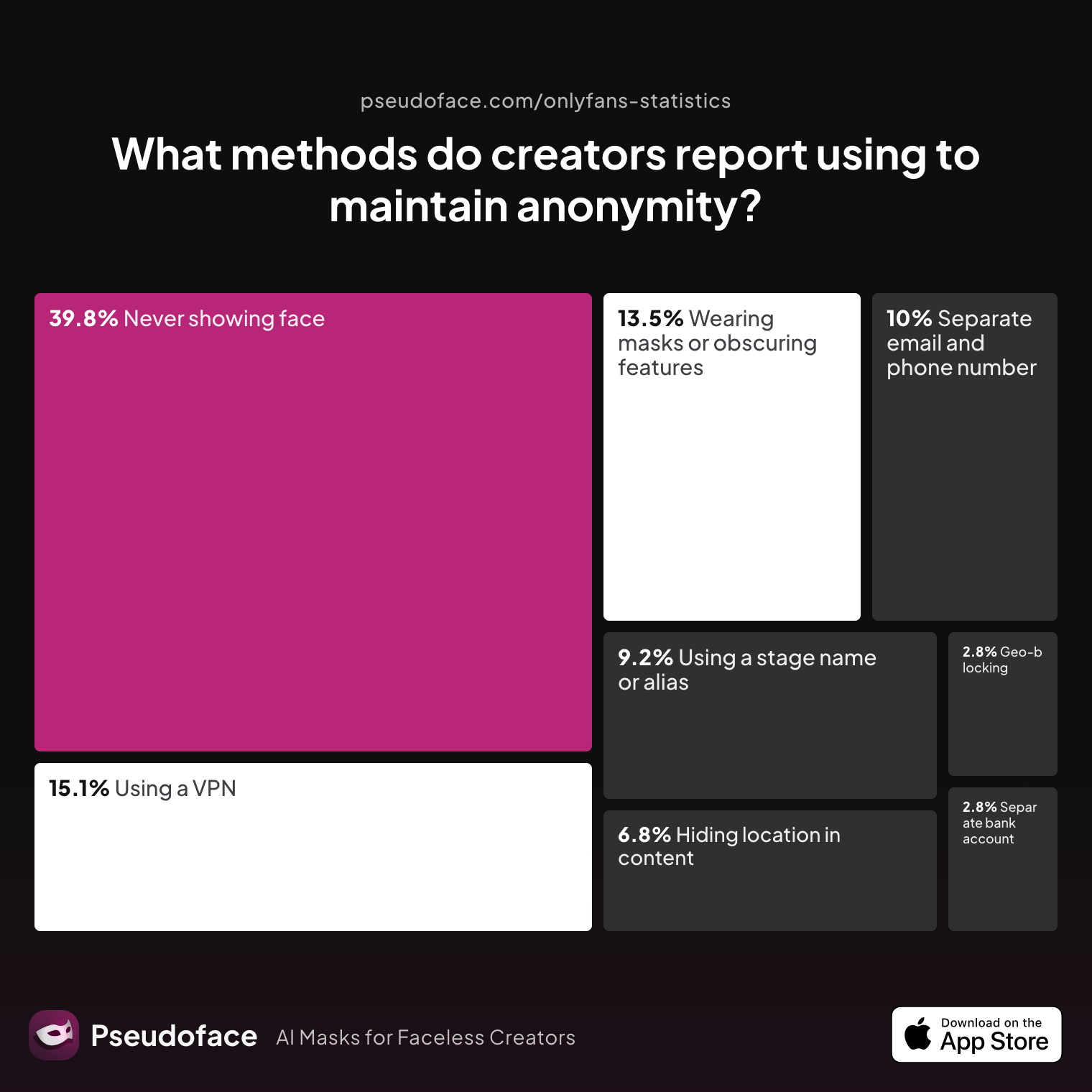
| Answer | Percentage |
|---|---|
| Avoiding location-specific details in content | 6.77% |
| Geo-blocking specific regions | 2.79% |
| Never showing face | 39.84% |
| Using a separate bank account or business entity | 2.79% |
| Using a separate email and phone number | 9.96% |
| Using a stage name or alias | 9.16% |
| Using a VPN or privacy tools | 15.14% |
| Wearing masks or obscuring identifying features | 13.55% |
About 40% “never show face,” with another 14% masking or obscuring facial features, and 10% using partial-face shots. The truly faceless avatar is less common than you’d expect—the dominant strategy is suggestive realism: real photos, with mouth/chin/cheeks or masks, props, or cropping that keeps you anonymous but still specific and “human.” If the mask route appeals to you, wearing a mask on OnlyFans is fully allowed and can even become your brand.
Strategies change over time, reflecting both comfort and success rates:
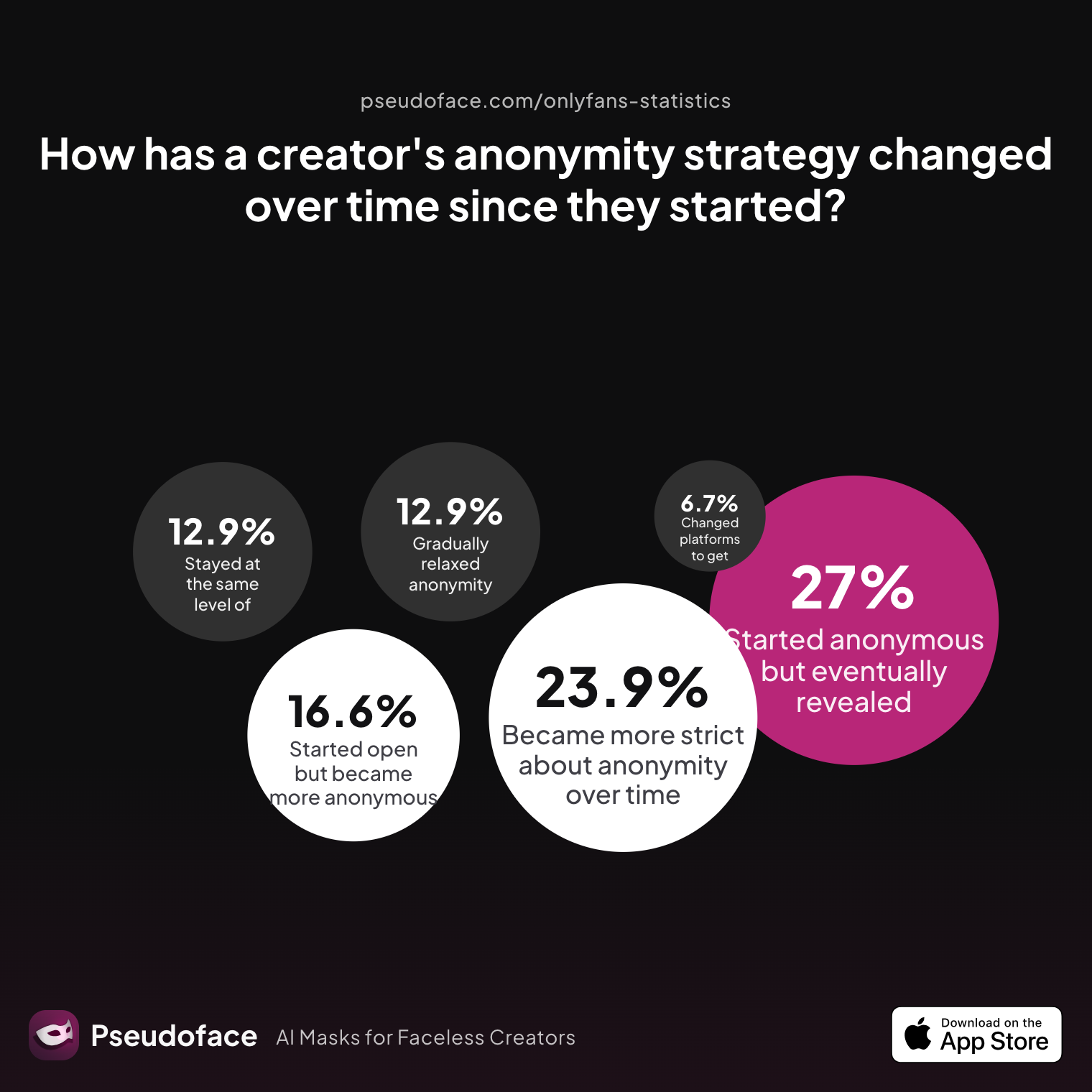
| Answer | Percentage |
|---|---|
| Became more strict about anonymity over time | 23.93% |
| Changed platforms to get better anonymity features | 6.75% |
| Gradually relaxed anonymity measures as comfort grew | 12.88% |
| Started anonymous but eventually revealed face/identity | 26.99% |
| Started open but became more anonymous after a scare | 16.56% |
| Stayed at the same level of anonymity throughout | 12.88% |
About 1 in 4 creators end up revealing more over time, often after hitting an earnings threshold; another quarter get more strict after a “scare” or potential doxxing threat. In practice, anonymous branding is rarely static. It’s a spectrum—most start faceless, then tweak their approach in response to audience feedback, growth, or personal comfort.
The most consistent narrative: real, faceless photos beat anonymous illustrated avatars for trust and conversion—unless the avatar is custom, branded, and niche-perfect. Stock images, AI faces, or default avatars underperform nearly everywhere.
Open thread on Redditr/onlyfansadvice
u/msroserack
My profile pic here is the same, and it was approved straight away My chin and side of my face and a bit of cleavage I'm a faceless creator too
In short: choose the level of anonymity that feels safest for you, but let branding (not just “hiding”) drive your visuals. When your visuals are tuned to your niche and feel “real,” trust and conversion stay strong—even with zero face on display.
OnlyFans Without Showing Face: Compliance, Approval, and What Actually Gets You Flagged
Compliance is non-negotiable. Even if your branding is strong, breaking OnlyFans’ photo rules or misjudging how far you can push “implied nudity” puts your entire page at risk. Over the past two years, enforcement has swung between permissive and draconian—but in 2026, the trend is toward strictness, especially for profile and header images.
Most creator bans, deletions, or flaggings come not from explicit nudity, but accidental compliance misses—like including lingerie, sheer fabrics, or “implied” nudes (hand-placed covers, shadow play, even certain emojis over nipples or genitalia). Moderation is a mix of AI and manual review; rejections can seem random, but the safest path is always “PG-13 or cleaner” in public-facing images.
Creators often share personal run-ins with the rules:
Open thread on Redditr/CreatorsAdvice
u/kattarinathekitten
As the other commenter said, they’re insanely picky- I’d recommend fully clothed photos for both your profile pic and header until you’re approved, they’re less strict after that. Other than that I have no advice- gah they suck. Good luck, once you’re done with verification at least you’ll never have to do it again!!!
What actually gets flagged?
- Implied or overt nudity (for profile or banner).
- Lingerie in profile images (less likely to get flagged post-approval, but risky).
- Text or graphics that contain explicit words or emoji.
- Photos with visible alcohol, drugs, or third parties (consent issues).
- Background details that can ID you (mail, address, school, tattoos).
A useful trick: submit a safer, fully clothed profile picture just for verification. After approval, you can adjust branding slightly, but never cross the PG-13 line in these images.
Open thread on Redditr/onlyfansadvice
u/jaxiecastillo
You can put your face during the approval process then remove it before promoting your page.
Platform quirks mean that while enforcement is strictest during verification, they do still retroactively review changes (especially if you’re reported or have a co-creator join later).
For headers and banners, treat Twitter’s standards as a floor. If you wouldn’t use it on Twitter and pin to the top of your page, don’t use it on OnlyFans. Don’t trust the “I see others doing it so it must be safe” logic; enforcement is inconsistent, and your risk tolerance is yours alone.
Open thread on Redditr/CreatorsAdvice
u/littletiptoess
NSFW content is not allowed in Twitter banners and profile pictures. If you include such content, your account will be automatically banned, and appealing the ban can be a headache.
Bottom line: err on the side of safety in all profile visuals. Save explicit or suggestive content for paywalled posts, and never let a small compliance mistake jeopardize your entire account.
From Profile to Promo: Creating a Cohesive Faceless Brand Everywhere You Show Up
Going truly faceless is rarely confined to OnlyFans alone. Most creators rely heavily on Twitter, Reddit, and sometimes Discord for driving traffic to their OF page. Consistency across these channels is not only a trust signal—it’s a practical necessity for maximizing conversions and minimizing skepticism.
Creators universally report that matching visuals—banners, avatars, and even username or color schemes—across platforms leads to higher subscriber rates, fewer “is this a scam?” brush-offs, and less manual effort tracking links or verifying page authenticity.
How do you pull this off as a faceless brand?
- Use the same or similar faceless image for your avatars on Twitter, Reddit, and OF. It’s fine to crop or adapt, as long as it feels like a visual “handshake.”
- Deploy the same color palette, branded object, or vibe in your banner/header images for all channels. Canva and Figma templates make this much easier.
- Avoid NSFW in banners or promo avatars—most platforms will punish even borderline images with shadow bans or outright suspension.
- Watermark paywalled teasers, but keep banners and profiles clean. Teaser images or sample posts can use watermarks, but headers should not.
One practical tip surfaced repeatedly:
Open thread on Redditr/CreatorsAdvice
u/Thebelly001
I got shadow banned on Instagram so I stopped using their platform. It’s getting harder and harder these days to promote especially being a faceless creator.
Cross-platform shadow bans often result from either NSFW banners or mismatched branding, which triggers skepticism from both platforms and potential fans.
Most crucial: If fans see the same name, banner vibe, and avatar style across Reddit, Twitter, and OnlyFans, they are much more likely to convert—and much less likely to doubt your authenticity or report you as a scam.
FAQ: Faceless and Anonymous OnlyFans Branding
What’s the best OnlyFans profile picture idea for faceless creators?
The strongest faceless profile pictures use high-quality lighting, body-only or masked shots, and clear niche cues, avoiding nudity but showing personality.
Examples include mirror selfies with the phone covering the face, chin-down or back-turned shots in on-brand clothing, and creative props like masks, wigs, or signature items that tie to your content’s theme.
Does an anonymous OnlyFans account get fewer subscribers or make less money?
Yes, but the gap is moderate and can be closed with smart branding and marketing.
Most data suggests 27% of anonymous creators see some dip in earnings or conversion—but about 13% actually do better, and nearly 30% see no difference. Consistent, branded visuals narrow this gap.
Can I use AI-generated art as my OnlyFans avatar?
You can, but trust and conversion are typically lower unless the avatar is custom and clearly niche-relevant.
Stock AI avatars tend to be flagged as low-effort or generic by fans; real faceless or partial-face photos (creatively cropped or masked) perform best. Custom illustrations inspired by your content are a good middle ground.
What are the OnlyFans banner rules for no-face creators?
Banners must not include nudity, implied nudity, or identifying information; use clean design and niche cues instead.
Err on the side of cautious: if you wouldn’t use it on Twitter, don’t use it on OF. Stick to simple, branded graphics, color themes, or non-explicit poses in clothing/lingerie if allowed.
How do I avoid looking “scammy” or generic with a faceless OnlyFans banner?
Invest in visually consistent branding across all your channels—avoid default avatars, stock art, or clutter.
Use a palette, prop, or vibe unique to your brand, not “just another sex worker banner.” Consistency reassures potential subs they’re in the right place.
Will OnlyFans let me change my profile photo after approval?
Yes, you can update your profile and banner images post-approval as long as you remain compliant.
However, any new image is subject to review, and switching to bolder or riskier images can lead to rejections or flags—especially if you cross lines on nudity or identifiers.
What cropping or editing tricks help me stay anonymous in banners and avatars?
Use in-camera cropping (chin down, over-shoulder, back turned), phone mark-up apps to blur/color in faces, and props.
Photoshop or mobile editing tools like Snapseed let you blur, mask, or sticker over accidental identifiers. Always check backgrounds for clues before uploading.
How can I keep my OnlyFans profile and banners consistent with my Twitter or Reddit promo?
Maintain the same avatar or color scheme, tweak banner graphs for different sizes, and keep names/handles aligned.
Fans who see your OF page as “just an extension” of your Twitter or Reddit profile trust you faster and are more likely to subscribe.
What is the most common mistake new anonymous OnlyFans creators make?
Overusing generic avatars, including accidental personal identifiers, and failing to craft a visual brand.
The safest and most successful faceless creators think of their profile and banner as part of their marketing—instead of just “hiding” themselves.
Has anyone been “outed” as a faceless OnlyFans creator?
Yes, but it’s rare and usually due to content slip-ups, not facial recognition.
Most reported discoveries come from backgrounds, distinctive tattoos, or links between public/private social accounts—not profile pics or banners.
In summary: Designing a trustworthy, compliant, faceless OnlyFans presence is not a compromise—it’s a craft. Drawing on the lived experience of tens of thousands of creators, you can build an anonymous brand that looks professional, converts consistently, and keeps you safe. Carefully-lit, niche-aware visuals beat generic anonymity every time, and disciplined compliance is your insurance policy. Treat your anonymity not as a concealment, but as a curated, recognizable brand across everything you do.


