
TL;DR
Earnings from OnlyFans, Fansly, or similar content platforms are treated by the IRS as self-employment income—not employment wages or hobby cash. According to Pseudoface’s analysis of over 250,000 public Reddit threads from real adult content creators (2025-2026 dataset), more than 60% expressed confusion or anxiety about tax forms and income classification in their first year, with “self-employed independent contractor” emerging as the common requirement. Expect to receive a 1099-NEC form if you earn over $600/year, handle your own taxes (including self-employment tax), and track business expenses. Treating this income like what it is—a small business or freelance gig—can help you stay ahead of obligations and avoid trouble down the road.
What Does It Mean That OnlyFans Income Is “Self-Employment”?
What happens, from a tax and legal standpoint, when you make your first dollar on OnlyFans? The answer is deceptively simple but freighted with real-world consequences: the IRS treats that money as self-employment income, not a regular paycheck. Unlike a W2 job—where your boss takes out taxes before your money even hits your bank account—platforms like OnlyFans don’t withhold federal or state taxes. Instead, you are the “business,” and the IRS expects you to act like one.
For many creators, this distinction catches them off guard. Instead of a pay stub, you get a 1099 form from OnlyFans (if you cross the $600 annual payout threshold). Reporting, tracking, and paying taxes are now your direct responsibility. You have to understand what counts as income, what expenses might be deductible, and—most importantly—how and when to pay the taxes you owe.
This reclassification brings real legal stakes. If you don’t report your earnings (even if it’s “just a side hustle”), you could face fines, penalties, or worse. Even with small amounts, the IRS expects diligent recordkeeping and compliance. The difference isn’t just paperwork: self-employment status also means you're potentially eligible for certain deductions (think phone bills, props, outfits, software) that aren’t available to employees.
Crucially, self-employment doesn’t mean “incorporated” or “LLC” by default. Most beginners are “sole proprietors” by IRS standards, and this doesn’t require any upfront registration or business bank account. But the moment money lands in your possession for content, it’s considered taxable, self-employed income.
This definition sets the stage for everything else—how you fill out forms, how you pay taxes, and even how you explain your work to banks or landlords. You’re not technically an “employee” of OnlyFans; you’re providing services as an independent contractor, and all the tax headaches (and opportunities) that come with that role are now on your plate.
With the ground rules set, we take a closer look at whether OnlyFans is truly self-employment or if it can be classified differently.
Is OnlyFans Considered Self Employment? Current IRS Rules and Common Myths
OnlyFans, Fansly, and comparable content platforms do not classify creators as employees. Instead, every payout you receive—no matter how small—is treated as self-employment income by the IRS. The rules haven’t changed for 2026: if you earn $600 or more in a calendar year, OnlyFans will report that payout to you (and the IRS) via a 1099-NEC form.
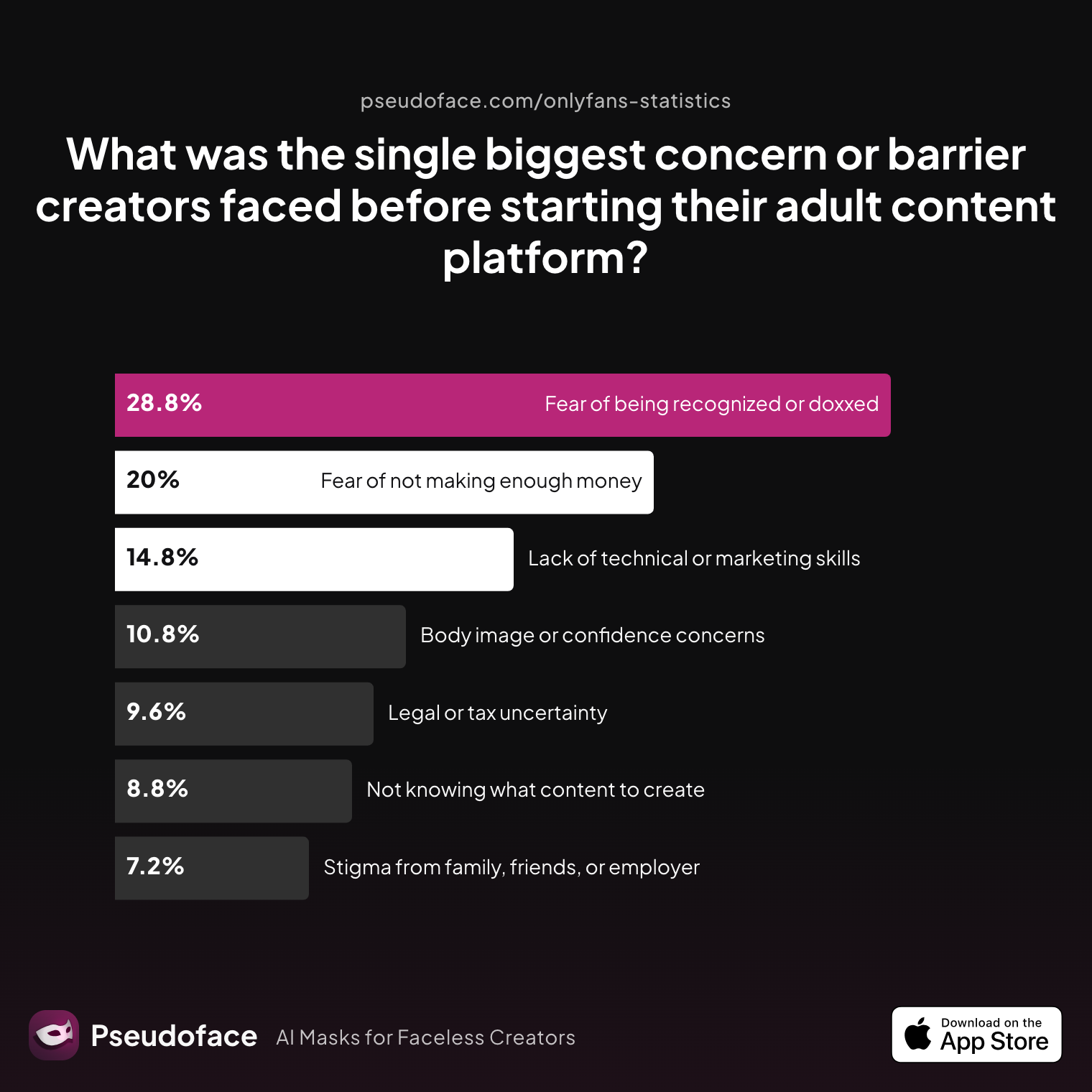
Yet, based on Pseudoface’s data, the misunderstanding persists: more than 1 in 10 creators identified legal or tax uncertainty as their biggest barrier before launching their account.
| Answer | Percentage |
|---|---|
| Body image or confidence concerns | 10.80% |
| Fear of being recognized or doxxed | 28.80% |
| Fear of not making enough money | 20.00% |
| Lack of technical or marketing skills | 14.80% |
| Legal or tax uncertainty | 9.60% |
| Not knowing what content to create | 8.80% |
| Stigma from family, friends, or employer | 7.20% |
While tax issues aren’t the top concern, nearly 10% of creators cite legal or tax uncertainty as their primary fear before starting. That’s a significant population wrestling with how to classify, report, and navigate this new kind of income—especially given the narrower public conversation on creator taxes compared to workplace jobs.
The Most Persistent Myths
Several myths surface again and again in creator forums, and Pseudoface’s Reddit data reveals just how sticky they can be:
-
“I can just claim it’s a hobby, not a business.”
The IRS makes clear: if you intend to earn money (even $1), it’s business/self-employment income. Hobby income is rare and usually not an option for subscription platforms where you’re actively promoting, tracking earnings, and expecting payment. -
“OnlyFans is my employer—they’ll handle everything.”
False. OnlyFans (and its competitors) act as payment processors; they facilitate your earnings but do not withhold or pay your taxes, offer benefits, or file W2s. -
“I don’t have to report small amounts.”
Also false. Technically, you’re supposed to report all income, even if you don’t hit the 1099 threshold to get a form in the mail. This is an area where IRS enforcement has become more visible in recent years.
Surprises After Launching
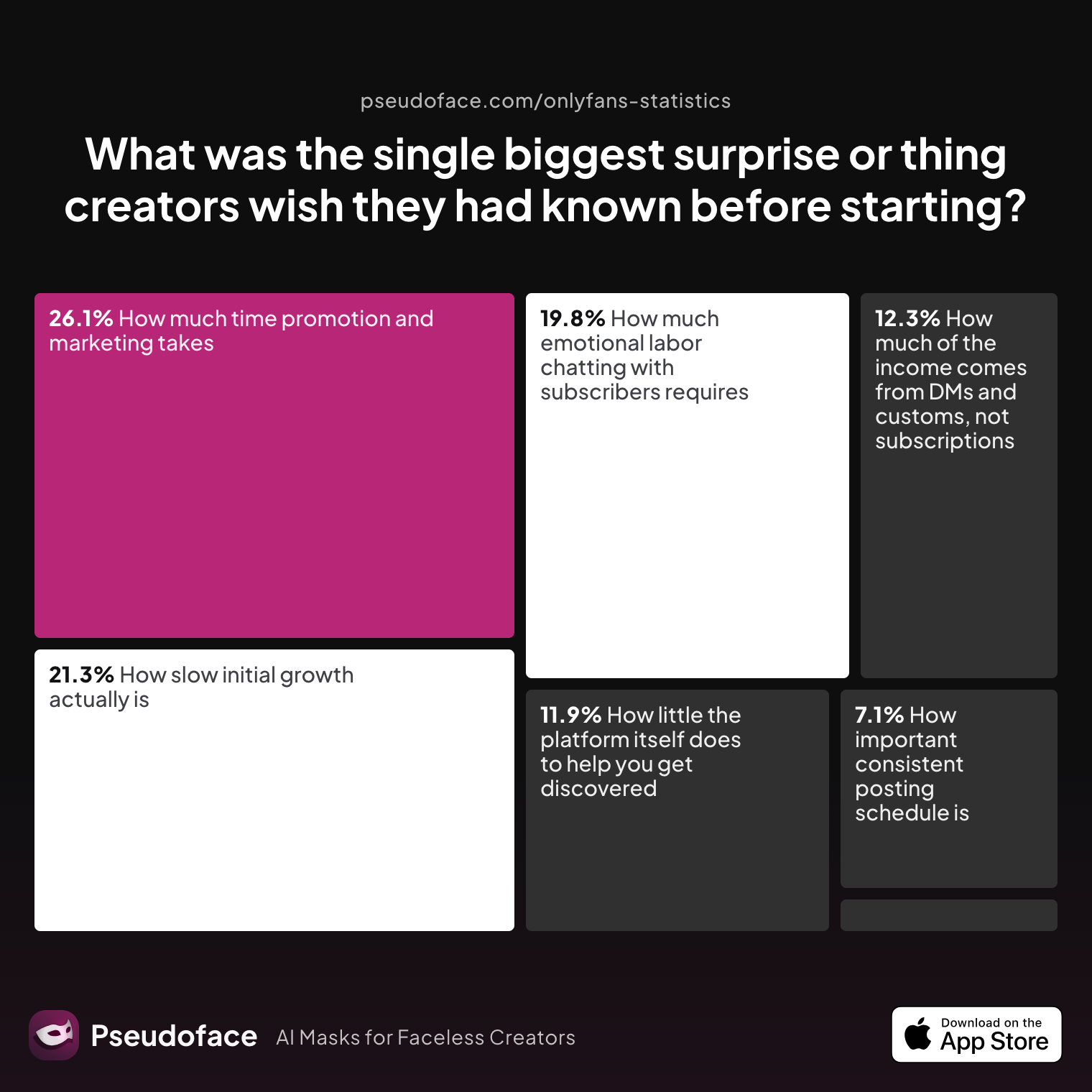
The tax reality often hits later—sometimes after the first year, when it’s time to file. Looking at experienced creators, the most common surprises after getting started weren’t legal, but the learning curve is still evident:
| Answer | Percentage |
|---|---|
| How important consistent posting schedule is | 7.11% |
| How isolating it can feel without a creator community | 1.58% |
| How little the platform itself does to help you get discovered | 11.86% |
| How much emotional labor chatting with subscribers requires | 19.76% |
| How much of the income comes from DMs and customs, not subscriptions | 12.25% |
| How much time promotion and marketing takes | 26.09% |
| How slow initial growth actually is | 21.34% |
While promotion and slow growth top the list, nearly 12% of respondents found the lack of platform discovery tools unexpectedly challenging—which indirectly feeds back into misunderstanding about OnlyFans’ role. The platform isn’t there to help you build business systems; you are the business.
Open thread on Redditr/onlyfansadvice
u/nova-flowerz
You won’t get anything, you have to do your taxes as a self employed person.

These social data reflect real confusion in the creator community, but the IRS hasn’t wavered: if you’re making money from content platforms, you’re operating as a self-employed individual (or, in technical terms, an independent contractor).
Now that we’ve dispelled the most common myths, it’s time to clarify exactly what type of self-employment category fits OnlyFans creators.
What Type of Self-Employment Is OnlyFans (or Fansly)?
When you fill out your taxes, apply for a loan, or even answer a nosy family member, you’ll need a label for your work. For adult creators, this raises messy questions: What “job title” do you use? Does your work need to be registered as a formal business? What does the IRS see you as?
According to the IRS, most new creators are automatically considered sole proprietors. This simply means that you, personally, are running an unincorporated small business. There's no extra paperwork to fill out, no mandatory registration, and you use your Social Security Number (SSN) for tax purposes—unless you choose to get an EIN (Employer Identification Number), which isn't required to start. Your income is reported as self-employment, much like a freelancer or gig worker on platforms such as Uber, DoorDash, or Fiverr.
What “Job Title” Should You Use?
There’s no single right answer. IRS forms provide open-ended categories, but real creators recommend several common, relatively neutral options when asked for your occupation on tax returns:
Open thread on Redditr/onlyfansadvice
u/GothOne13
Content creation, model, digital creator, performer. Nowadays people will leave you alone if you say content creator and if they ask more just say you’re an influencer ☺️
Open thread on Redditr/onlyfansadvice
u/HanviDraws
I'd just do content creation tbh
Open thread on Redditr/onlyfansadvice
u/SassieNOpants
I always just say modeling.
Your wording impacts privacy and perceived stigma, but not your tax category. The IRS doesn’t have a checkbox for “OnlyFans”—you’ll generally use something like “independent contractor,” “digital creator,” or “modeling.” If a tax preparer seems stumped, it’s often best to simply say “online freelancer” or “self-employed content creator.”
Is OnlyFans Full-Time Work, Gig Work, or a Side Hustle?
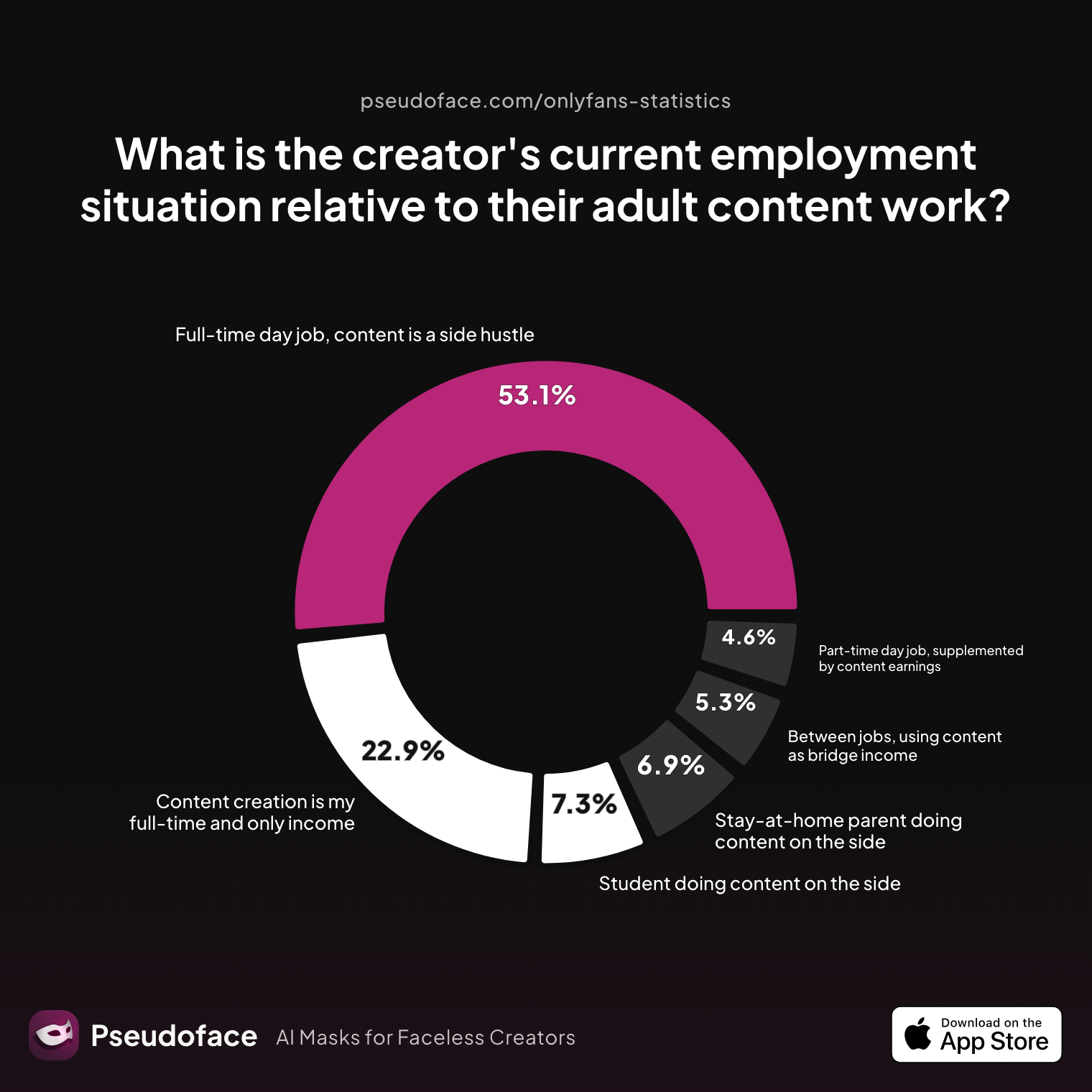
Pseudoface’s survey of income reliance among creators gives insight into how this work actually fits into people’s lives—and, by extension, how the IRS sees it:
| Answer | Percentage |
|---|---|
| Between jobs, using content as bridge income | 5.34% |
| Content creation is my full-time and only income | 22.90% |
| Full-time day job, content is a side hustle | 53.05% |
| Part-time day job, supplemented by content earnings | 4.58% |
| Stay-at-home parent doing content on the side | 6.87% |
| Student doing content on the side | 7.25% |
More than half of creators are combining OnlyFans with a traditional job—they do content as a side hustle or supplemental gig. But here’s the catch: the IRS treats “side hustle” and “self-employment” the same way. Even if you only create part-time, if you’re paid, you’re self-employed for those earnings.
Open thread on Redditr/onlyfansadvice
u/Flashy_Currency_2559
Sex Worker, basically what OF/Fansly/Webcammers/etc are considered as a group. Accountants who are used to that line of work will know more specifics for deductions and tax breaks vs your standard tax return places like HR Block
Key Point: No matter your workload, as far as taxes are concerned, “side hustle” is still self-employment—subject to the same rules, reporting, and forms.
Understanding your classification is just one part—next, we’ll compare how self-employment stacks up against a classic W2 job.
OnlyFans Self Employment Income vs Typical W2 Job: A Side-by-Side Reality Check
One of the biggest shocks for new creators is how payment, withholdings, and paperwork differ from standard employment. Let’s set the record straight with a practical comparison:
| Aspect | W2 Job | OnlyFans (Self-Employment) |
|---|---|---|
| Employer | Your workplace | You (independent contractor) |
| Tax withholdings (federal/state/SS/Med) | Taken out of each paycheck | Not withheld; you pay directly |
| Form at tax time | W2 | 1099-NEC |
| Unemployment, disability, workers comp | Employer-provided | Not provided |
| Business expenses deductible? | Rarely | Yes (if ordinary & necessary) |
| Frequency of payment | Regular intervals | Payout on demand/by thresholds |
| Need to file quarterly taxes? | No | Sometimes (if enough is owed) |
Even when creators understand the basics, the real surprises are about money, time, and the “hidden” costs of self-employment.
Upfront Costs and Investment
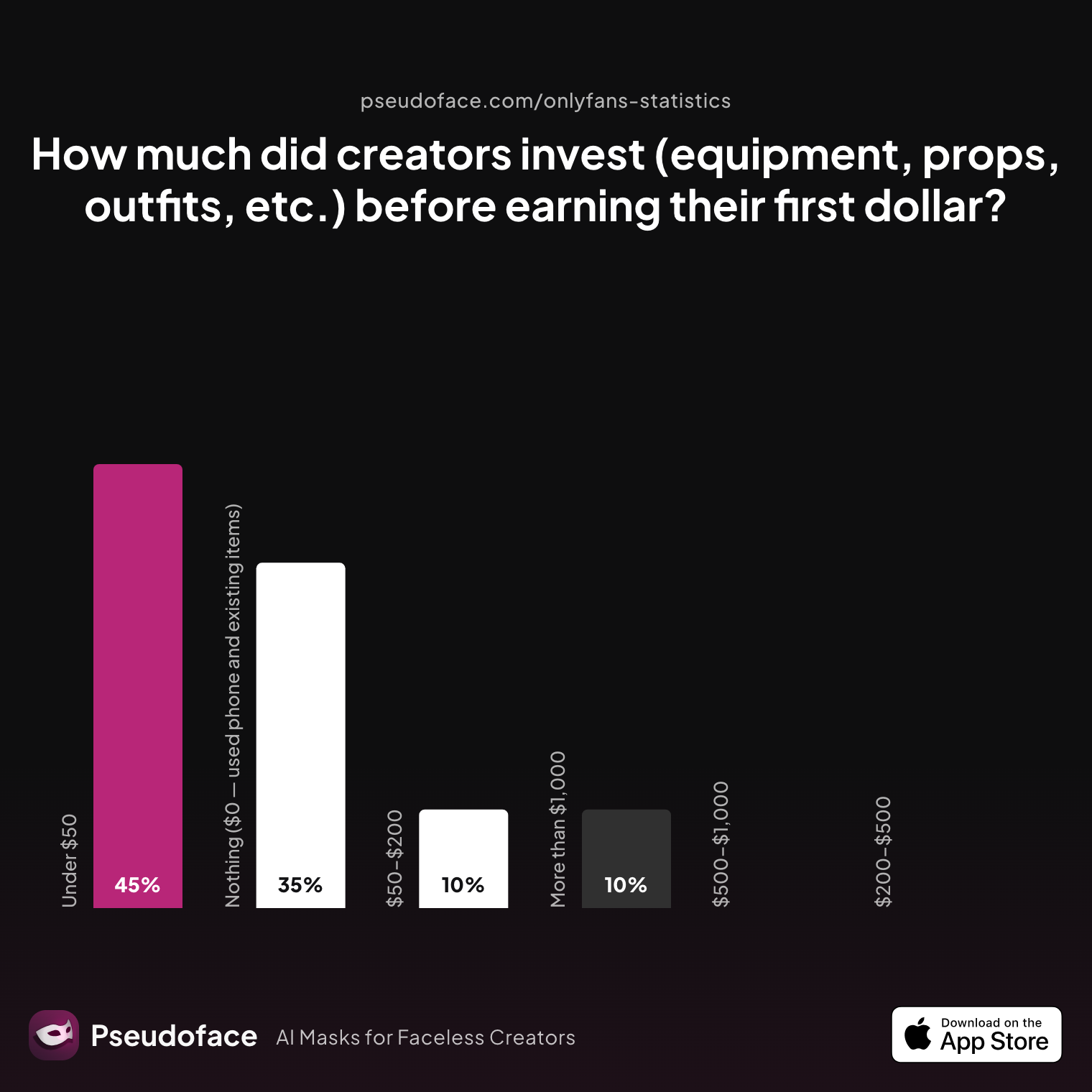
Many creators believe that making money on OnlyFans requires a hefty startup investment—fancy cameras, lighting, endless props. But the reality, according to recent data, is much more modest:
| Answer | Percentage |
|---|---|
| $200-$500 | 0.00% |
| $50-$200 | 10.00% |
| $500-$1,000 | 0.00% |
| More than $1,000 | 10.00% |
| Nothing ($0 — used phone and existing items) | 35.00% |
| Under $50 | 45.00% |
Four out of five creators spent less than $200 to get started, with 35% spending nothing at all. Startup costs are not a prohibitive barrier for most. But where OnlyFans work differs sharply from a W2 job is in the time and labor required for non-creative tasks.
Where the Time Actually Goes
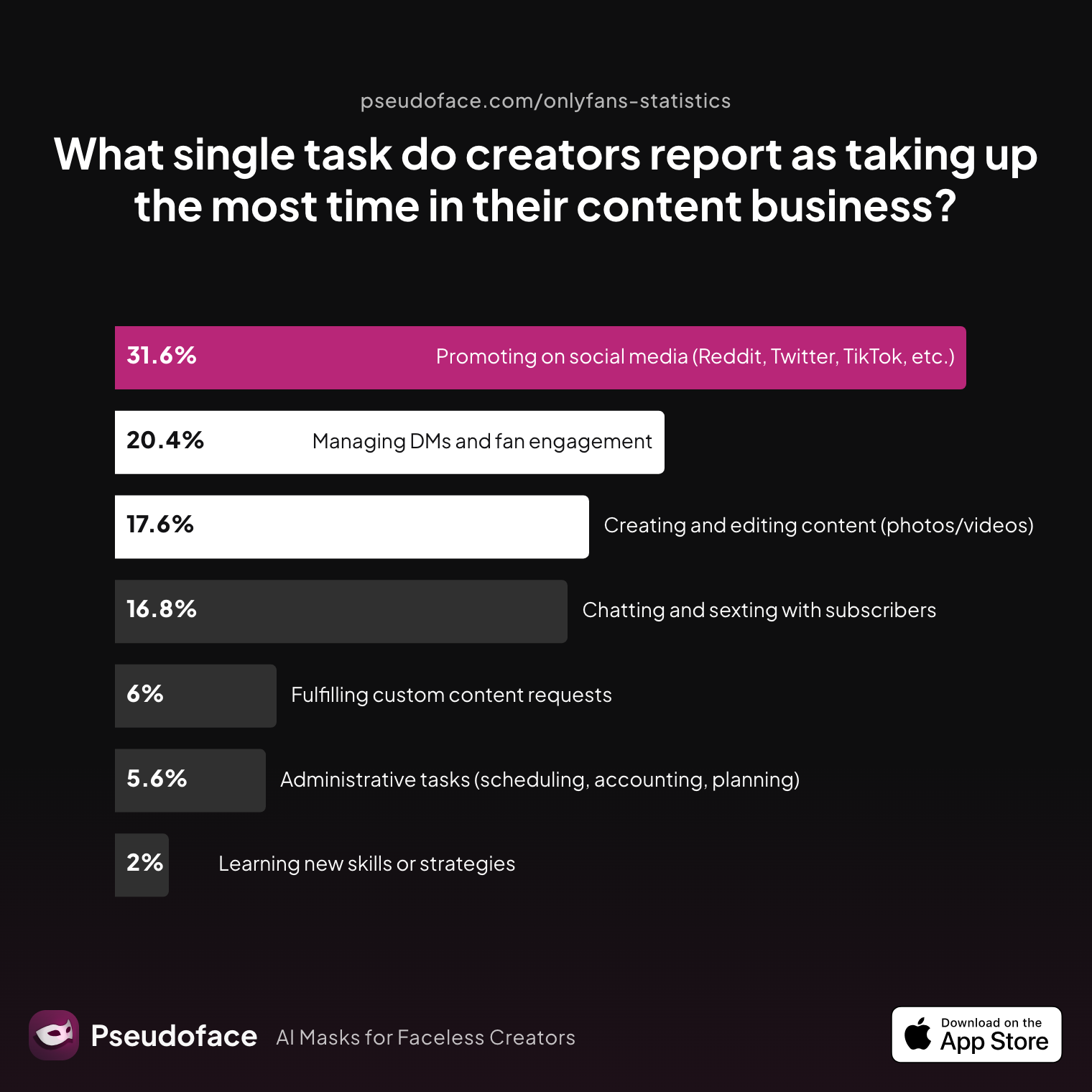
The fantasy of “just upload photos and collect cash” cracks quickly. Here’s how creators report their most time-consuming tasks:
| Answer | Percentage |
|---|---|
| Administrative tasks (scheduling, accounting, planning) | 5.60% |
| Chatting and sexting with subscribers | 16.80% |
| Creating and editing content (photos/videos) | 17.60% |
| Fulfilling custom content requests | 6.00% |
| Learning new skills or strategies | 2.00% |
| Managing DMs and fan engagement | 20.40% |
| Promoting on social media (Reddit, Twitter, TikTok, etc.) | 31.60% |
Promotion—especially on social media—eats up more time than content creation itself, with a staggering 31.6% of creators naming it their #1 labor sink. In a W2 job, you never need to handle your own marketing. As a self-employed creator, your business only moves if you do the outreach yourself. These hidden time costs—and the absence of administrative structure—are cited over and over as surprising, and sometimes overwhelming, for first-timers.
Open thread on Redditr/onlyfansadvice
u/Flashy_Currency_2559
Sex Worker, basically what OF/Fansly/Webcammers/etc are considered as a group. Accountants who are used to that line of work will know more specifics for deductions and tax breaks vs your standard tax return places like HR Block
We’ve established that OnlyFans income doesn’t get tax taken out upfront—so how does reporting work when tax time arrives?
OnlyFans 1099: What to Expect (and Why It Confuses So Many)
Here’s how it actually works: If you earn $600 or more in payouts from OnlyFans in a given year, you’ll receive a 1099-NEC form. This isn’t just a courtesy—OnlyFans is required by law to issue it (and to send a copy to the IRS). Yet, a huge portion of creators are confused by who is obligated, what income is reported, and how to handle these forms.
Open thread on Redditr/onlyfansadvice
u/Psychological_Tap420
They issue a 1099 and you’ll file it with your income tax for that year
Open thread on Redditr/onlyfansadvice
u/awholemessadessa
With a 1099 you need to report anything over $600. You can either pay quarterly or the following year when you do your taxes. Keep track of your work expenses (but consult a tax professional or search this sub on what you may be able to report as an expense) and claim those so that you are taxed for less than the straight income you make from the 1099 gigs
Key points creators frequently misunderstand:
- The form comes from OnlyFans’ parent company (often listed as “Fenix Internet LLC”).
- If you’re under the $600 threshold, you won’t get a 1099, but you’re still required to report your earnings.
- OnlyFans reports whatever it pays out to your bank, not what you earned in gross subscriptions or un-withdrawn platform balance.
- Timing can be tricky: a late December payout may show up on next year’s 1099 if not cashed out by December 31.
Open thread on Redditr/onlyfansadvice
u/nerdydancing
Did you make $5k in December 2021 that you didn’t withdraw until Jan 2022? They base your 1099 off your withdrawals for 2022, regardless of when you earned the money. If it’s not that, I’m stumped.
If you don’t get a form by late January or early February, check your email and spam folders, your OnlyFans account dashboard, and the mailbox for a generic envelope marked “tax documents”—sometimes under a name you don’t recognize.
Open thread on Redditr/onlyfansadvice
u/dogplantmom
It says “tax document enclosed” and is from Fenix Internet LLC
Missing the form doesn’t excuse you from filing. The IRS expects you to report everything, whether or not OnlyFans sends paperwork. This is why keeping records of withdrawals is crucial, especially if your income spans multiple platforms.
After the panic around tax forms, the next confusion is about the actual dollars—do you pay taxes on OnlyFans, and what exactly counts as income?
Do I Pay Taxes on OnlyFans? Yes—But It’s Not as Scary (or Simple) as You Think
Yes, you pay taxes on OnlyFans income. This applies even if your earnings are a few hundred dollars, a side stream, or inconsistent across the calendar year. The self-employment label makes two kinds of taxes your responsibility:
- Income tax (federal, plus state/local if applicable), on your net profit (income minus allowable business expenses).
- Self-employment tax (which covers Social Security and Medicare, typically 15.3%).
Many creators are tripped up by what counts as “income.” OnlyFans—and the IRS—go by paid-out, not just account earnings. That means anything you’ve actually withdrawn to your bank accounts or received through official payouts counts for tax purposes for that year.
Earnings level is not the threshold for reporting. Even if you don’t receive a 1099, the legal requirement is to declare every dollar you make, minus valid business expenses.
Open thread on Redditr/CreatorsAdvice
u/emmitthegremmit
Basically as an independent contractor/1099 taxes you owe aren’t automatically taken out so you have to do it yourself. A good rule of thumb is to put away 30% of earnings for taxes. So if this is your first year or you didn’t make quarterly payments, when you get your 1099 from OF you’ll have to file with it and pay the taxes from your earnings to the IRS by a certain date to avoid penalties
If you're earning enough to owe $1,000 or more in anticipated taxes for the year, the IRS expects you to pay quarterly estimates (rather than waiting for April of the following year). For lower amounts, paying once per year is usually fine, but this varies by state.
Most Common Triggers for Trouble
The biggest red flag? Forgetting how much the IRS already knows based on 1099s issued by platforms. Delayed reporting or ignoring small income puts creators at risk for owing more than expected and being flagged for penalties.
Why Creators Lose Paid Subscribers—A Lesson in Net Income
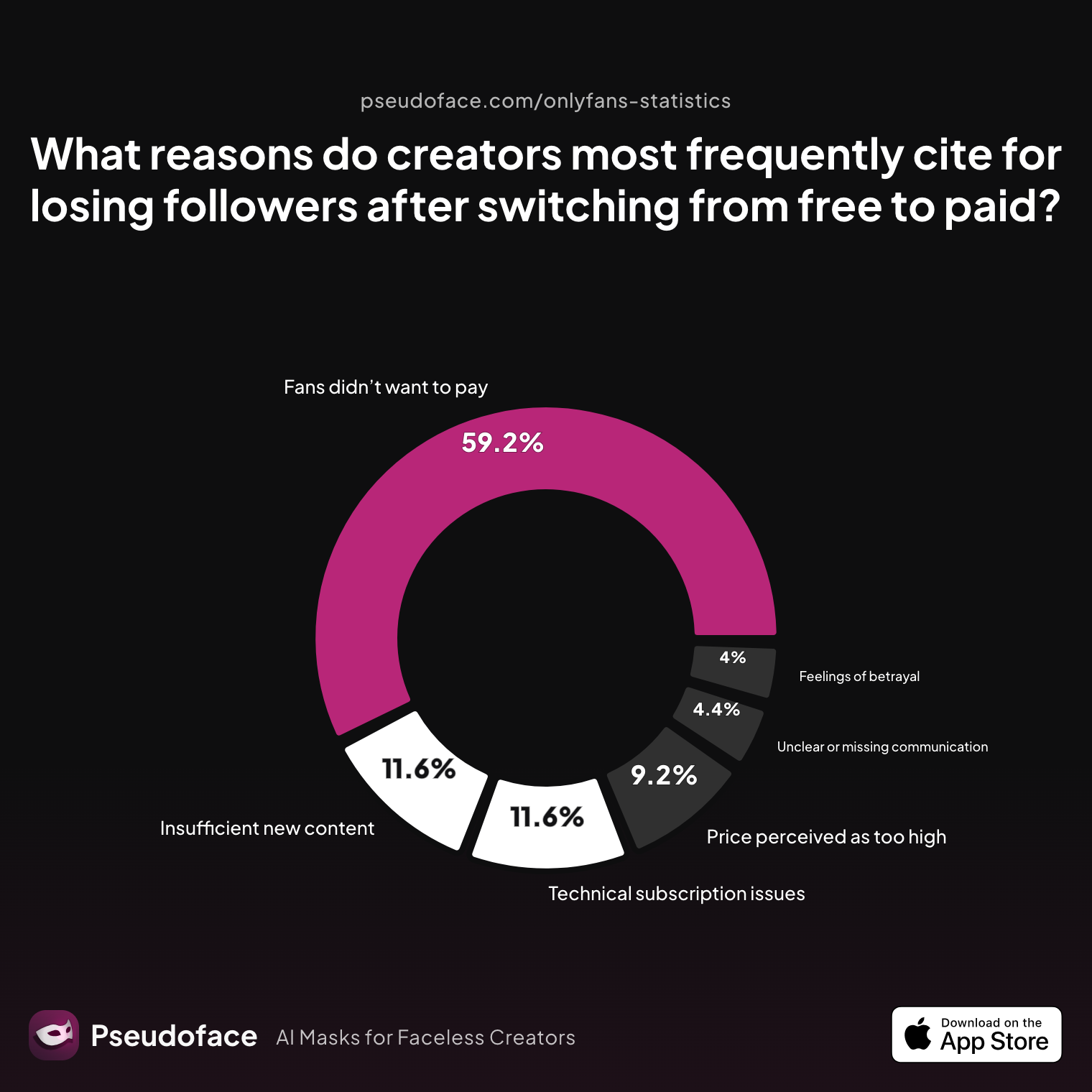
Looking at why creators lose subscribers after switching to paid, nearly 60% cite fans not wanting to pay:
| Answer | Percentage |
|---|---|
| Fans didn’t want to pay | 59.20% |
| Feelings of betrayal | 4.00% |
| Insufficient new content | 11.60% |
| Price perceived as too high | 9.20% |
| Technical subscription issues | 11.60% |
| Unclear or missing communication | 4.40% |
This highlights a double vulnerability: creators overestimate recurring income, but net profits (after chargebacks, platform fees, and lost subscribers) are all the IRS cares about at tax time. Only what you actually receive matters.
Open thread on Redditr/onlyfansadvice
u/YoMiner
As has already been mentioned, it's whatever OF has actually paid you. Until you transfer it to your bank account, it is sitting in the bank account of OF and they are generating interest on it, which will go on their taxes.
Learning from experienced creators, the biggest takeaway is to err on the side of over-preparing—track every dollar, set aside a conservative amount for taxes, and remember that deducted business expenses reduce your taxable income (but only if properly documented).
Next, let’s move to the cornerstone of sustainable self-employment: the daily habit (and headache) of expense tracking, recordkeeping, and simple business discipline.
Building the Habit: Why Expense Tracking and Bookkeeping Start Day One
Ask any seasoned creator what they regret about the early days, and you’ll hear it almost as a mantra: “I wish I’d tracked my expenses from the start.” Bookkeeping—however basic—turns a dreaded tax season into something survivable (and, at times, financially rewarding through valid deductions).
Open thread on Redditr/onlyfansadvice
u/arielhartlett
Hold on to any work related receipts so you can keep track of possible deductions. Are you sure the barista job gave you a 1099 form though instead of a w4? 1099 is for self employed/ independent contractors, not employees. If they gave you a 1099 ask them for a W4 instead. They might be doing that to get out of paying taxes which is shady
You don’t need accounting software on day one, but you do need a system—spreadsheet, notebook, even a locked note on your phone. Track income, every business purchase, and save receipts (digitally or physically) for at least three years. This lets you claim deductions for ordinary and necessary expenses: camera gear, props, outfits, travel for shoots, phones, editing software, even a portion of your home internet if used for your content business.
Open thread on Redditr/CreatorsAdvice
u/BabyBlackBear
Yup! I think you also HAVE to pay quarterly or get fined
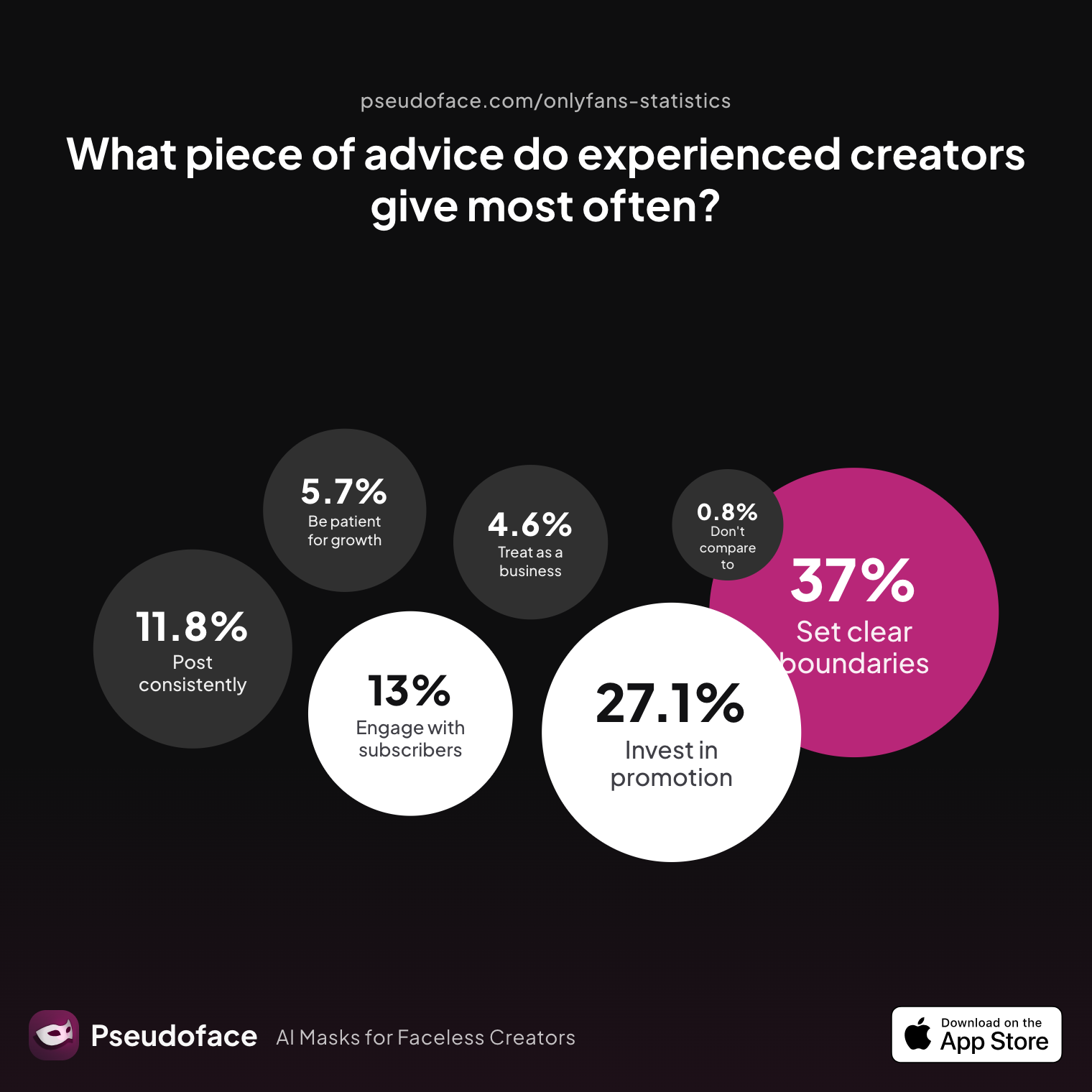
The “treat it like a business” mindset is echoed by experienced creators as their single most important piece of advice:
| Answer | Percentage |
|---|---|
| Be consistent — post on a regular schedule no matter what | 11.83% |
| Be patient — real growth takes months, not days | 5.73% |
| Do not compare yourself to top creators | 0.76% |
| Engage genuinely with your subscribers and build relationships | 12.98% |
| Invest heavily in promotion, not just content | 27.10% |
| Set clear boundaries early and stick to them | 37.02% |
| Treat it like a real business from day one | 4.58% |
Only 4.58% call out “treat it like a real business” as their #1 advice—yet almost every in-depth advice thread urges creators not to repeat the mistakes of casual, sloppy bookkeeping or disregarded receipts. The gap reflects survivorship bias: by the time creators look back, they’ve realized the value of discipline, but most new entrants still underestimate the business reality until faced with actual tax bills.
Early, consistent tracking isn’t just IRS compliance—it’s peace of mind, financial control, and potentially hundreds or thousands of dollars in legitimate deductions.
With the essentials laid out, let’s recap the most pressing questions new creators should be asking as they get started.
FAQ
Is OnlyFans income taxed as self-employment or as a “side hustle?”
OnlyFans income is taxed as self-employment, regardless of whether you see it as a main job, side hustle, or gig.
If you create content and get paid for it, the IRS treats it as business income—you report and pay self-employment tax, no matter how many hours you spend.
Do I really need to report OnlyFans earnings if it’s just a small amount?
Yes, all earned income (no matter how small) is legally required to be reported, even if you don’t receive a 1099.
The $600 1099-NEC threshold only determines whether the platform sends you a form, not whether you must report your income.
What job category do I put for OnlyFans on tax forms?
Use “content creator,” “digital creator,” “modeling,” “independent contractor,” or similar roles—there is no single required label.
See what other creators use:
Open thread on Redditr/onlyfansadvice
u/GothOne13
Content creation, model, digital creator, performer. Nowadays people will leave you alone if you say content creator and if they ask more just say you’re an influencer ☺️
What is a 1099-NEC, and when should I expect it from OnlyFans?
The 1099-NEC lists your total payouts for the year; if you earned $600 or more, OnlyFans must send it by January 31 the following year, often under the name “Fenix Internet LLC.”
Check your mailbox and email, and don’t ignore plain envelopes marked “tax document enclosed.”
How does OnlyFans track what to report to the IRS?
OnlyFans reports what it actually pays out to your linked bank or payment account—unwithdrawn balances are not counted until paid out.
Make sure to keep your own records, as timing (end-of-year withdrawals) can affect which tax year income appears in.
Do I need to pay quarterly estimated taxes if I’m just starting out?
If you expect to owe $1,000 or more in taxes (after deductions and credits) for the year, you must make quarterly payments. If you owe less, annual payment is usually acceptable.
Quarterly payments help avoid interest and penalties, but this rule can vary state by state.
Can I deduct expenses like props, outfits, or equipment for my OnlyFans?
Yes, as long as they are “ordinary and necessary” for your content business, most such expenses are deductible against your income.
Keep receipts, track every purchase, and consider consulting a tax professional if in doubt.
What happens if I don’t report my OnlyFans income?
Failing to report could lead to IRS penalties, late fees, or an audit—especially if OnlyFans has issued a 1099-NEC in your name.
Being proactive is always safer than hoping your earnings go unnoticed.
If I use a pseudonym, what name appears on my tax forms?
Tax forms must use your legal name and Social Security Number, even if you create content under a stage name or alias.
Privacy on the platform does not carry over to tax documents.
How do state taxes factor in for OnlyFans income?
State rules vary, but most require you to pay income tax on self-employment income—sometimes with their own quarterly estimated payment system.
Check your state’s revenue department or consult a tax expert experienced with self-employment.
Key Takeaways:
- If you make money on OnlyFans, the IRS considers it self-employment—whether full-time, side gig, or just for fun.
- Expect to file a tax return, pay self-employment tax, and track expenses to reduce your taxable income.
- Be prepared for paperwork: 1099-NEC from OnlyFans if you cash out $600+, but always report all income.
- Treat it like a real business from the first dollar, and you’ll save stress, time, and money.
- The numbers and quotes in this guide are based on over 250,000 Reddit threads analyzed by Pseudoface from 2025-2026—self-reported, sometimes messy, but the best window into real creator experiences available. While not every finding will apply universally, the trends are clear: self-employment is the OnlyFans reality.


