
TL;DR
The LoyalFans store and timeline serve distinctly different roles in a creator’s earning strategy: the store is an evergreen, searchable shop ideal for big-ticket or bundled content, while the timeline (feed) drives regular, impulse sales, engagement, and subscriber retention. Based on Pseudoface’s analysis of over 250,000 real creator Reddit threads (2025-2026), most US-based LoyalFans creators use the store for premium videos and bundles, leveraging the timeline for PPV teasers, fan interaction, and community warmth. Together, these channels maximize visibility and total earnings—if you understand when to use each. All statistics and pain points are self-reported; trend directions should guide your experiments, but not be treated as universal rules.
How the LoyalFans Store Works: Always-On Content Shop for Big Sales
For creators navigating LoyalFans, the "store"—also known by fans as the LoyalFans video store, content shop, or simply the LoyalFans shop—functions as your personal digital storefront. This section is always "open," visible both to casual browsers and your most loyal subscribers. Unlike the fast-moving, time-sensitive format of the timeline, the store operates as a catalog: organized, filterable, and designed for both discovery and long-term passive sales.
Listing content in the store means picking and curating your very best work. Creators typically list full-length videos, large photo sets, voice notes, ASMR tracks, bundles, and even custom commission slots. Items are searchable by tag, title, or media type. Importantly, buyers don’t need to wade through a chronological feed to find them—each item stands on its own, always visible in your menu as long as you keep it listed. Pricing is fully in your control. Whether you’re selling a $5 selfie set or a $99 ultra-premium custom, the store allows for one-time access fees and (where applicable) instant downloads.
The store also supports multiple media types—video, audio, photo sets, even zipped bundles—and offers creators more advanced metadata options. You can sort products into categories, highlight best-sellers, and bump new items to the top. This level of curation rewards careful planning: many mid-tier and top earners use the store to house their highest-value content, repositioning feed-based “daily” content as a kind of funnel or teaser for store sales.
Notably, fans do not need to be subscribed to access the store—anyone can browse and buy, provided you allow it. This widens the sales funnel, letting free or former subscribers purchase à la carte, and gives high-intent buyers a one-stop shop for quick decisions.
Once the utility of the store as an evergreen, always-on shop is clear, the next logical question emerges: where does the timeline fit in the daily creator hustle?
How the LoyalFans Timeline (Feed) Works: Daily Sales, Engagement, and Impulse Buys
The LoyalFans timeline—sometimes referred to as the “feed”—is the beating heart of everyday creator engagement. Instead of operating like a static storefront, the timeline is built for speed, personality, and real-time connection with your fanbase. Whenever you post new content—a tempting selfie, flirty audio note, short teaser clip, or a behind-the-scenes update—it appears in sequence on your timeline. For paying subscribers and, depending on your permissions, followers or general fans, this is where they interact with you on a recurring basis.
Posts here are, by design, time-sensitive and ephemeral—especially as your content library grows. The timeline sits at the boundary between social media and a sales platform: posts can be open or locked behind paywalls (PPV), and creators can use teasers, countdowns, scheduling tools, and comment prompts to build hype around each new drop. Daily or weekly posts are how you nurture regular engagement and build a sense of community among your audience, which, in many creators’ experience, is the main driver of both recurring subscriptions and small, frequent PPV unlocks.
Monetization here is typically driven by PPV “locked” posts, tip-to-unlock models, or exclusive media for your paid subs. The timeline lets you schedule posts in advance, use tags so buyers can sort by content themes, and send posts simultaneously to DMs for crossover exposure. Importantly, many creators use the timeline for real-time experiments—toggling locking/unlocking strategies, sharing special offers, and gathering immediate feedback.
How timeline content appears varies by user status. Subscribers see all timeline content you permit, while public or “follower-only” posts show only what you allow for non-payers. This allows strategic drip-feeding of value: a taste of your world for free users, a slightly bigger bite for followers, and the whole buffet for subscribers. You can also segment timeline posts to appear for specific user tiers—wall, sub, or tip-to-view—mirroring complex content ladders without overwhelming your shop.
From a sales psychology perspective, the timeline is where “fear of missing out” and personal rapport drive purchases. Fans scrolling their feed might buy a $3-10 PPV impulse clip after seeing a hot preview, even if they skipped your store that day. The downside? Timeline posts “age out” quickly; after a few days or weeks, most fans never scroll back more than a screen or two.
Once you fully grasp the mechanics and momentum of both channels, it’s much easier to lay their differences (and overlap) side-by-side.
LoyalFans Store vs Timeline: Key Differences in Selling Content
Understanding how the LoyalFans store and timeline diverge is crucial for maximizing both your workflow and your income. Each has distinct pros, cons, and use cases, though they increasingly work in tandem for top earners. Here, we’ll distill their key differences across discoverability, sales control, content types, and buyer journey.
| Feature | LoyalFans Store | Timeline (Feed) |
|---|---|---|
| Visibility | Always-on, menu/tabbed | Chronological, expires from top quickly |
| Who Can Buy/View | Anyone (by settings) | Subscribers, followers, or both, per post |
| Content Types Allowed | Videos, bundles, photos, audio, custom offers | Short clips, photos, text, polls, limited video |
| Pricing Control | Custom per item | PPV price per post, subscription wall |
| Buyer Experience | Browsable, searchable, filterable | Feed scroll, “surprise and delight” |
| Discoverability | Tag-based, categories, search | Recent first, no deep-search by default |
| Best for... | High-value, evergreen, bundles | Daily/weekly engagement; quick PPV hits |
| Workflow | Batch upload, curate, slow updates | Frequent, real-time posting, quick edit |
Let’s pull this out of abstraction. The LoyalFans store gives you full curatorial control: each item gets a title, price, tags, and designated spot. It is optimized for strategic, longer-term sales—especially for premium videos, multi-item bundles, and highly visual products. The ability to lock in pricing, control “stock” (availability), and keep content visible for months means you can stack up a catalog that works while you sleep.
Contrast this with the timeline: here, your content is most valuable in the moment. PPV posts, visual teasers, one-off selfies, interactive questions, audio drops, and tip-to-unlock previews fill the feed with transitory, live-community energy. Sales here are often opportunistic; fans buy because the post is new, personal, or features a direct call-to-action. The timeline is less about passive discovery, more about emotional connectivity, urgency, and fleeting offers.
A note on discoverability: the store lets anyone—past, present, or potential fans—browse your best work, regardless of their subscription status. The timeline’s visibility is more restrictive and contextual. Some creators restrict timeline posts to subscribers, others open them to followers or even to all visitors, creating a spectrum of access from public tease to subscriber-only delights. You can also batch timeline posts into highlights, but these are still less navigable than the store’s structure.
From a workflow standpoint, timeline posts reward consistency and experimentation—post often, test pricing, ride trends. Store listings require more investment up front (editing, titling, bundling, producing), but pay off in steadier, evergreen sales.
As of early 2026, US creator Reddit advice threads repeatedly warn newcomers not to treat the two features interchangeably. Each serves a clear, strategic purpose—store as permanent display, timeline as hot-now engagement.
With these differences in focus, let’s look at how creators are actually using these tools, and what types of content sell best in each context.
By the Numbers: What Creators Sell Most in the LoyalFans Store vs Timeline
Quantitative evidence from recent creator surveys—interpreted with self-reporting and survivorship bias in mind—shows strong distinctions in what is sold via the LoyalFans store versus the timeline. Let’s anchor this insight with current data.
| Answer | Percentage |
|---|---|
| Audio files | 4.76% |
| Bundled content | 6.35% |
| Custom content | 20.63% |
| Photo sets | 17.46% |
| Short clips | 6.35% |
| Videos (full length) | 44.44% |
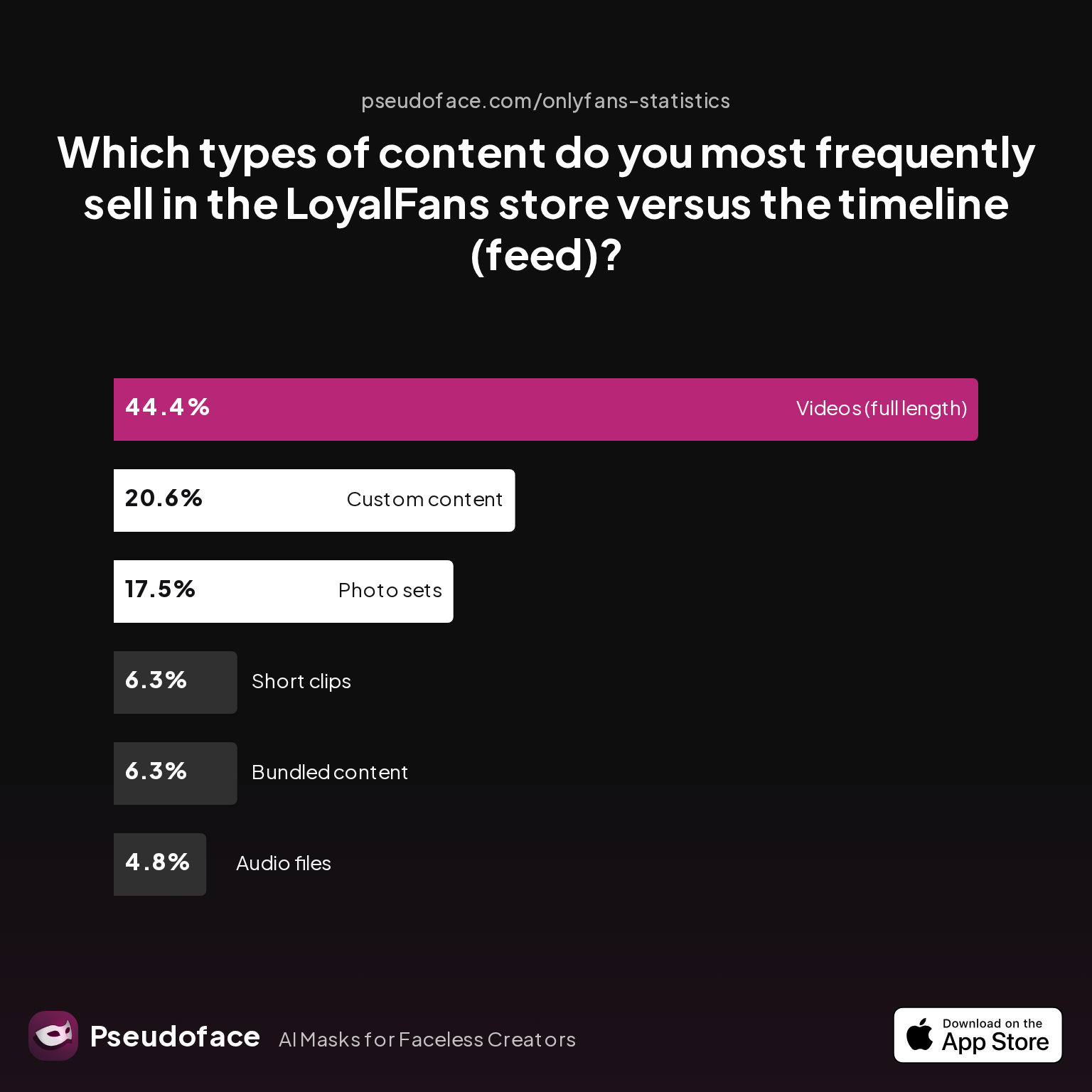
Most US LoyalFans creators report listing full-length videos (44.44%) and custom content slots (20.63%) as the top sellers in their stores, while timeline (feed) sales skew toward teasers, PPV posts, and smaller content segments. According to Pseudoface’s 2025-2026 Reddit data set, creators consistently point to this split: big-ticket or “best of” content in the store, with smaller, day-to-day engagement pieces on the timeline.
Custom commissions and full-length videos are typically best positioned in the store for both organizational and pricing reasons. Custom offers benefit from clear menu listing and persistent links, while longer videos command higher prices when sold outside the distraction-prone timeline feed.
Bundles and photo sets, though less dominant, still represent substantial store traffic. Creators highlight the store’s advantage in bundling related content: “I bundle themed photo sets and upsell to fans looking for multi-item deals. Much easier to keep bundles organized in the shop than scattered across old timeline posts,” one Reddit user summarizes.
Timeline sales, meanwhile, revolve around immediacy and impulse. Fans scrolling the feed buy smaller PPV clips, tip for access to locked posts, and interact with regular updates. These are not typically cataloged or organized, and fade from view more quickly.
Methodology caveat: these survey stats reflect creators sharing publicly on Reddit. The sample is skewed toward English-speaking, US-based, and mid-earner creators willing to discuss their workflow. Some store under-use may reflect lack of awareness or challenges with setup, so the gap may be even wider in actual platform usage.
To understand how to deploy this content in both channels, and maximize workflow and results, let’s look at smart packaging and workflow optimization next.
Optimizing Your Content Workflow: Smart Packaging Between LoyalFans Shop and Feed
Strategy isn’t just about what you sell—it's how you package and cycle content between the LoyalFans store and timeline. Successful creators blend both, using workflow hacks to get more visibility (and sales) with less exhaustion.
Picture it this way: the timeline is your “daily driver”—fueling regular small-ticket sales, subscriber check-ins, quick polls, and behind-the-scenes posts. The store is your “showroom,” where polished, high-value items sit ready for any buyer. The key lies in batching your work, recycling promos, and building a content ladder that incentivizes fans to move up in spend.
Let’s look at how creators segment the value ladder, using real data.
| Answer | Percentage |
|---|---|
| Four or more tiers | 3.98% |
| One tier (all wall) | 17.93% |
| Three tiers (wall + PPV + custom) | 19.92% |
| Two tiers (wall + PPV) | 58.17% |
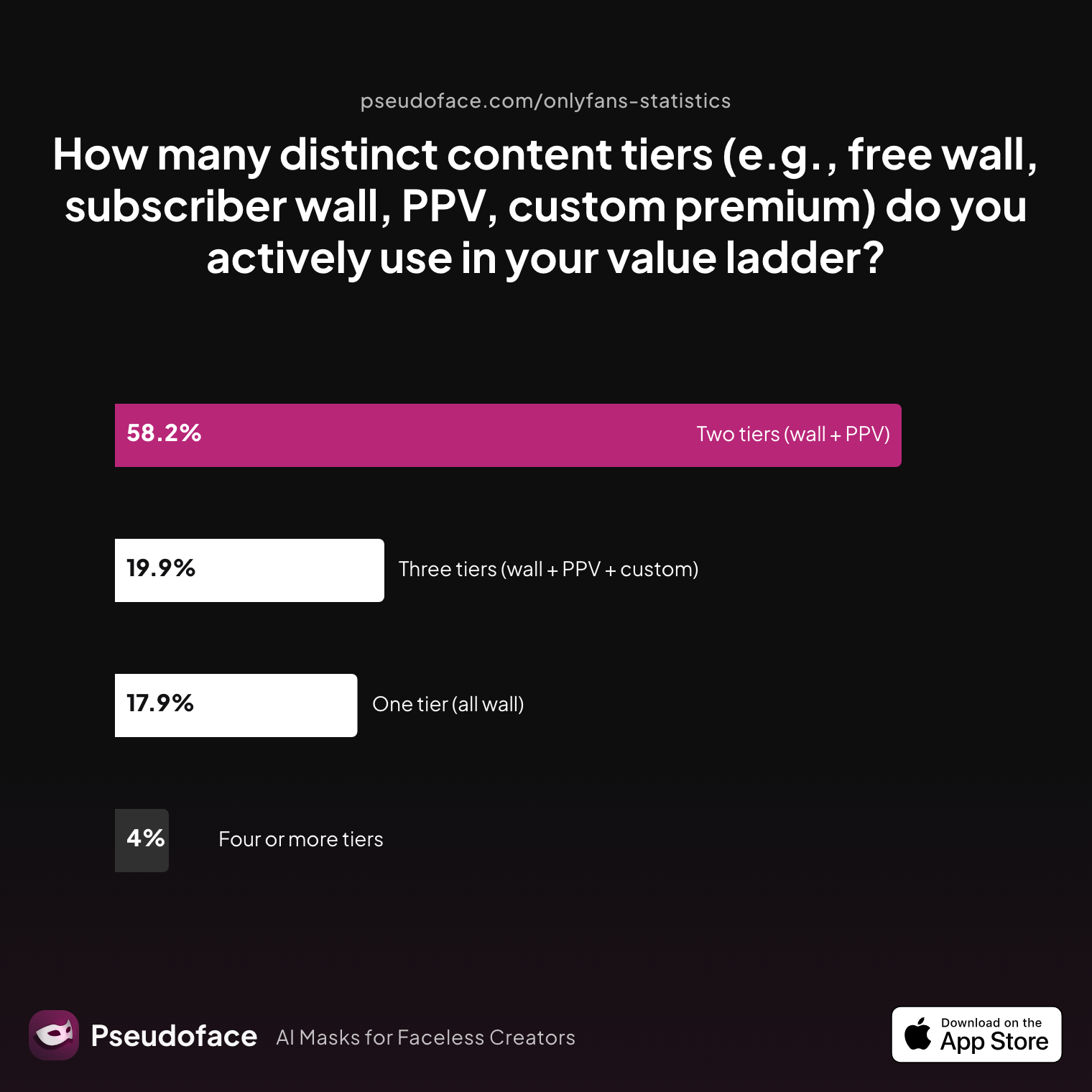
Most creators (58.17%) use two main monetization tiers: a subscriber “wall” and pay-per-view (PPV) posts, layering custom or bundled offers as they grow. This split supports an efficient workflow: regular timeline posts for engagement, then driving paid fans or big spenders to your store for higher-value offers.
Workflow strategies that surface in 2025-2026 Reddit analysis include:
- Batching: Record and edit a week’s worth of teasers or selfie posts for the timeline; batch-produce premium video or photo sets for the store.
- Recycling: Use timeline posts to tease or cross-promote store items (“Preview free here... unlock the full video in my shop”).
- Tiered packaging: Offer versions—short preview on the timeline, full set in the store, custom upgrade as a menu item.
- Segmentation: Save time by tagging and categorizing both timeline and store items, making it easier for buyers to find what they want.
Revenue split preference data also shape workflow:

| Answer | Percentage |
|---|---|
| Balanced | 4.50% |
| Mostly PPV | 36.04% |
| Mostly subscription | 59.46% |
Nearly 60% of creators report that most of their earnings come from subscriptions, with 36% relying on PPV sales and only 4.5% achieving a true balance. This suggests most creators use the store for high-ticket one-offs or bundles, not as the main driver of their monthly take-home pay. It also reinforces the wisdom of “workflow tiering”—supporting both regular timeline engagement and specialty store drops.
Here’s how one top earner described the balancing act:
Open thread on Redditr/Fansly_Advice
u/MissHoodie
I've locked my timeline down to just subs a couple of times and it's hard to say if it has really made a difference or not. I had my timeline locked to subs and followers now for a few months so it's almost time to lock it back down to subs only. I have to keep reminding myself that followers don't pay the bills.

Expect to experiment with packaging and scheduling; what works for one creator’s audience may underperform for another. Be ready to test, track, and refine workflow every few months.
With a smart workflow established, it helps to step into your buyer’s shoes: how do these sales channels shape the customer journey?
The Buyer’s Experience: How LoyalFans Store and Timeline Shape Customer Journeys
Ask any creator: fans interact with the store and timeline in fundamentally different ways. The store supports buyers who are goal-oriented—hunting for a specific video they missed, wanting to browse by kink or content tag, or ready to splurge on a big-ticket item once trust is established. The store’s always-on, searchable nature means buyers can find premium items long after their initial release.
The timeline, by contrast, rewards the “regular scroll.” Subscribers and loyal followers are exposed to a sequence of updates: teasers, quick selfies, PPVs, and polls, all integrated into their social-media ritual. On the timeline, buyers don’t always know what they want until you tempt them with a teaser or a compelling caption. Impulse purchases are common; so is a sense of intimacy, particularly for creators who actively respond to comments or customize shout-outs.
Reddit advice threads surface frequent buyer questions about navigating both:
Open thread on Redditr/onlyfansadvice
u/Diligent_Heron_3486
I just use the label feature so that fans can sort by what they like (PPV, Butt, Breasts, etc)
Features like tagging, highlights, and store categorization directly affect the ease with which buyers discover and unlock content. Many creators report frustration when timeline posts become buried, with fans missing drops entirely unless guided to the store or highlight reels.
There’s also the “repeat purchase” dynamic. Store items are always there to revisit; timeline posts, once buried, are often forgotten or never seen by casual fans.
Common buyer pain points—extracted from Reddit self-reporting—include confusion between PPV posts in the feed versus premium store items, and difficulties finding older content outside the store. Smart creators address this with regular timeline reminders to “check my store for all my best vids” and by organizing menu links everywhere.
As of late 2025, the customer journey on LoyalFans is still evolving, but one theme is clear: store and timeline are not interchangeable. Each draws different buyer behavior—meaning tactical, cross-promotional reminders are essential for maximizing conversions.
Pitfalls, Pain Points, and Field-Tested Tips for LoyalFans Content Sales
No matter how polished your strategy, both store and timeline come with quirks and challenges—most of which get sorted in real-time by bold, experimental creators.
The number one pain point with timeline-only sales is post “churn”—older posts become nearly invisible over time, while buyers may never scroll back to find your gems. This leads to frustration from both creators (who see engagement plummet on older work) and buyers (who miss out on content unless hand-held through the process).
A Reddit user voices this pain clearly:
Open thread on Redditr/onlyfansadvice
u/RJRWrites
Thank you! I was hoping to make it more automatic than that, but I will work with what they allow me. 😁
Many creators counter by regularly highlighting or reposting old favorite content, moving “evergreen” items to the store after a timeline run, or using creative tags/menus so fans can self-serve. However, self-selection and reporting bias in Reddit data suggest those most vocal about pain points are also the ones experimenting most, meaning your mileage may vary.
Other pitfalls include confusion about who can see timeline posts (subscribers vs. followers vs. public), inconsistent use of tags or highlights making discovery harder, and over-reliance on one channel for all sales. Pricing struggles are perennial: too high, and impulse sales stall; too low, and buyers anchor their value perception.
Reliable tips from the field include:
- Curate the store for high-ticket, easy-to-navigate bundles and video drops.
- Use timeline posts for teasers, time-limited promos, and mini-engagements (polls, Q&A, quick stories).
- Regularly resurface both store and timeline posts using highlights, tags, or simple “blast from the past” reposts.
- Communicate clearly with buyers about where to find specific content, especially if your menu is extensive.
- Don’t expect a single approach to last forever—evolve and adapt as fan feedback and sales patterns shift.
Next, let’s distill all these lessons into a practical store vs timeline decision guide.
Store or Timeline? Decision Guide and Best Practices
With all this context, how do you decide what to sell in the store and what belongs on the timeline? Here’s a condensed matrix to guide you:
Use the LoyalFans Store when:
- Your content is evergreen, high-value, or intended for à la carte sale (full-length videos, bundles, custom commissions).
- You want items to be searchable and visible to non-subscribers, followers, or even first-time visitors.
- You’re bundling multiple mini-items or “collections” for a bigger-ticket offer.
- You need ongoing passive income from work that shouldn’t fade after a few days.
Leverage the Timeline when:
- Your content is timely, personal, or intended to spark quick engagement (teasers, daily selfies, short clips, stories).
- You’re targeting subscribers or regular followers with exclusive updates and PPV unlocks.
- You want to drive engagement, swell community warmth, or run targeted flash promos.
Success, as confirmed by both data and firsthand advice, comes from layering these channels—cross-promoting from timeline to store, cycling old timeline hits into evergreen store items, and nurturing both impulse grabs and planned, major sales.
For most creators, the workflow includes: produce high-value content, tease it on the timeline, push the full set to the store, and remind fans regularly where to find it.
Open thread on Redditr/Fansly_Advice
u/MommyCara_
Test it for a bit and see how it works. It’s different for everyone. So trialling it is the only way you’ll find out
Continuous experiment, feedback, and iteration win out over a rigid template. Keep your analytics tabs open, listen to fan feedback, and don’t be afraid to switch things up as your audience grows.
FAQ
What’s the difference between the LoyalFans store and timeline for selling videos?
The store is a searchable shop for evergreen, premium content; the timeline is a real-time feed for engagement, fast sales, and teaser posts.
The store supports full-length videos, bundles, and clear menu listings browsable by anyone (unless you restrict it), while the timeline is organized chronologically, with posts quickly aging out of view. In the store, you control individual item pricing and categorization; on the timeline, you set PPV prices post-by-post and can quickly engage subscribers or followers.
Should I sell all premium content in the LoyalFans store or use the timeline?
Use the store for high-value or evergreen items, and the timeline for teasers, daily posts, and PPV micro-sales; mix both for best results.
Most top-earning creators tease premium content on the timeline with a link or prompt to unlock the full item in the store.
How do buyers find and purchase videos in the LoyalFans content shop?
Buyers browse your store tab, filter by content type or tags, and purchase directly with a one-time unlock/payment.
The process is straightforward: fans never need to scroll your full feed, and can check back on your storefront any time for new or longstanding content.
Can I set different prices on the LoyalFans timeline and in the store?
Yes, you set custom pricing for each store item and separate PPV prices for timeline posts.
Creators often price timeline PPV lower for engagement, but reserve higher, set prices in the store for premium work or bundles.
How do I organize content for easy fan discovery on LoyalFans?
Use the store’s menu structure for best-of items, tag both store and timeline content, and refresh highlights or pinned sections for quick access.
Combining highlights and careful tagging—both in the store and on the timeline—means buyers are less likely to miss (or get frustrated searching for) your most important offers.
What are common pitfalls with selling via the LoyalFans timeline?
Main pitfalls are rapid post “churn” (older content becoming invisible) and difficulty getting fans to find/pay for PPV posts buried in the feed.
Regularly resurface key posts, communicate where to find older content, and experiment with highlights/menu features to avoid leaving money on the table.
Which works better for maximizing earnings: LoyalFans store or timeline?
Most creators earn the majority via subscriptions and timeline engagement, but the store captures high-ticket, “forgotten opportunity” sales.
Treat the two as complementary—using both increases your total earnings and fan satisfaction.
How can I handle custom content requests with LoyalFans shop features?
Use the store to list and price custom content slots, then fulfill directly with the buyer using internal messaging for delivery and customization details.
Buyers appreciate clear options, and custom listings benefit from permanent, navigable menus.
Do buyers ever get confused between timeline PPV and store items?
Yes, some buyers struggle to find or differentiate between timeline and store offers, especially as portfolios grow.
Maintain clarity with regular reminders: tell fans where to go for specific content, and link both channels prominently in your profile and posts.
What analytics does LoyalFans give for store vs timeline sales?
Analytics include store inventory, item-level sales, and message engagement; timeline has view counts, post unlocks, and PPV revenue breakdown by post.
Creators looking to optimize should cross-reference these stats to sharpen what to sell where—and how often to resurface or repackage content.
Bottom Line:
The LoyalFans store and timeline are synergistic, not redundant. Strategic, data-informed use of both—guided by your own workflow and buyer feedback—is the clearest path to maximizing income, fan satisfaction, and creative sanity. Experiment, adapt, and let your fans’ engagement shape your next move.


