
TL;DR
Worried about keeping your identity private while growing a TikTok audience? You’re in good company. According to Pseudoface’s analysis of over 250,000 public Reddit threads from real adult and SFW creators, most successful faceless TikTokers lean into B-roll with voiceovers, POV or hands-only tutorials, and animated or masked content. Over 60% implement device or bio isolation tactics to dodge accidental doxxing, while the majority report that trending audio, refined editing styles, and niche challenge participation are critical for algorithm-driven growth. This 2025–2026 data, though self-reported and prone to survivorship and selection bias, highlights actionable strategies for anyone starting out. With the right faceless content formats and privacy habits, you can build—and monetize—a presence without ever revealing your face.
Why Faceless TikTok Accounts Are Booming—and What That Means for You
In the past few years, TikTok has become an unlikely safe haven for creators who value privacy—or anonymity—above all else. The appetite for faceless content has been rising steadily since 2024, as creators see both opportunity and risk in the platform’s mix of viral discoverability and community surveillance. For many, the calculation is simple: reaching a mass audience shouldn’t require sacrificing identity or exposing faces to unpredictable viewers.
Anonymity-seeking creators span a spectrum: some are sex workers or adult freelancers wanting to avoid real-world consequences, others juggle traditional jobs, and many simply prefer not to be recognized by family, students, or neighbors. In all cases, TikTok presents a unique challenge: its recommendation algorithm is a double-edged sword, capable of catapulting a creator to stardom—or surfacing their content right into the feeds of people who know them offline. This leaves privacy-conscious TikTokers searching for ideas and workflow strategies that maximize reach while minimizing risk.
Reddit communities have become the playbook of choice for this cohort—sharing everything from account isolation tricks to battle-tested video ideas.
Open thread on Redditr/Fansly_Advice
u/kvltkt
I've always like Masks for this. For just tik tok you can use something super simple

As more creators echo this tension, the demand for faceless TikTok strategies grows. What makes TikTok different from YouTube, Instagram, or Twitter is its laser focus on authentic, video-first engagement—meaning creators must get creative if they want to stand out without ever stepping into the frame unmasked.
Several factors are fueling the boom in faceless TikTok:
- The platform’s preference for short, frequent, and highly visual content lowers the barrier to staying anonymous.
- TikTok’s in-app effects, AI/AR tools, and sound library enable high-polish content—without face reveals.
- The once-stigmatized “faceless” genre now spans everything from SFW education and humor channels to NSFW tease and cosplay, dissolving boundaries between niche subcultures and the mainstream.
This movement isn’t just a fad. As of 2026, the faceless TikTok economy continues to expand, supported by a robust ecosystem of editing tools, privacy apps, and community knowledge. But anonymity comes with trade-offs: growth hacking, monetization, safety, and creativity all look different on this side of the camera. Let’s dive into the video ideas and content types that are producing results—without compromising your privacy.
The Most Engaging Faceless TikTok Video Ideas Without Showing Face
Faceless creators aren’t limited to just one or two content styles. As Pseudoface’s analysis shows, there’s a diverse range of faceless TikTok video ideas that reliably drive engagement and subscriber demand. Choosing the right fit depends on your niche, effort tolerance, and what feels natural without ever crossing into unsafe territory.
| Answer | Percentage |
|---|---|
| Audio/voice tease | 13.27% |
| Cosplay/masked | 4.08% |
| Feet | 55.10% |
| Hands | 1.02% |
| POV (no face, body focus) | 3.06% |
| Solo explicit w/ crop | 13.27% |
| Written/roleplay | 10.20% |
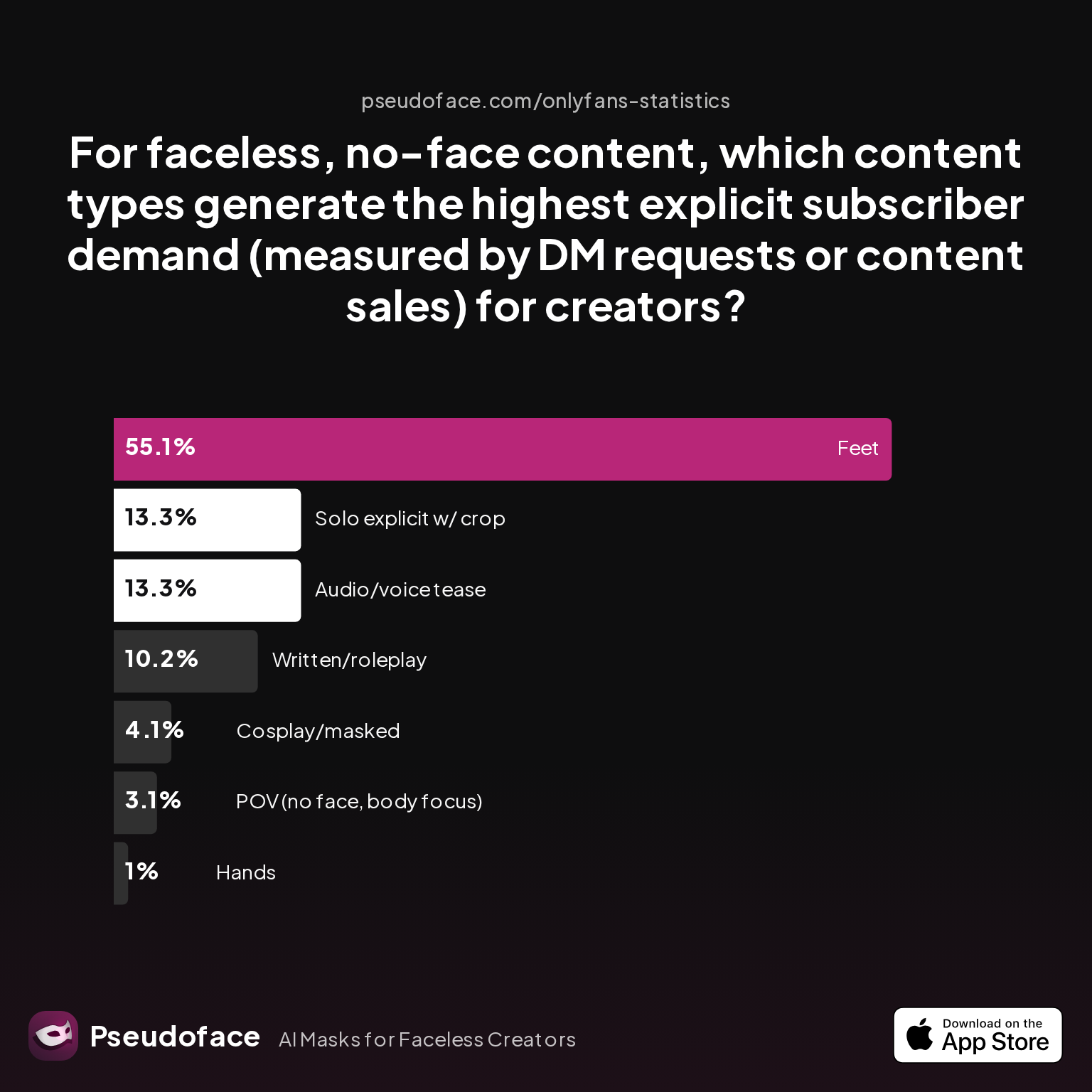
The top content types for faceless TikTok creators are “feet” (55.1%), followed by solo explicit-with-crop and audio/voice tease (13.3% each), and creative text/roleplay (10.2%). Reliance on cosplay/masked, hands-only, and pure POV format is far lower.
The most successful styles—by engagement metrics and explicit subscriber interest—are not always the most creative, but they balance safety and viral potential. Across both SFW and NSFW communities, the “faceless” formats that thrive include:
- B-roll with voiceover: This flexible framework lets you narrate tutorials, stories, or commentary while showing relevant images, screen recordings, or stock video behind your audio.
- Hands-only or feet-focused shots: Particularly for niches like unboxing, crafts, cooking, or adult premium content, focusing on only your hands or feet means your face never enters the frame. Many viewers find this both relatable and enticing.
- Screen-recordings and on-screen text: For educators, meme creators, or explainer accounts, you can narrate or use automated text-to-speech bots with zero video of yourself.
- POV from behind/the side: Kinetic, body-centric videos—where your back, side, or cropped body is visible—offer personality without facial risk. This style is common in both adult and SFW spaces.
- Masked or costumed: Masks, cosplay, or heavy makeup transform you without risking identity exposure, though it’s a smaller slice of the overall demand pie.
- Written/roleplay: Some faceless creators use creative text overlays, DMs, or storyboards to build a persona, delivering narrative or character-based content without visuals.
The numbers reflect a clear trend: “feet” accounts dominate explicit demand, more so than even voice or roleplay. However, SFW “faceless” TikToks often center on hands-only tutorials, point-of-view experiments, or educational screen captures—easing production while cloaking identity.
Users consistently report that faceless TikTok videos outperform face reveals in certain niches. One Reddit creator captures how reusable and efficient faceless formats can be:
Open thread on Redditr/onlyfansadvice
u/mysecretadvice
Yes I repost but change words/filters to make it seem new
Interpreting this demand is crucial: “Faceless” isn’t a niche, it’s a set of best practices—maximizing comfort, minimizing risk, and optimizing for TikTok’s fast-paced, trend-driven culture. When you find the right corner—voiceovers, feet, hands, or cleverly masked personas—it’s easier to ship new content consistently.
But with such variety, how should you choose your format? The next section compares effort, anonymity, and audience potential side by side.
Comparing Faceless TikTok Account Ideas: Format, Effort, and Anonymity
Standing out as a faceless creator doesn’t mean picking the most viral style—it’s about finding a balance between anonymity, effort, and ongoing comfort. Recent data from 2026 highlights which methods creators truly prefer, revealing important trends in satisfaction and practical usage.
| Answer | Percentage |
|---|---|
| Neutral | 1.47% |
| Somewhat dissatisfied | 16.18% |
| Somewhat satisfied | 44.12% |
| Very dissatisfied | 5.88% |
| Very satisfied | 32.35% |
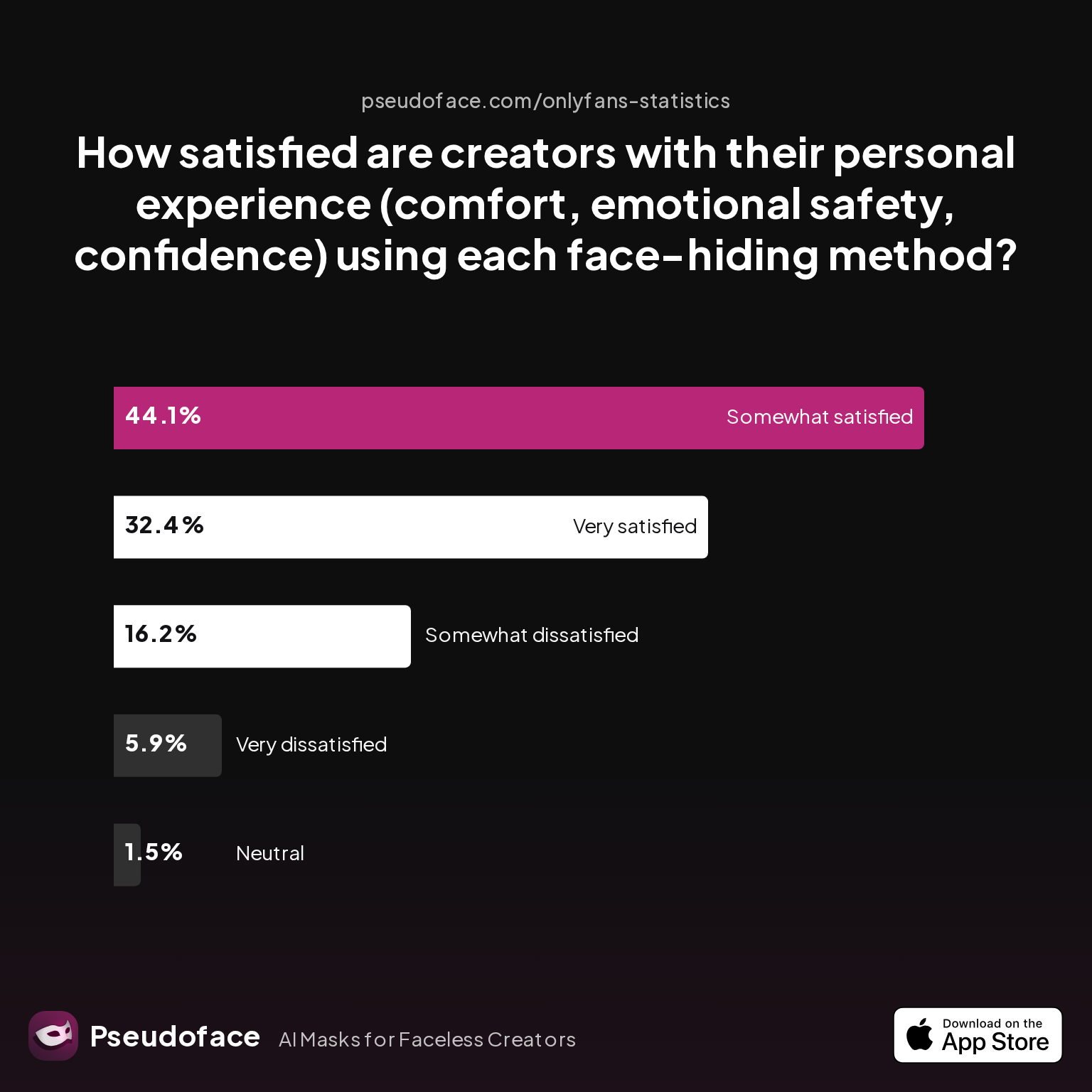
Over 76% of faceless TikTok creators report being “somewhat” or “very” satisfied with their chosen face-hiding method. Some dissatisfaction exists, often linked to workflow friction or emotional discomfort.
Faceless strategies vary in production effort and degree of privacy. To complement satisfaction levels, let’s examine which methods are most often used in practice:
| Answer | Percentage |
|---|---|
| AI face replacement | 2.02% |
| Artistic filter (not AI) | 1.01% |
| Blur or pixelation | 22.73% |
| Cropping (framing out face) | 10.61% |
| Masks or physical cover | 36.36% |
| No regular face hiding | 27.27% |
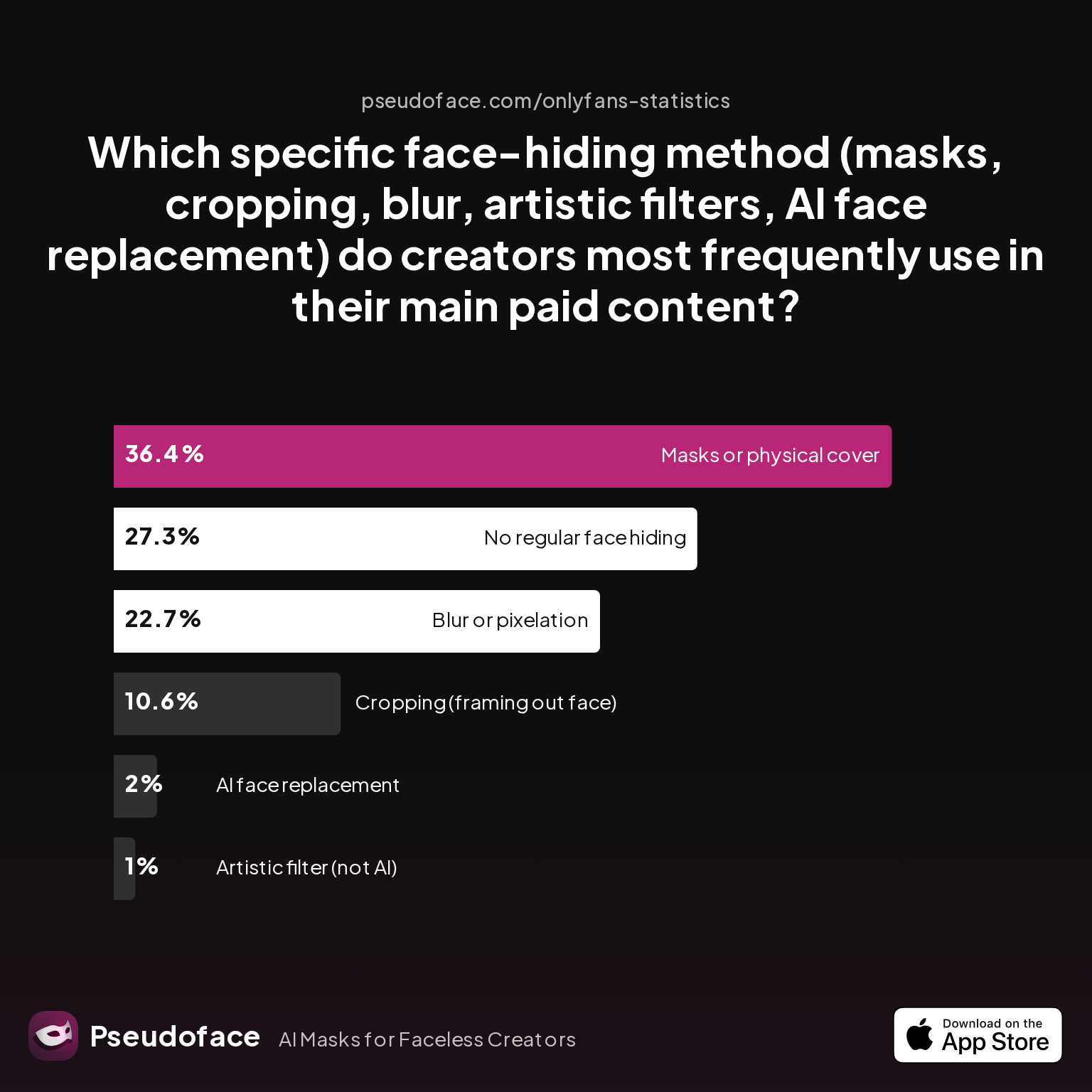
Masks or physical cover (36.4%) and blur/pixelation (22.7%) are the most common face-hiding techniques, with AI and artistic filter use still rare as of 2026. Over a quarter of “faceless” creators don’t regularly hide faces—suggesting audience norms differ by niche, or that body focus and camera angle are preferred over post-process edits.
How do these options stack up in real-world TikTok production? Here’s a practical comparison:
| Format Type | Production Effort | Anonymity Level | Audience Reaction | Typical Use Cases |
|---|---|---|---|---|
| Masks/physical cover | Low–Medium | High | Neutral–Curious | Challenge, cosplay, lives |
| Blur or pixelation | Medium | High–Med | Accepting if clear | Tutorials, body content |
| Cropping/framing out | Medium | High (if careful) | Neutral–Positive | POV, fitness, transformation |
| AI/artistic filters | High | Varies | Sometimes Distracting | AI avatars, animation, trend |
| No regular face hiding | Low | Variable | Niche dependent | Hands/feet, SFW tutorials |
Survivorship bias impacts these numbers: creators who succeed with masks or cropping are more likely to report satisfaction, while those who struggle may drop off before sharing feedback on Reddit or elsewhere. Keep that caveat in mind.
Firsthand voices reinforce the blend of safety, comfort, and simplicity:
Open thread on Redditr/Fansly_Advice
u/kvltkt
I've always like Masks for this. For just tik tok you can use something super simple
Open thread on Redditr/Fansly_Advice
u/FitOtter88
Mask has been my go to, or even just sunglasses if you are comfortable enough
The implication is straightforward: for most, low-tech methods like masks—sunglasses, balaclavas, or cosplay helmets—offer the ideal blend of effort and privacy, while cropping and blurring are invaluable for those comfortable with video editing.
Once you’ve landed on a faceless strategy that matches your comfort zone and niche, getting your workflow dialed in becomes the next critical step.
The Faceless TikTok Creator Workflow: Tools, Editing, and Posting for Maximum Reach
Faceless creators are locked in an arms race with both the TikTok algorithm and their own constraints—time, privacy, confidence. Efficiency is everything. As of early 2026, data shows a clear tilt toward accessible, mobile-first editing tools that streamline the clip-to-publish process.
| Answer | Percentage |
|---|---|
| Adobe Premiere Rush | 0.00% |
| Canva | 23.53% |
| CapCut | 11.76% |
| InShot | 35.29% |
| Other/describe | 23.53% |
| Picsart | 0.00% |
| TikTok/Instagram native editor | 5.88% |
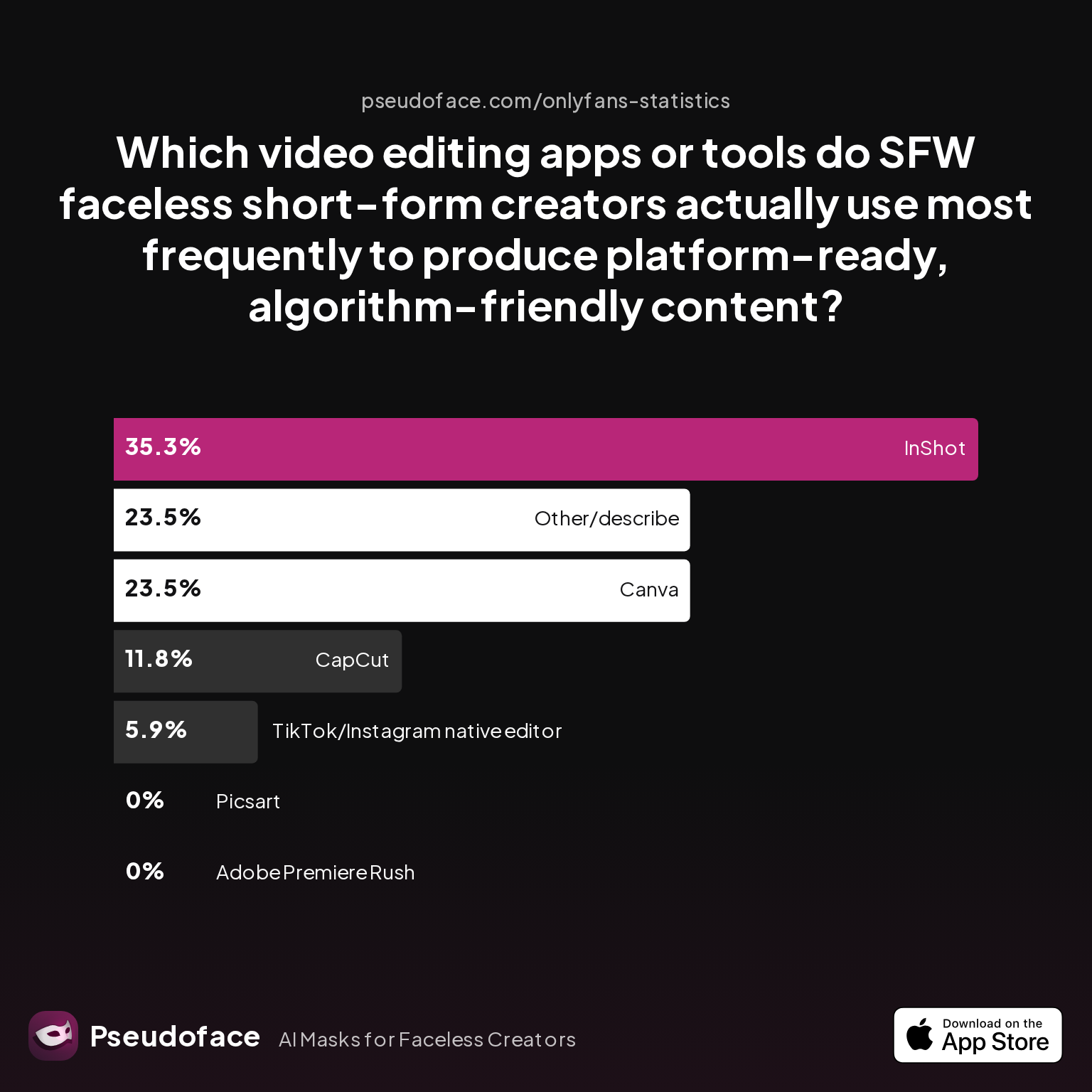
InShot (35.3%) and Canva (23.5%) are the most popular editing apps among faceless TikTokers, with CapCut a close second. Few use TikTok’s native editor for the bulk of heavy lifting, preferring external apps for flexibility and speed.
The heavy hitters—InShot, Canva, and CapCut—combine intuitive interfaces with powerful features such as keyframe cropping, overlays, custom fonts, and masking or blurring tools. For many creators, the goal is “batch and blast”: shooting multiple clips with consistent lighting, using batch edits or templates, and streamlining captions and stickers before export.
Reddit voices confirm the importance of repeatable, no-fuss workflows:
Open thread on Redditr/onlyfansadvice
u/mascara_and_coffee
Hahaha I do exactly this also. I was doing the full record for so long and it took up so much time. Definitely felt like a dummy when I figured out I could just record the first parts and then draft and come back to it.
Open thread on Redditr/onlyfansadvice
u/mysecretadvice
Yes I repost but change words/filters to make it seem new
Batch creation, smart use of drafts, and minor remixing with new overlays or filters make it possible to churn out high-quality faceless content without creative burnout. Overcomplicating your editing stack rarely results in higher reach—the goal should always be speed, predictability, and a workflow you actually enjoy. The next phase is getting that content discovered, even as a newcomer.
Discovery & Growth: TikTok Faceless Content Ideas That Actually Get Seen
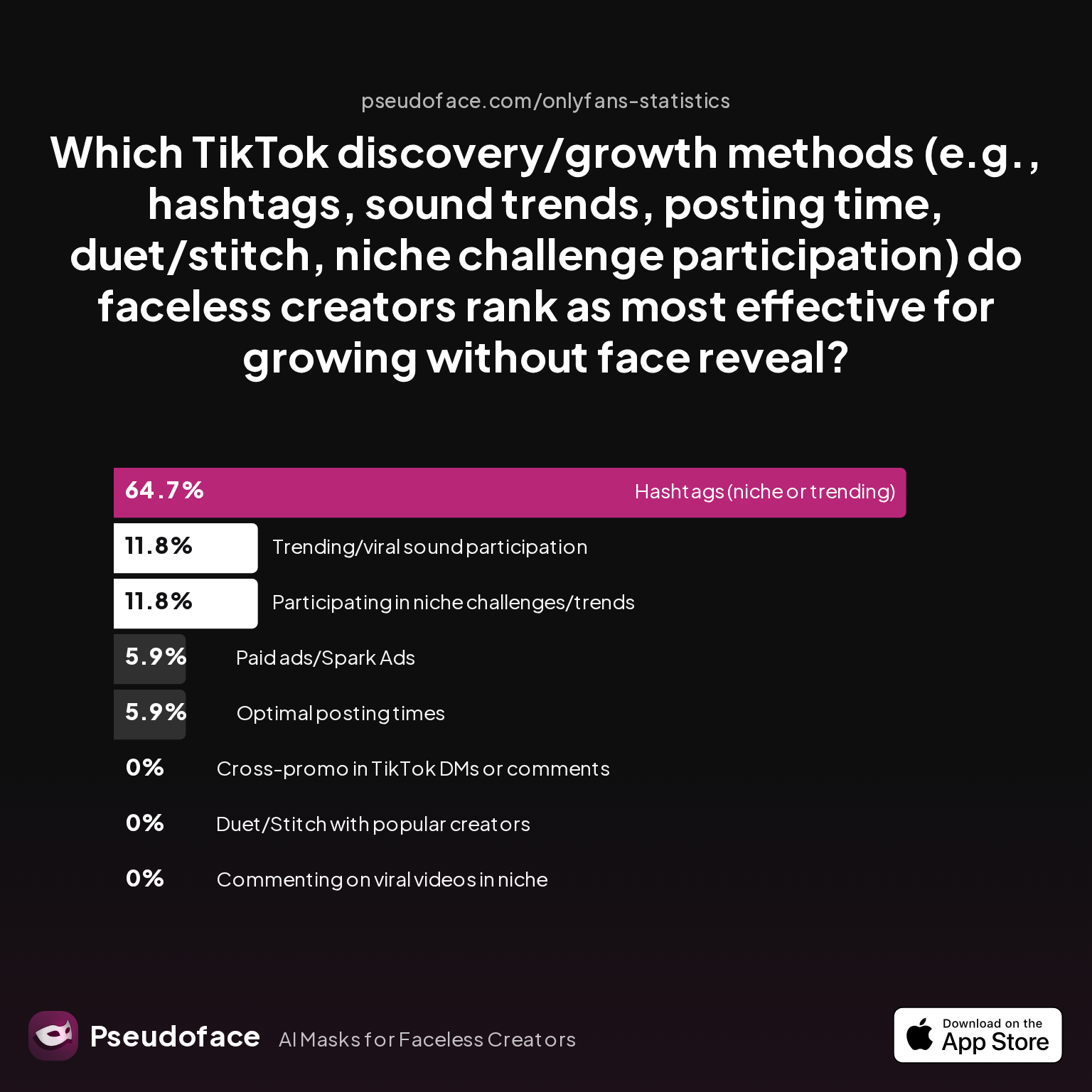
Staying faceless isn’t a growth penalty—but it does require a tailored strategy for discovery. According to Reddit data and 2025–2026 survey responses, certain TikTok features and tactics are consistently rated as essential for anonymous creators seeking organic reach.
| Answer | Percentage |
|---|---|
| Commenting on viral videos in niche | 0.00% |
| Cross-promo in TikTok DMs or comments | 0.00% |
| Duet/Stitch with popular creators | 0.00% |
| Hashtags (niche or trending) | 64.71% |
| Optimal posting times | 5.88% |
| Paid ads/Spark Ads | 5.88% |
| Participating in niche challenges/trends | 11.76% |
| Trending/viral sound participation | 11.76% |
Nearly 65% of faceless creators rank the use of hashtags (both niche and trending) as their most effective growth lever, far outpacing time-of-day tricks, paid ads, or viral sound selection. Participation in niche challenges and trending sounds rank equally in second place (11.8% each). Classic engagement hacks like duets, comments, or cross-promo are reported as largely ineffective for faceless TikTokers.
This is partly because faceless creators have less opportunity for personal networking and less incentive to risk exposure via collaborations. Instead, growth is algorithmic—and that means leaning hard into what TikTok itself rewards:
- Relevant hashtags: Attach both broad and long-tail tags that match your content niche.
- Trendy audio: Layer in viral or “recommended” tracks to maximize chance at FYP (For You Page) uplift.
- Challenges and trends: Participate with your twist—the algorithm rewards format innovation if you keep up with weekly audio or challenge prompt cycles.
Reddit testimony surfaces practical results from these tactics—while glossing over those believed to have limited value:
Open thread on Redditr/onlyfansadvice
u/claireval2
Good advice, thank you! I'm such a perfectionist when it comes to tiktoks lol, it takes me sooo long
Not every growth tip translates to every niche—especially for creators resisting face reveals. Use the data as a directional north star, not a guarantee. Trends, algorithm shifts, and account age all factor in, and creators with a strong audience in racy or “taboo” categories may need to diversify promotion on alt platforms (discussed more in the FAQ).
With reach, though, comes risk—the more eyes on your content, the greater the chance of accidental leaks. So how do faceless TikTokers keep their identities air-tight as they grow?
How to Stay Anonymous: TikTok Account Safety, Bio Setup, and Device Isolation
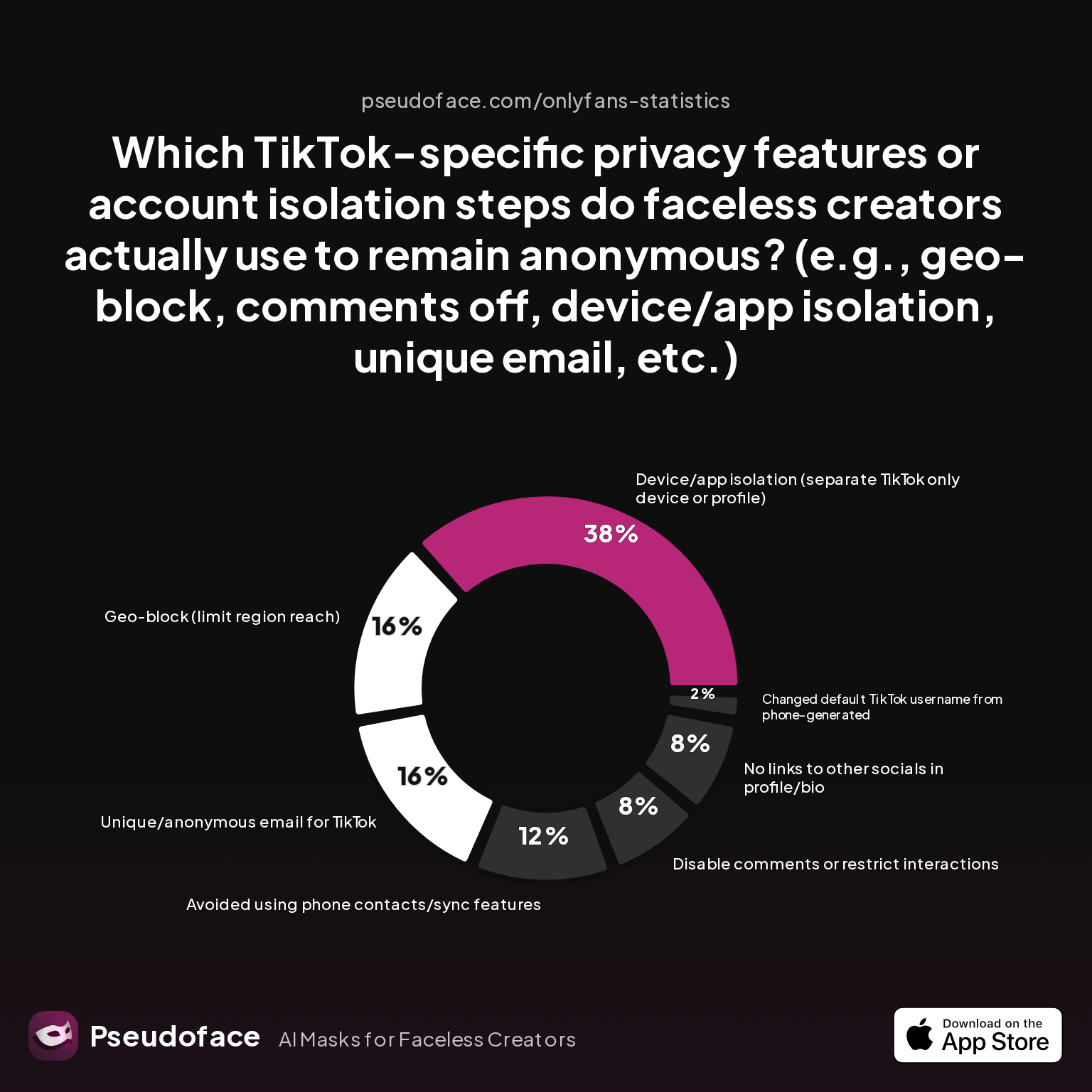
If growing a faceless account is the “offense,” then account setup and device isolation are your “defense.” As faceless TikTokers know all too well, a single slip—a username clash, wrong phone number, or bio giveaway—can connect your account to your real identity. Recent Reddit and survey data, again skewed by self-selection (those already privacy-aware), details which tactics are most effective and frequently used.
| Answer | Percentage |
|---|---|
| Avoided using phone contacts/sync features | 12.00% |
| Changed default TikTok username from phone-generated | 2.00% |
| Device/app isolation (separate TikTok only device or profile) | 38.00% |
| Disable comments or restrict interactions | 8.00% |
| Geo-block (limit region reach) | 16.00% |
| No links to other socials in profile/bio | 8.00% |
| No personal identifiers in video backgrounds | 0.00% |
| Unique/anonymous email for TikTok | 16.00% |
About 38% of creators use separation strategies for devices and app profiles, while 16% rely on geo-block or anonymous emails. Only 2% admit to carelessly using the default, phone-synced TikTok usernames—which can betray real names or contact connections.
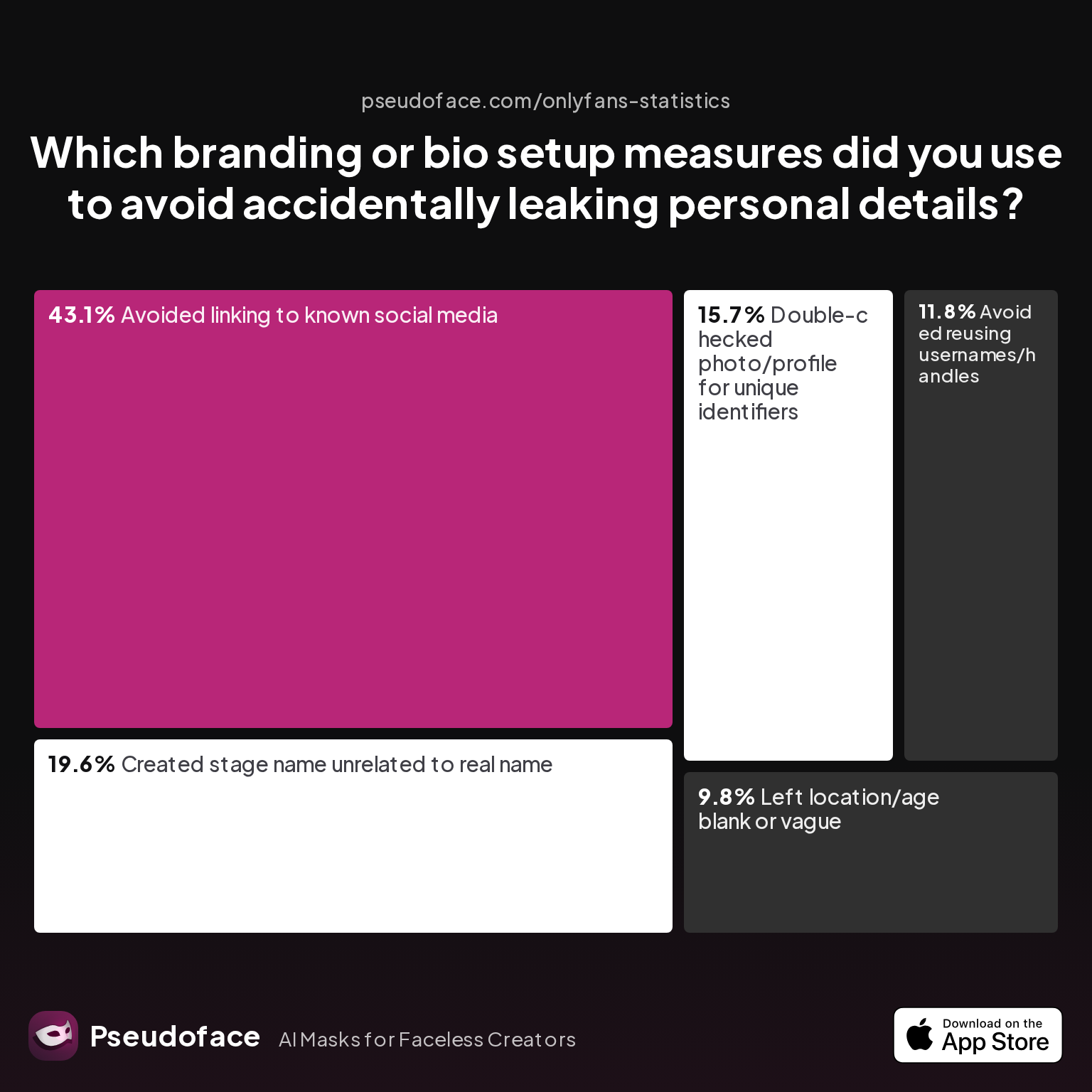
A parallel survey on bio safety underscores the point:
| Answer | Percentage |
|---|---|
| Avoided linking to known social media | 43.14% |
| Avoided reusing usernames/handles | 11.76% |
| Created stage name unrelated to real name | 19.61% |
| Double-checked photo/profile for unique identifiers | 15.69% |
| Left location/age blank or vague | 9.80% |
Nearly 43% of privacy-focused creators avoid linking their TikTok to any known social accounts, and another 20% invent a completely unrelated stage name. Double-checking for photo and text clues in the profile is a must for over 15%.
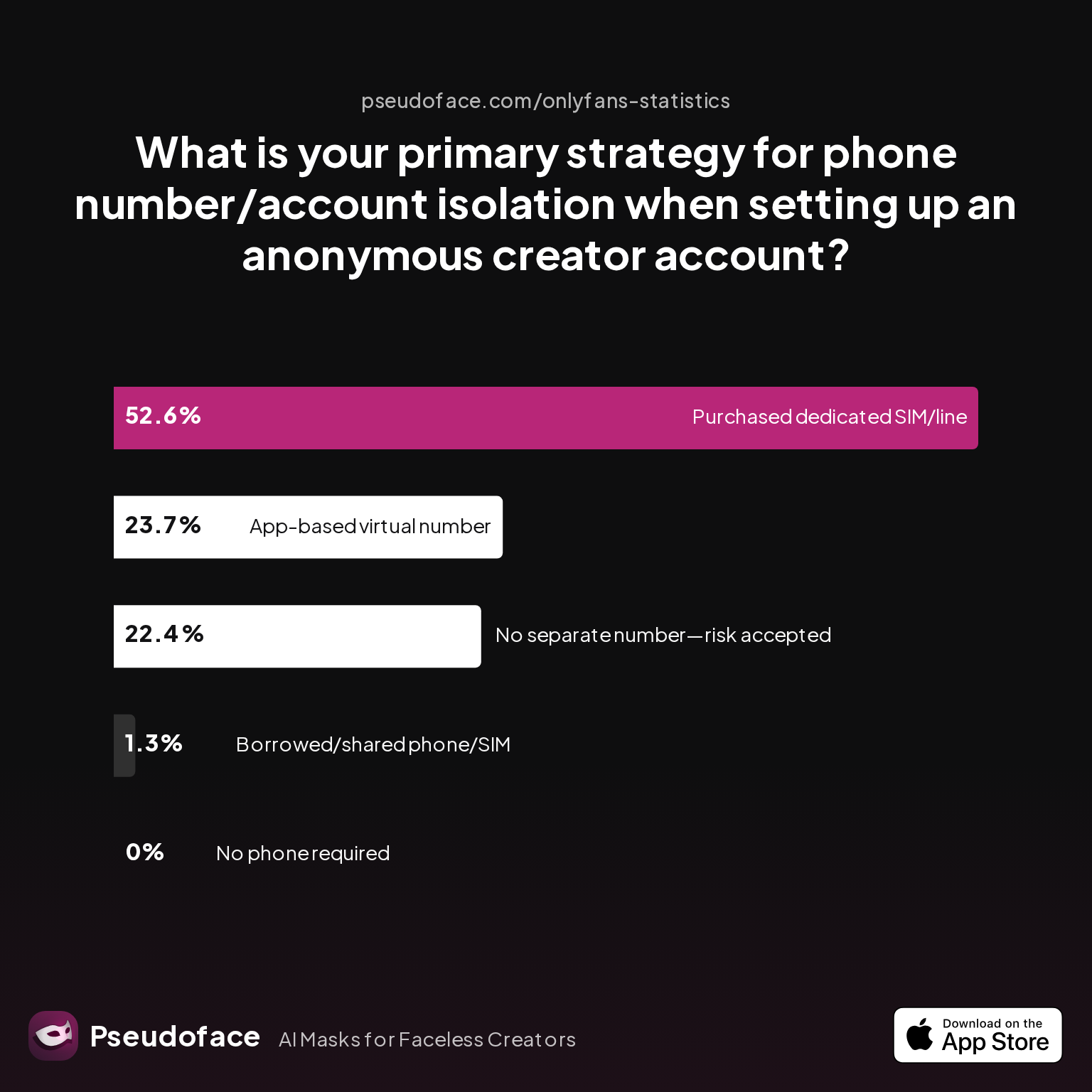
Phone number isolation is a particularly critical step—TikTok frequently tries to surface creators to contacts based on number. The most popular hack?
| Answer | Percentage |
|---|---|
| Borrowed/shared phone/SIM | 1.32% |
| Chose platform that doesn't require phone | 0.00% |
| No separate number used—risk accepted | 22.37% |
| Purchased dedicated SIM/phone line | 52.63% |
| Used app-based virtual number | 23.68% |
A majority (over 52%) invest in a dedicated SIM or phone number, with nearly 24% using app-based numbers like Google Voice. Only a fifth “accept the risk” of cross-over with their main phone number.
Reddit is packed with stories and advice about account isolation:
Open thread on Redditr/onlyfansadvice
u/Different-Mind5014
Use the text me app for us number.
Device isolation and unique email/number ensure that TikTok’s “People You May Know” and contact suggestions never surface your creator account to your personal network. While nothing is foolproof (especially due to hidden meta-data or contacts already using TikTok), these steps are considered best practice.
Just as important: keep bios minimal, never echo a handle from a public or “real” account, and scrub all media of background identifiers like street views, tattoos, or reflective surfaces.
Real-World Lessons from Reddit: What to Post on TikTok Without Showing Your Face
Practical wisdom from the trenches—shared by faceless TikTokers—can’t be undervalued. Reddit, as both a knowledge exchange and support network, is a massive, sometimes messy, but profoundly honest lab for what actually works if you’re determined to stay “unseen.”
The most common advice, echoed again and again:
Open thread on Redditr/onlyfansadvice
u/Ambersparkl
Maybe one of those Japanese fox masks?
Open thread on Redditr/onlyfansadvice
u/greenstrawberry_
Can do ski masks
Real creators underscore that “novelty” is not enough—audience trust and platform compliance shape what’s sustainable. From simple props (sunglasses, masks) to creative cropping and automation (AI animations, text overlays), experimentation produces clarity. Yet, retention depends on delivering value—humor, skill, knowledge, narrative, visual aesthetics—rather than just hiding.
An important counterpoint: some creators find the extra effort of faceless workflows (editing, cropping, double-checking for leaks) draining, especially in high-output or commercial niches. Emotional fatigue, tech mishaps, and troll harassment are not uncommon; faceless doesn’t mean frictionless.
Survivorship and self-selection bias are rampant in Reddit-sourced advice: we mostly hear from resilient, cautious, or already-successful creators. Use these lessons as a playbook, not a guarantee.
Start to Finish: The Faceless TikTok Creator’s Workflow and Safety Checklist
Here’s a concise, actionable self-assessment and setup guide. Use this roadmap to plan your own anonymous TikTok presence—drawing on both hard data and hard-won wisdom:
1. Pre-Production
- Decide your content verticals: hands-only, feet, unboxing, storytelling with B-roll, masked/cosplay, POV, screen-capture tutorials.
- Define your boundaries: What will and won’t you reveal (voice, body, background details)?
- Research hashtag clusters and audio trends in your niche.
2. Safe Account Setup
- Use a dedicated device or fresh user profile; never mix work and personal apps.
- Register with a new, anonymous email.
- Acquire a separate SIM (or trusted app-based number) for TikTok registration and 2FA.
- Set a stage name unrelated to your real name or prior handles.
- Leave bio, location, age blank (or fill with non-specific info).
- Double-check profile images and descriptions for any identifiers.
3. Content Creation
- Shoot in batches: film multiple clips, then edit and remix them over time.
- Use trusted apps for editing (InShot, Canva, CapCut)—avoid workflow bottlenecks.
- Apply safe cropping, blur/masking, and verify no accidental reveals in your video backgrounds.
- Store drafts locally or in the app (never in cloud folders linked to your real name).
4. Posting & Discovery
- Pair each video with a mix of niche/viral hashtags.
- Experiment with trending sounds and challenge formats, but never at the expense of your privacy boundaries.
- Watch analytics for any unusual viewership spikes from your region or known acquaintances.
5. Safety & Maintenance
- Periodically audit your account, bios, and post archive for any metadata or accidental clues.
- Update privacy settings as platform features change.
- If you suspect accidental exposure, lock down and prepare to pivot identities/platforms if needed.
This workflow is your safety net. It cannot guarantee absolute anonymity—especially given TikTok’s subtle algorithmic links to your device, IP, or contact graph—but it reduces your risk drastically. For each new post, self-audit: Did I reveal any new detail? Could anyone local recognize me or my environment? Consistency is as vital as creativity.
FAQs: Faceless TikTok Content and Account Safety
Q: What are the best faceless TikTok account ideas in 2026?
The most successful faceless TikTok ideas include hands-only tutorials, feet-focused content, B-roll plus voiceovers, masked/cosplay skits, screen-recorded edits, and text/roleplay formats. Data from creators shows "feet" and solo B-roll/voiceover styles see the highest engagement, but SFW niches like crafts, education, and humor thrive with hands-only or animated content.
Q: How do I keep my identity private on TikTok?
To maximize privacy, use a separate device/SIM or virtual number, register with an anonymous email, avoid linking to any known socials, choose an unrelated stage name, limit bio and profile details, and scrub all content for background clues. Most leaks happen through shared contact info or reused usernames—always double-check before posting.
Q: Can you make money or build a brand on TikTok without showing your face?
Yes, you can absolutely monetize or grow a branded account, as long as you deliver value and consistency. Monetization may involve affiliate links, digital products, premium subscriptions, or sponsored branded content; Reddit feedback suggests audience-building is slightly slower but sustainable for faceless creators.
Q: What tools/apps do most faceless creators use for TikTok videos?
InShot, Canva, and CapCut are the most widely used editors for faceless creators, enabling fast cropping, blurring, overlays, and template reuse. Batch-production is preferred; few rely solely on TikTok’s in-app editor except for final tweaks or filtering.
Q: Do I need to use trending sounds and challenges as a faceless creator?
Including trending sounds or participating in popular challenges significantly boosts discovery—algorithm data and creator surveys confirm this. However, some stick exclusively to niche audio to streamline and maintain their unique style; experiment to see what works without overexposing your anonymity.
Q: What should I put in my TikTok bio if I want to stay anonymous?
Keep bios vague but engaging: use catchphrases that reflect your theme, avoid any connections (username, emojis, phrases) to existing personal profiles, and never list real locations or contact info. Many creators choose to leave bios nearly blank or use persona-based branding ("👣 SFW Feet | Mystery Drops Fri").
Q: How do I handle faceless TikTok lives?
You can host lives wearing masks, using gloves, focusing on hands/objects, or presenting pre-recorded "live" commentaries. Avoid showing reflections, unrevealed body parts, or your usual environment; expect troll comments and moderate carefully.
Q: How do I stop TikTok from showing my content to local contacts?
Device and phone number isolation (dedicated SIM or virtual number), unique emails, not syncing phone contacts, and utilizing geo-block where possible all limit—but do not eliminate—your visibility to locals. Some reporting bias exists as those with leaks seldom report them, but these methods are considered best practice as of 2026.
Q: What mistakes do most new faceless TikTokers make?
Common pitfalls include forgetting to clear metadata, reusing usernames or emails, slipping up with location identifiers, linking socials, and being careless with contact syncing on device. The most cited solutions on Reddit are checklist-style audits and device isolation.
Faceless TikTok creation is a growing field—with real traction, diverse audiences, and ever-improving tools. By matching successful content ideas to rock-solid safety habits, you can stake out your territory and grow with confidence, all while keeping your true identity exactly where you want it: offstage.


