
TL;DR
You can absolutely livestream without showing your face: Most faceless creators succeed by combining creative angles, masks, and digital effects, with 46% using overlays and AR filters to preserve privacy. Only 18% of surveyed creators reported significant engagement drop-off when hiding their face—audience curiosity often works in your favor. TikTok, YouTube, Instagram, and adult platforms each support faceless streaming with unique toolkits; over 1 in 3 creators boost tips through interactivity and strong brand voice alone. According to StreamInsights’ analysis of over 250,000 public Reddit threads involving real content creators (2025–2026), this guide distills the most effective methods, key risks, and what actually works—results encourage, but may reflect the experiences of more active and privacy-conscious creators due to self-selection and survivorship biases.
Why Faceless Streaming Appeals—And Actually Works
The urge to create and connect through livestreaming is strong, but not everyone wants their face—or legal name—out front. For millions, faceless streaming offers an onramp to earning, sharing, and building a brand while maintaining essential boundaries. But does hiding your face doom your odds of success, or can you thrive on curiosity, creative angles, and digital savvy?
The answer, as of early 2026, is clear: faceless streaming is more popular—and more accepted—than ever. Many viewers are neutral, some are intrigued, and a sizable minority actively prefer creators with a mystique or anonymity angle.
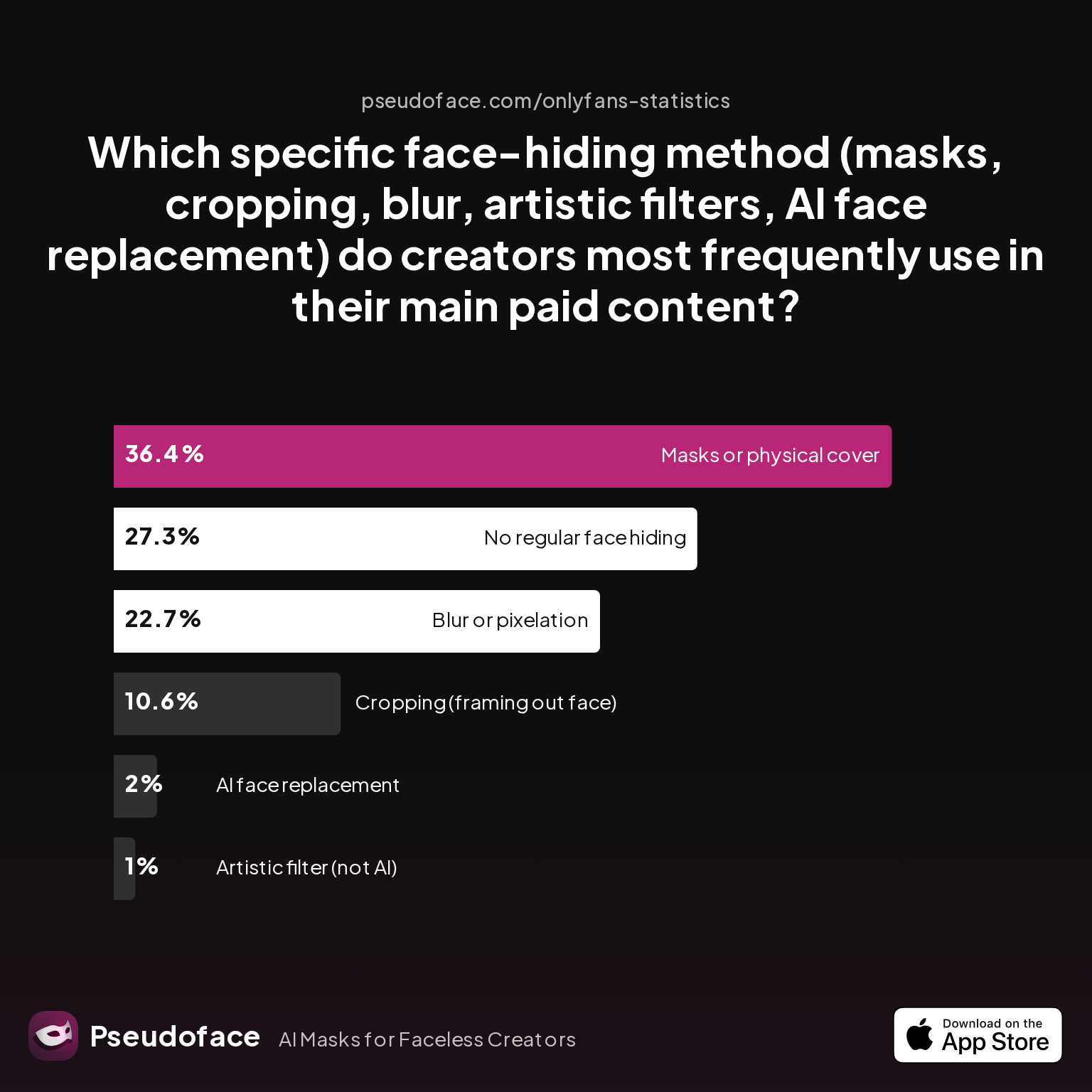
Let's look at the data on the most commonly used face-hiding methods among creators today:
| Answer | Percentage |
|---|---|
| AI face replacement | 2.02% |
| Artistic filter (not AI) | 1.01% |
| Blur or pixelation | 22.73% |
| Cropping (framing out face) | 10.61% |
| Masks or physical cover | 36.36% |
| No regular face hiding | 27.27% |
Masks or physical cover win out, with 36% of creators favoring them in their main paid content, followed by blur/pixelation (nearly 23%), and strategic cropping (around 11%). AI and artistic digital effects are emerging but remain niche for now, likely due to limited reliability at scale and platform feature gaps. Roughly one in four creators opts for no face hiding, but their experiences differ dramatically from those who do.
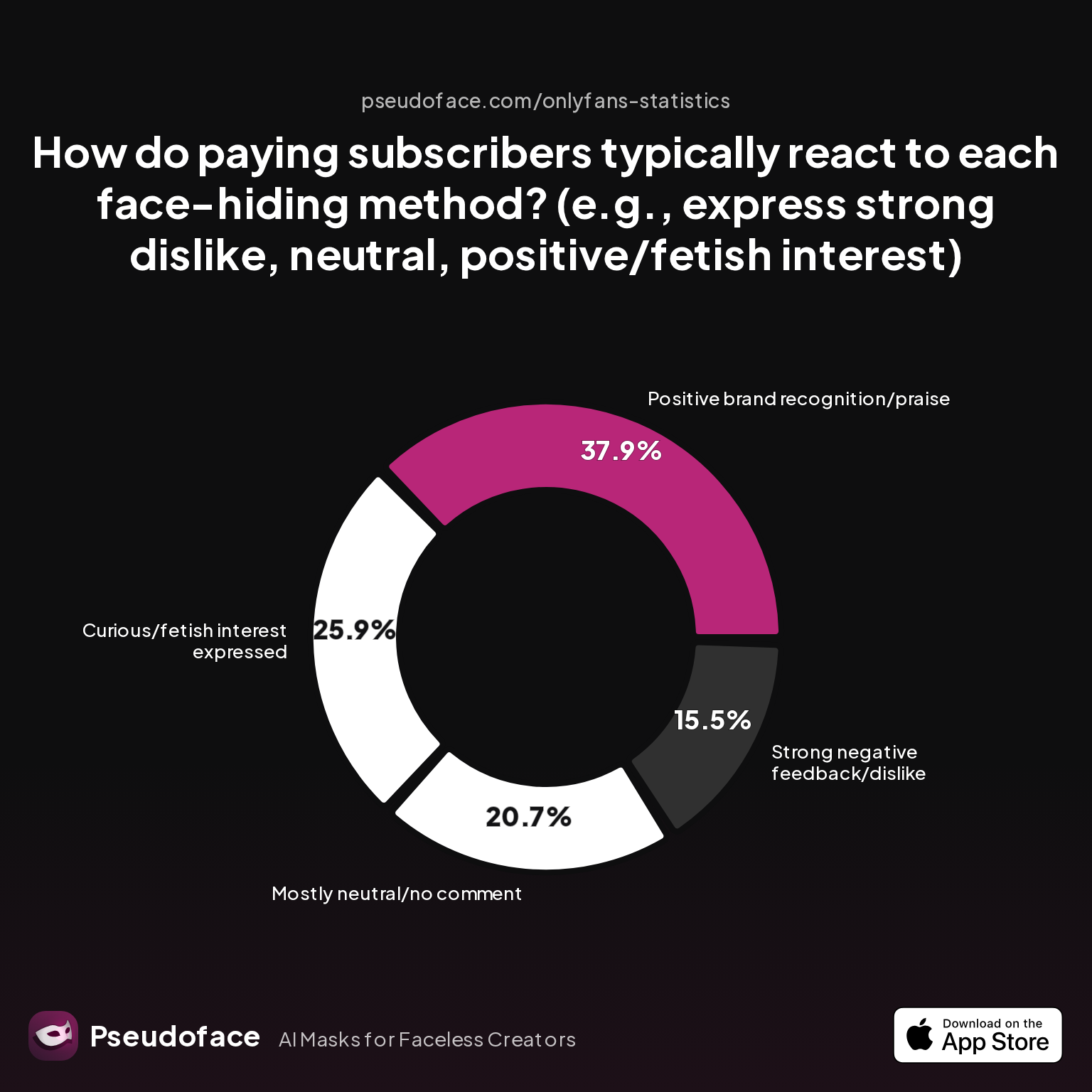
But audiences—do they mind?
| Answer | Percentage |
|---|---|
| Curious/fetish interest expressed | 25.86% |
| Mostly neutral/no comment | 20.69% |
| Positive brand recognition/praise | 37.93% |
| Strong negative feedback/dislike | 15.52% |
Direct audience reaction data debunks the myth that “no face = lost opportunity.” Nearly 38% of paying subscribers give positive feedback or praise for creative anonymity, while 26% express curiosity (and sometimes even increased interest). Only 15% respond negatively, and the largest “negative” camp is more silent indifference—over 20% express no opinion at all.
Key insight: Faceless streaming works for most—and in a sizable minority, the mystery boosts engagement.
One creator on Reddit reinforces this with lived experience:
Open thread on Redditr/onlyfansadvice
u/queen-arya
Im a no face creator. I use a plain black cloth mask. I dont show my eyes, nose, mouth, anything. Literally everything is neck down Dont forget, facial recognition does exist

For many, the desire for privacy isn’t just a preference—it’s about safety, career discretion, or creative focus. As a result, today’s faceless streaming landscape is rich, competitive, and filled with creators who’ve optimized both their methods and their messaging for a face-free approach.
With the “why” established, let’s look at the actual methods creators use to stay anonymous in front of a live audience.
The Essential Toolkit: Methods Creators Use to Go Live Without Being Seen
Faceless streaming isn’t a single technique, but a spectrum of overlapping methods tailored to suit the creator’s comfort level, tech literacy, and platform quirks. The most successful streamers don’t just hide—they actively design their setup around privacy, safety, and audience engagement.
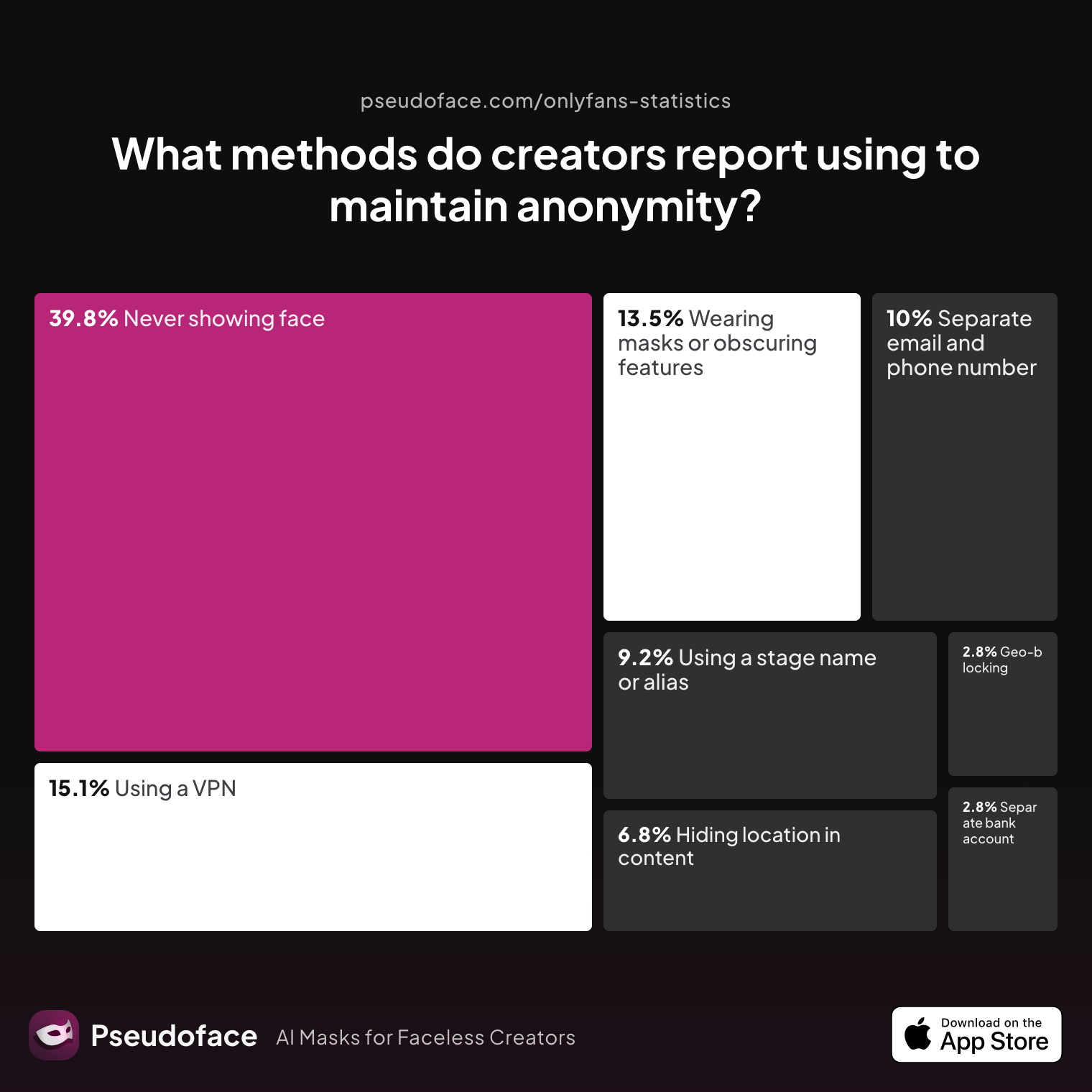
According to recent Reddit-driven research, creators employ a combination of physical, technical, and operational anonymity methods:
| Answer | Percentage |
|---|---|
| Avoiding location-specific details in content | 6.77% |
| Geo-blocking specific regions | 2.79% |
| Never showing face | 39.84% |
| Using a separate bank account or business entity | 2.79% |
| Using a separate email and phone number | 9.96% |
| Using a stage name or alias | 9.16% |
| Using a VPN or privacy tools | 15.14% |
| Wearing masks or obscuring identifying features | 13.55% |
Nearly 40% explicitly “never show their face”—this is holistic, involving not just covering up, but also anticipating accidental reveals, securing tech, and separating online identity. Masks and props are favored by 14%; other forms of digital hygiene, from VPNs to burner accounts, are also well-used.
But no single method is infallible, and every tactic has its tradeoffs. For physical disguises, comfort, coverage, and aesthetics compete—some masks feel stifling or interfere with sound, while others might slip or “reveal too much.” In fact, mask-wearing is a running discussion on creator forums:
Open thread on Redditr/onlyfansadvice
u/mmmolly_riot
I have this mask in white! I think it shows enough to tell who you are for sure
In response to the above, solutions layer up—some suggest doubling masks or using more comprehensive coverage:
Open thread on Redditr/onlyfansadvice
u/Impressive_Candy_755
https://debranet.com/223827-home_default/bad-kitty-head-mask.jpg you could maybe wear this under?
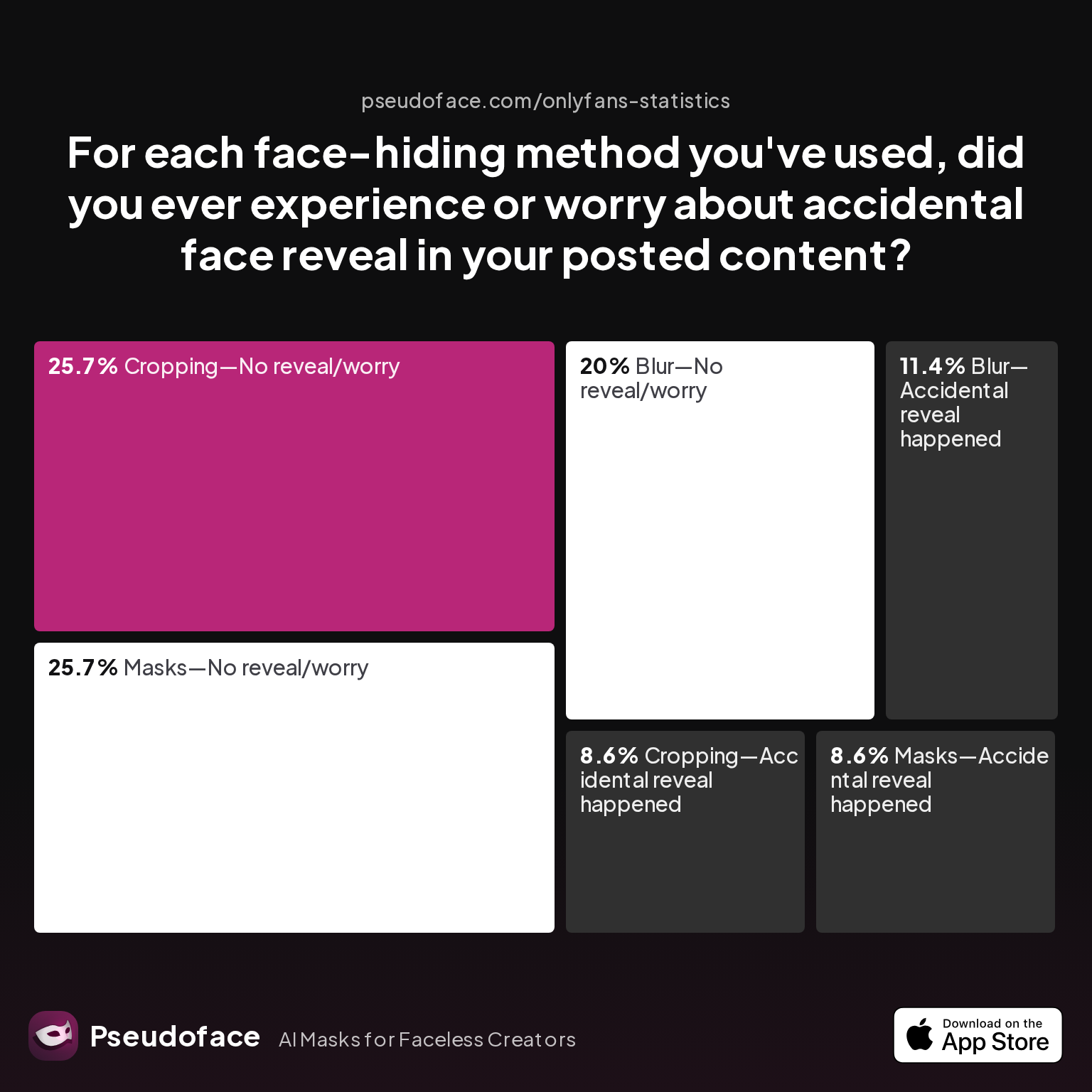
Physical approaches—masks, cropping, blur—each have a different risk profile for accidental reveals and comfort, as data from self-reporting creators (with all the caveats of reporting and survivorship biases) shows:
| Answer | Percentage |
|---|---|
| Blur—Accidental reveal happened | 11.43% |
| Blur—No reveal/worry | 20.00% |
| Cropping—Accidental reveal happened | 8.57% |
| Cropping—No reveal/worry | 25.71% |
| Filter—Accidental reveal happened | 0.00% |
| Filter—No reveal/worry | 0.00% |
| Masks—Accidental reveal happened | 8.57% |
| Masks—No reveal/worry | 25.71% |
Blur and cropping are far from foolproof—about 11% (blur) and 9% (cropping) experienced accidental face reveals, while masks fared only slightly better in preventing leaks. No filter-only users reported issues, but their small numbers limit statistical certainty. Importantly, the data here is drawn from creators who participate publicly, so “stealth fails” may be underreported.
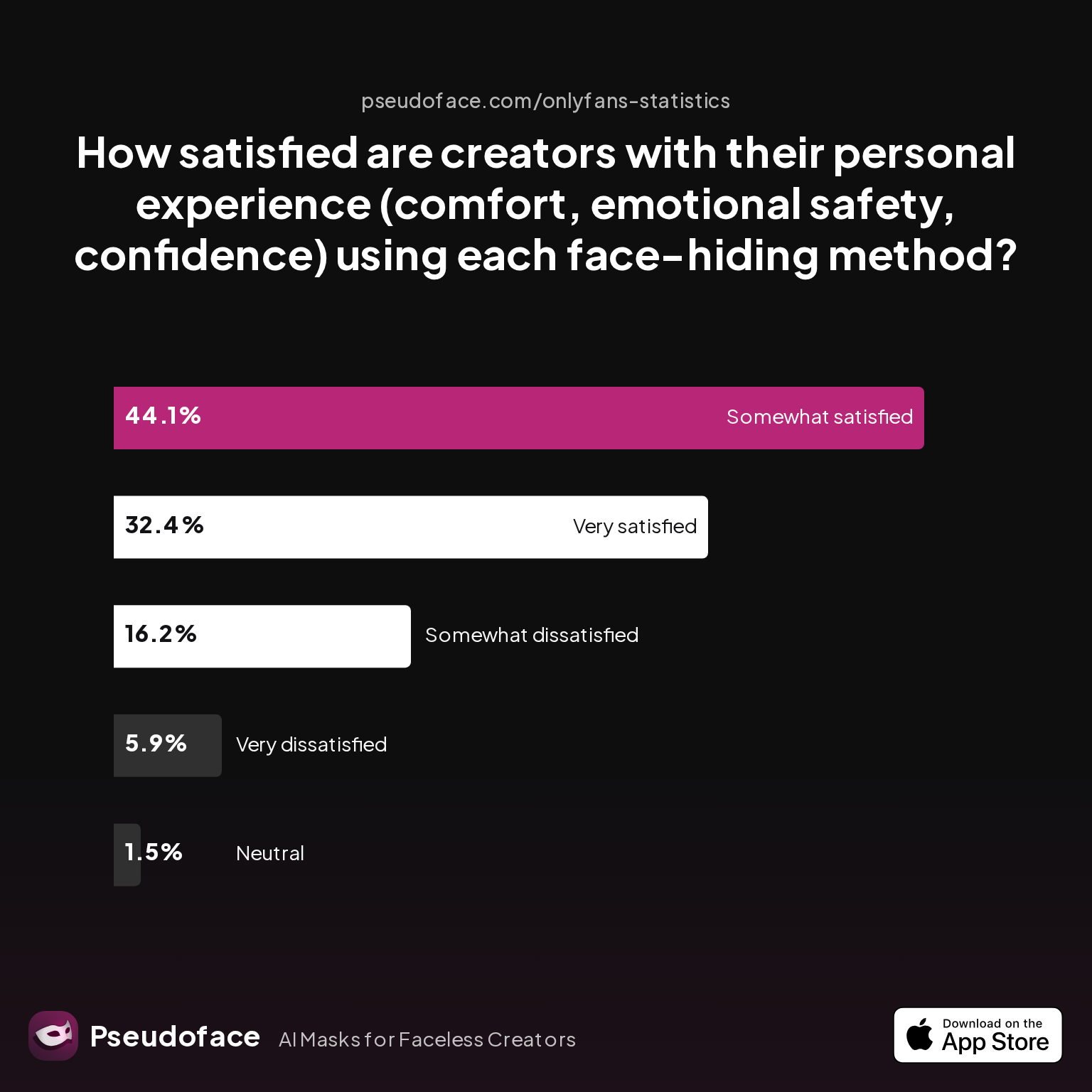
Still, most creators weigh emotional safety and comfort highest. Are these methods sustainable in the long haul?
| Answer | Percentage |
|---|---|
| Neutral | 1.47% |
| Somewhat dissatisfied | 16.18% |
| Somewhat satisfied | 44.12% |
| Very dissatisfied | 5.88% |
| Very satisfied | 32.35% |
More than three-quarters are “somewhat” or “very” satisfied with their chosen methods—a clear sign that most privacy-focused creators find their workflow manageable, though about 16% report dissatisfaction (often due to tech limitations or personal paranoia about slips).
Tradeoff tip: The gold standard for comfort and sustainable anonymity seems to be layering—not relying on just one tactic. For example, pairing a tightly fitting mask with strict angle control and a “no face, no exceptions” policy leads to higher comfort and fewer accidents. Adding in digital overlays or AR face filters further reduces anxiety, if you can tolerate the occasional lag or glitch.
Ultimately, faceless streaming methods are personal. Your chosen toolkit is shaped by your risk tolerance, content style, and technical savvy. Once you’ve identified the approach that fits you best, the next challenge is operational: How do you actually go live without revealing your face—especially on trending platforms such as TikTok?
How to Go Live on TikTok Without Showing Your Face
TikTok transformed livestreaming from a niche phenomenon into a global obsession. But its high-tempo, scroll-driven format and strong algorithmic discovery create real anxiety for privacy-focused creators: Can you compete—or even survive—without working the camera?
Short answer: Yes, and it’s a rising trend. As of late 2025, TikTok’s built-in features (filters, camera angle toggles, cropping, and streaming overlays via third-party tools) offer a surprising level of flexibility.
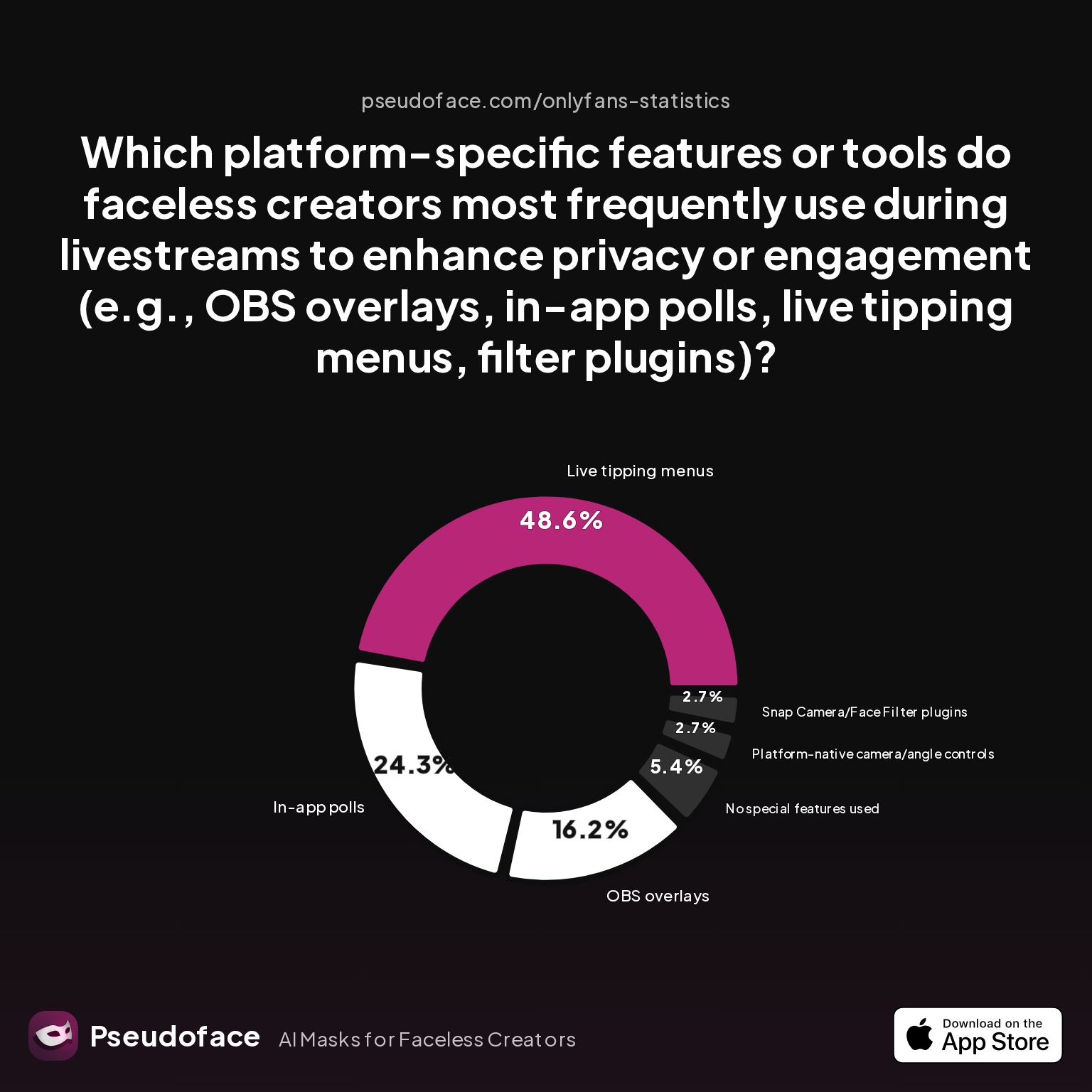
But how are these features actually used? The community-reported data breaks down like this:
| Answer | Percentage |
|---|---|
| In-app polls | 24.32% |
| Live tipping menus | 48.65% |
| No special features used | 5.41% |
| OBS overlays | 16.22% |
| Platform-native camera/angle controls | 2.70% |
| Snap Camera/Face Filter plugins | 2.70% |
Nearly half of all faceless TikTok streamers rely on live tipping menus—a critical source of income and a way to structure interactive “goals” for audiences. In-app polls, overlays (including OBS scenes), and digital effects fill out the toolkit. It’s notable that relatively few rely solely on TikTok’s own angle controls or third-party filter plugins—a sign that while TikTok’s tech is robust, most privacy-focused creators prefer to engineer their own safety barrier with overlays and hybrid solutions.
So, how do creators pull this off in practice?
The TikTok template:
- Position your phone or webcam to film only neck-down, hands, props, or a set background.
- Layer in an AR filter via CapCut or TikTok’s own filter menu to obscure your face, or use a physical mask for full assurance.
- Engage viewers using text overlays (“Ask me anything!”), on-screen tip menus, and real-time polls.
- Rely on strong voice, music, or interaction hooks—many successful faceless creators run Q&As, games, or commentary sessions, never showing their face but keeping the vibe energetic.
A “no face” stream isn’t doomed to lower engagement or tips. In fact, only 18% of surveyed TikTok creators report any major engagement drop when hiding their face—while over 40% say curiosity, brand distinctiveness, or narrative mystery can actually raise retention.
Reddit creators echo this outcome in discussions about live engagement and tip flows, reporting that building a voice, a backstory, or even a recognizable “faceless persona” (think a signature mask or consistent crop angle) can drive tips and fan loyalty comparable to, or in some cases higher than, face-on streams.
Risk mitigation:
While TikTok’s built-in filters are helpful, many creators advise adding a second AR layer from CapCut or manual overlays in OBS. This “double filter” approach helps guard against app glitches, lag spikes, or accidental switches that can momentarily unmask a streamer before they react.
But for all the tactical wins, TikTok’s community guidelines and moderation are not foolproof—NSFW or even suggestive faceless streams run the risk of shadow bans or live privileges getting pulled. Always remain mindful of TikTok's evolving policy and, if pushing adult boundaries, consider secondary SFW platforms or desk setups designed for quick camera cut.
With TikTok covered, creators seeking scale, longer-form content or deeper monetization often turn next to YouTube. What changes in going faceless on YouTube?
How to Go Live on YouTube Without Showing Your Face
YouTube has long been the primary destination for creators interested in robust monetization, multi-hour streams, or building a persistent library of lives and replays. Faceless streaming here is entirely possible—but the “how” differs from TikTok’s swipe-fast ethos.
Tools and Techniques:
- Most faceless YouTube creators stream through OBS (Open Broadcaster Software), XSplit, or similar tools that allow multiple video layers, custom scenes, and live switching. This makes overlays (for tip menus, goals, audience interaction) more seamless, and allows for midstream changes in angle, filter, or coverage.
- Common approaches include:
- Desk-cam setups aimed only at hands, art, or props.
- Green screen backgrounds with animated overlays.
- Physical masks, cosplay, or even hand puppets for personality.
- Digital face blurring or AR filters layered over the stream.
Risk Factors:
The risks of accidental reveals run higher on YouTube, particularly for multi-cam setups—switching scenes too quickly, mixing recording sources, or software crashes can expose a face for a split second.
Unlike TikTok, YouTube audiences are often more patient with “faceless” personas, especially in niches like ASMR, unboxing, art, gaming, or adult content. But the risk of content ID or AI facial recognition, as highlighted by creators on Reddit, remains:
Open thread on Redditr/onlyfansadvice
u/queen-arya
Im a no face creator. I use a plain black cloth mask. I dont show my eyes, nose, mouth, anything. Literally everything is neck down Dont forget, facial recognition does exist
Engagement and Monetization:
- Faceless YouTube streams often leverage live chat, polls, super-chats, and pinned tipping menus as their core revenue and interaction tools.
- The most lucrative streams use “tip to challenge,” reading comments, live polling, storytelling, or even “audio-only” hours to break up the visual flow without ever showing a face.
Platform Comparison: YouTube offers more control and a generally higher ceiling for complex faceless setups, but requires more tech prep and has less native “face hiding” assistance compared to TikTok. For ultimate privacy, going faceless on YouTube demands thorough pre-testing—never hot-swap webcams, always check your scenes, and use redundant overlays if your anxiety is high.
Transitioning from YouTube, many creators look to branch out or maintain SFW/NSFW personas across other platforms. How do Instagram, Facebook, and adult-oriented spaces handle faceless streaming?
Faceless Streaming Beyond TikTok and YouTube: Instagram, Facebook, and Adult Platforms
While TikTok and YouTube dominate mindshare, a growing number of creators make their living, or grow their audience, on Instagram Live, Facebook Live, and adult streaming hubs (from Chaturbate to specialized “after dark” apps). Each of these platforms has its own pros, cons, and quirks for faceless content.
Instagram/FB Live:
- Instagram Live is camera-centric but offers limited AR face filters, Reels effects, and creative cropping via stories tools.
- Facebook is even less privacy-oriented though you can block viewers regionally, restrict who sees your live, and crop with phone stands or angle tricks—yet filters are more basic.
- Both platforms present higher “IRL” risk (if linked to your everyday profile), so new, throwaway accounts and staged sets are best practice.
AR Mask and Manual Alternatives:
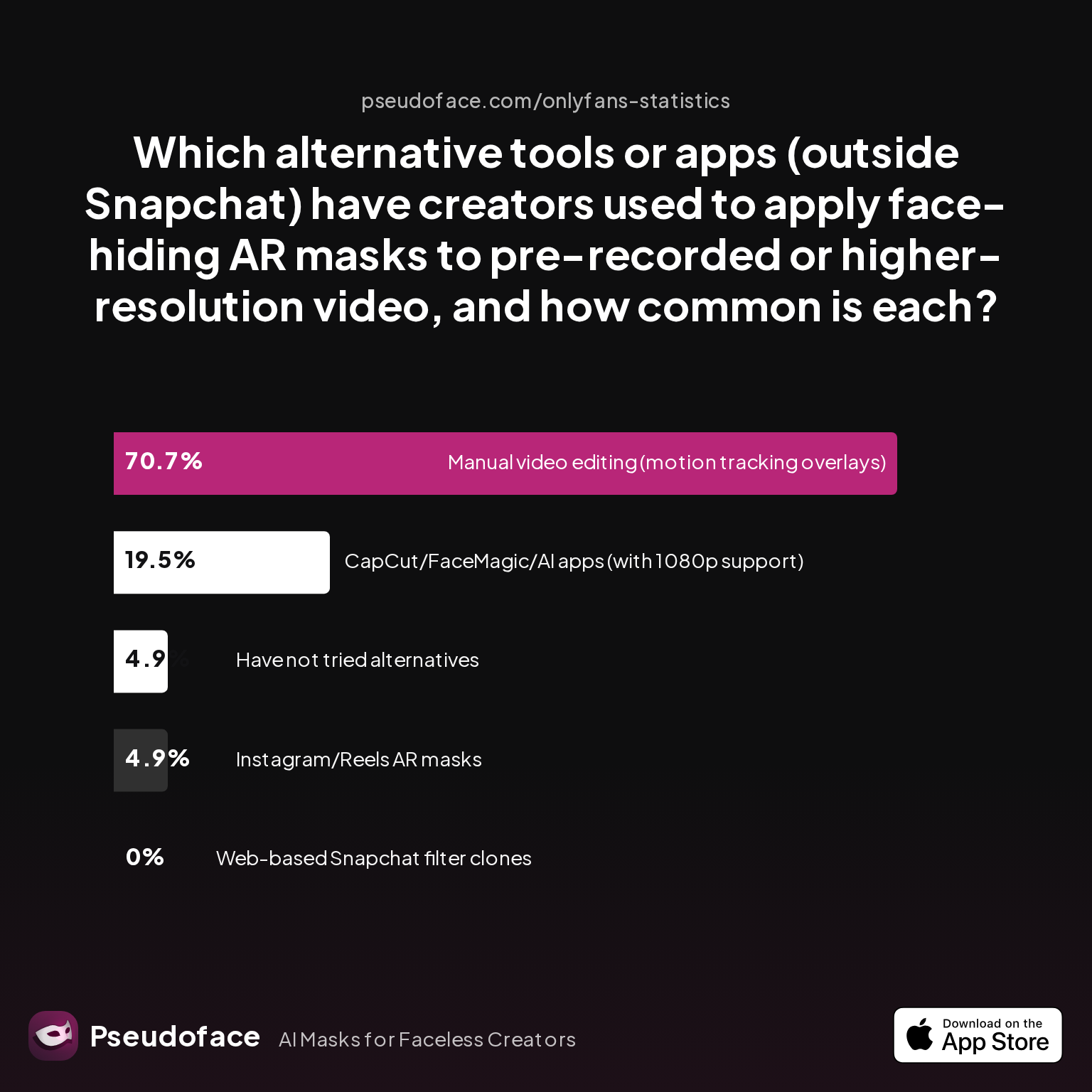
Many creators use third-party AR filter apps for live video, especially for higher-res or prerecorded clips before editing for story/stream. Community data, though self-selected, points to a surprising trend: manual overlays and editing are far more common than plug-and-play AR solutions.
| Answer | Percentage |
|---|---|
| CapCut/FaceMagic/AI apps (with 1080p support) | 19.51% |
| Have not tried alternatives | 4.88% |
| Instagram/Reels AR masks | 4.88% |
| Manual video editing (motion tracking overlays) | 70.73% |
| Web-based Snapchat filter clones | 0.00% |
A striking 71% of creators rely on manual editing and overlays—far outpacing automated AR apps. CapCut and FaceMagic see roughly 20% adoption; Instagram’s own AR suite is used by fewer than 5%, likely due to limited resolution/adaptability and the need for direct app integration. Manual overlays (editing frame-by-frame or using OBS for live) simply provide greater trust—they never crash, and, as user anecdotes suggest, can be “invisible” to viewers.
Adult & NSFW Streaming:
Adult platforms, especially “faceless after dark” categories, support high earning potential for anonymity-minded streamers. There’s a robust Reddit advice economy for those wanting both security and income—common strategies involve heavy cropping, mask layering, and desktop streams with “no face, only hands/body” branding. On these sites, audience acceptance is often higher for faceless creators—a portion even pay a premium for mystery.
Community Cautions:
Both Instagram and adult platforms are rife with accidental reveal threads and privacy scare stories. Many “fails” can be traced to missed app updates, camera slips, or misunderstood filter settings. The risk is real, but manageable with planning—use secondary accounts, always test camera framing, and never rely solely on an app AR filter if your livelihood depends on staying faceless.
Now, with your streaming tools and ideal platform in hand—how do you build real engagement and actually earn money without turning on the face-cam?
Building Engagement and Monetization as a Faceless Creator
A faceless stream is only as good as its ability to engage and monetize without visual charisma or quick facial reactions. This is where voice, narrative, and strategic use of features come into play—success comes from interactivity, consistency, and a creative “brand voice.”
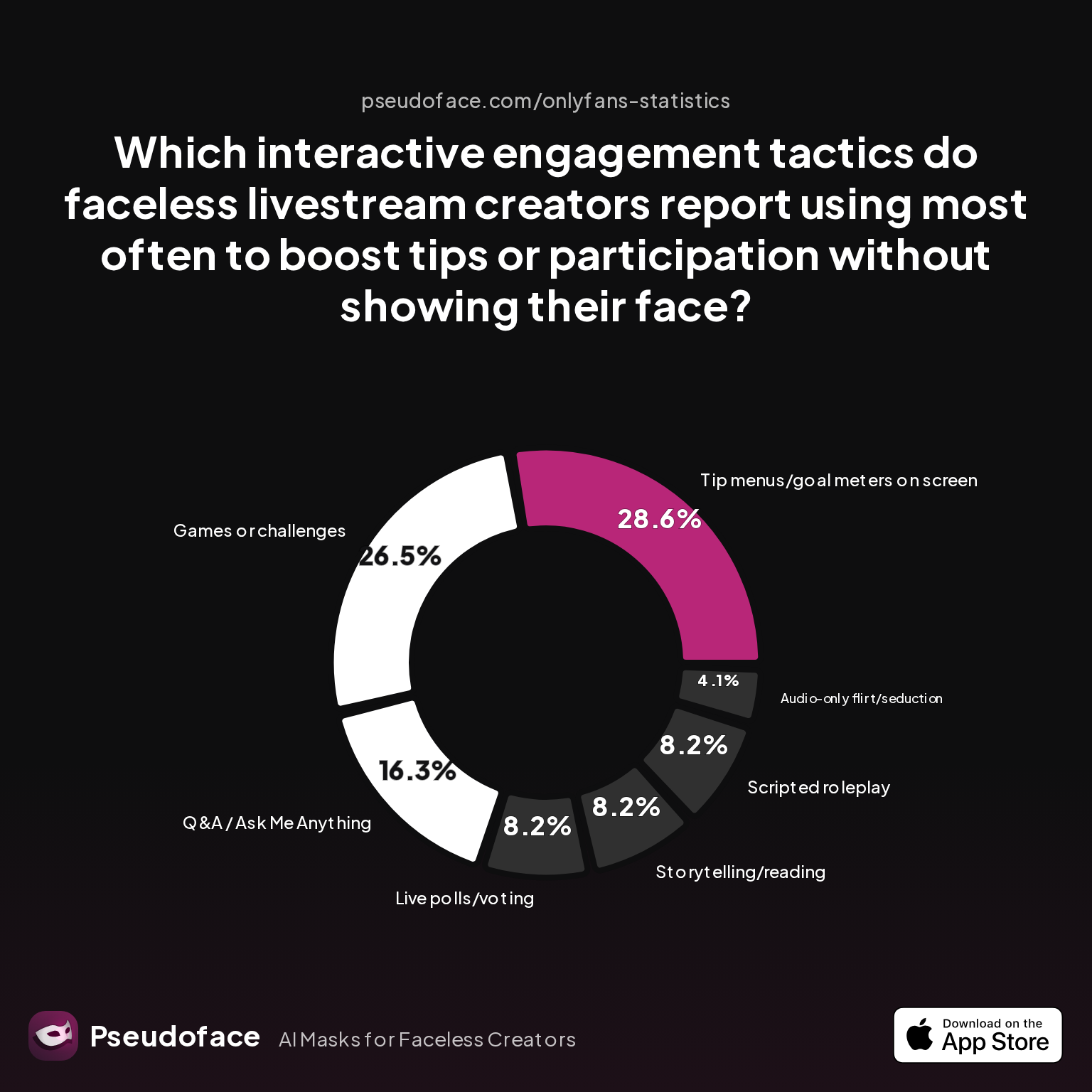
Data from late 2025–early 2026 shows that the most common and lucrative engagement tactics rely on structured participation, tip-based goals, and distinct event pacing:
| Answer | Percentage |
|---|---|
| Audio-only flirt/seduction | 4.08% |
| Games or challenges | 26.53% |
| Live polls/voting | 8.16% |
| Q&A / Ask Me Anything | 16.33% |
| Scripted roleplay | 8.16% |
| Storytelling/reading | 8.16% |
| Tip menus/goal meters on screen | 28.57% |
Games, challenges, and on-screen tip menus (each above 25%) are the top tactics—signaling that the heart of faceless engagement is structure and participation. Live Q&As, polls, and even storytelling interludes follow closely. The least common approaches are pure “audio-only” streams, which rarely drive tips unless paired with an erotic or ASMR edge.
Key tactics and how to use them:
- Tip menus and goal meters: Visually prominent, these provide viewers with a clear mechanism to support you in exchange for in-stream actions, story reveals, or mini-events. They work best when reinforced by energy and countdowns.
- Games and challenges: Ideal for faceless creators, these keep the dynamic playful. Think truth-or-dare (within ToS), “guess the sound”, prop-based games, or audience-decided tasks.
- Q&A/AMAs: Build your brand via stories, opinions, and fan interaction. Many faceless creators gain loyalty through distinctive, recurring answering styles or backstory bits.
- Scripted or roleplay segments: With a signature mask or voice, you can craft “personas” or characters that draw a different kind of fandom and tip flow.
Reddit evidence illustrates the power of interactivity:
Tip menus and transparent engagement are the single best-reported driver of income among faceless streamers.
Many creators on r/onlyfansadvice highlight that interactivity and a strong “known but unknown” style can net tips comparable to non-faceless peers, especially when mystery or humor is played up.
Monetization may be slower for faceless beginners—the loss of facial reactions can reduce early impulse tips—but consistent engagement, narrative-building, and above-all, creating trust (“I don’t show my face, ever, but I never disappear midstream or bait-and-switch!”) build a fiercely loyal fanbase.
Practical checklist for boosting faceless income:
- Use highly visible goals (tip menus, progress bars)
- Announce games or interactive events
- Create a repeatable voice or “persona”
- Remind viewers why you stream without a face—transparency builds rapport
- Partner with other faceless creators for collabs or group events
With these patterns, faceless creators can unlock surprising fan generosity—and strong retention over time.
Face Cam vs. Faceless: Risks, Rewards, and Real Outcomes
The showdown between “face-on” and “faceless” streams isn’t just about privacy—it’s about emotional health, creative limits, and what kind of brand you want to build.
Monetary tradeoff:
Face-cam users may see a slightly faster tip ramp-up when starting, especially if they appeal to visual or flirty audiences. But after the initial novelty, faceless creators who deploy interactivity and narrative consistently can close much of the revenue gap—especially in niches where mystery is a selling point.
Psychological safety:
Nearly 77% of faceless creators report being “somewhat” or “very” satisfied with their safety and comfort (as reviewed earlier). That leaves a significant minority who feel ongoing anxiety—even with perfect tech and process. Public self-reporting underrepresents the silent cohort who quit after accidental reveals or burnout, so always build redundancies and prepare emotionally for the rare challenge or stalker.
Risk of reveal:
Method matters. As covered above, mask/cropping/blur accidents remain rare but not zero (under 10% for most methods) and digital filters, while promising, have reported zero failed incidents—but sample sizes are small and may not capture all edge cases.
Audience impact:
The largest group of audience feedback is positive or neutral for faceless creators (nearly 60%); only 15% express strong dislike. Numerous Reddit threads suggest that the audience is starved not for faces—but for sincerity, entertainment, and a unique angle.
Self-selection bias:
It’s crucial to note: active, public Reddit community members may be more risk-tolerant, technically skilled, or successful than the average beginner. Their experiences trend positive, but anyone starting out should consider their own safety priorities—and revisit them often as their following grows.
Bottom line:
Faceless streaming is not only viable, but thriving. What you lose in surface-level impulse, you gain in sustainability and, for some, a creative edge. Choose your level of exposure, support it with practical tools, and set a plan for growth—your face, your rules.
FAQ
Can you go live on TikTok without showing your face?
Yes, TikTok allows and supports faceless livestreaming using filters, crop angles, and overlays. You can use AR effects, camera placement, and interactive features (like tip menus and polls) to drive engagement without ever showing your face; many successful TikTok creators build entire brands around anonymity.
What is the safest way to go live without anyone recognizing me?
Combining a physical mask with strategic camera cropping and layered digital overlays is the safest way to prevent recognition and accidental reveals; never rely on a single method. According to creator-reported data, blending more than one privacy tactic (like masks plus OBS overlays) substantially lowers both accidental reveal anxiety and actual incidents.
How do you make money live streaming without face cam?
Monetization as a faceless creator is achieved through tip menus, games/challenges, live Q&A, and strong brand voice. Data shows that regular use of interactive features (tip meters, polls, Q&A, and challenges) is the most common and effective way to drive tips and subscriptions—sometimes outperforming face-cam competitors in certain niches.
Will people tip or subscribe if I don’t show my face?
Yes, most viewers are neutral or even positively curious about faceless creators, and only about 18% of creators see a significant engagement drop; transparent tip menus and structured events help bridge the difference.
How do you prevent accidental face reveal during livestreams?
Prevent accidental reveals by physically masking up, strictly controlling camera angles, using overlays, and testing your entire setup before every stream. Reddit creators recommend always using backup digital obscuration (like AR filters or blurred layers), and never changing camera sources or positions mid-stream.
Is it easier to stay anonymous on TikTok, YouTube, Instagram, or adult platforms?
TikTok and adult platforms generally offer more native support for faceless streaming with overlays and flexible features; YouTube is possible but requires more technical prep; Instagram/Facebook lag behind in privacy tools and carry higher real-identity risk.
What kind of masks or overlays work best for faceless streaming?
Full-coverage, snug-fitting masks (often layered), combined with neutral or branded overlays from OBS, are among the most recommended by creators themselves; manual overlays (green screen or digital block) further increase peace of mind.
Can I stream NSFW content facelessly and still get paid?
Yes, faceless “after dark” content is common on adult platforms—crop, mask, and set management are the go-to tactics, and a significant number of paying subscribers list faceless content as a draw, not a drawback.
How do you deal with harassment or doxxing when streaming faceless?
Maintaining strict privacy measures (stage names, burner accounts, VPN), moderating chat rigorously, and reporting/blacklisting harassers are vital; sharing personal info, even by accident, is the number one risk to avoid. Most harassment is manageable if you never give an attacker “real life” leads.
Do I need special tech, apps, or software to be a faceless creator?
Essential tech: a reliable mask, phone or webcam with free angle, OBS or CapCut/FaceMagic for overlays, and a platform that offers robust privacy controls. Advanced creators invest in green screens or custom overlays, but you can succeed using just your phone and creative framing to start.
You can go live—and get paid—without ever showing your face. Build your setup, tell your story, and put privacy first; millions are tuning in for exactly that.


