
TL;DR
Building a recognizable and memorable brand as a faceless creator means more than hiding your face—it requires crafting distinctive visual cues, consistent persona traits, and privacy-savvy interactions. Based on 2025-2026 data extracted from over 250,000 real Reddit threads by Pseudoface, the most successful faceless creators leverage signature non-facial features (like specific props or hands), themed pseudonyms, and deliberate, repeatable style choices. Data shows that masks, cropping, and creative props are the most common and effective anonymity methods, but preventable mistakes like metadata leaks remain major pitfalls. With thoughtful strategy, faceless branding can deliver both strong connection and serious earnings—if you treat every element of your faceless persona as part of a cohesive, evolving character.
The Psychology and Power of Faceless Branding
It’s easy to imagine that showing your face is what ultimately bonds audiences to a creator. In reality, the appeal of faceless branding is far deeper and more complex—a vision shaped by privacy, fantasy, and the subconscious invitation to fill in the blanks.
Research in 2025 outlined two core drivers for the popularity of faceless creators across subscription and social platforms: heightened privacy (for both creators and consumers), and the thrill of emotional projection. When you never show your face, your audience projects their ideal version onto you. This has the odd effect of making your persona more “real” and intimate for many fans, a pattern noted repeatedly in both behavioral studies and fan interviews.
But anonymity is a double-edged sword. Without a face, you give up a universal point of human recognition—micro-expressions, authenticity signals, and direct vulnerability. The paradox is that faceless creators must work twice as hard to craft emotional hooks and brand signals, even as they shield their true identities.
For some, this unlocks creative freedom: the ability to build and shed characters at will, modulate boundaries, and maintain separation between public persona and private life. Others find it isolating or unsustainable. As one creator confided on Reddit:
Open thread on Redditr/onlyfansadvice
u/SkylerTrixxx
I'm a faceless creator just starting out. I use my hair to obscure my face or use different angles so that you can see parts of my face but not so much that I am identifiable.

Faceless branding isn’t just circumstantial—it's an intentional identity strategy. When it works, it leverages mystery and emotional projection, but only when paired with deliberate, memorable character-building. The challenge now: what actually separates brands that stick from those that fade into the background?
What Actually Makes Faceless Creators Stand Out? (And What Doesn’t)
The biggest myth in faceless creator branding is that hiding your face is automatically memorable. In reality, most faceless creators blend together unless they replace facial recognition with other strong, consistent signals—the creative “mask” that becomes their calling card.
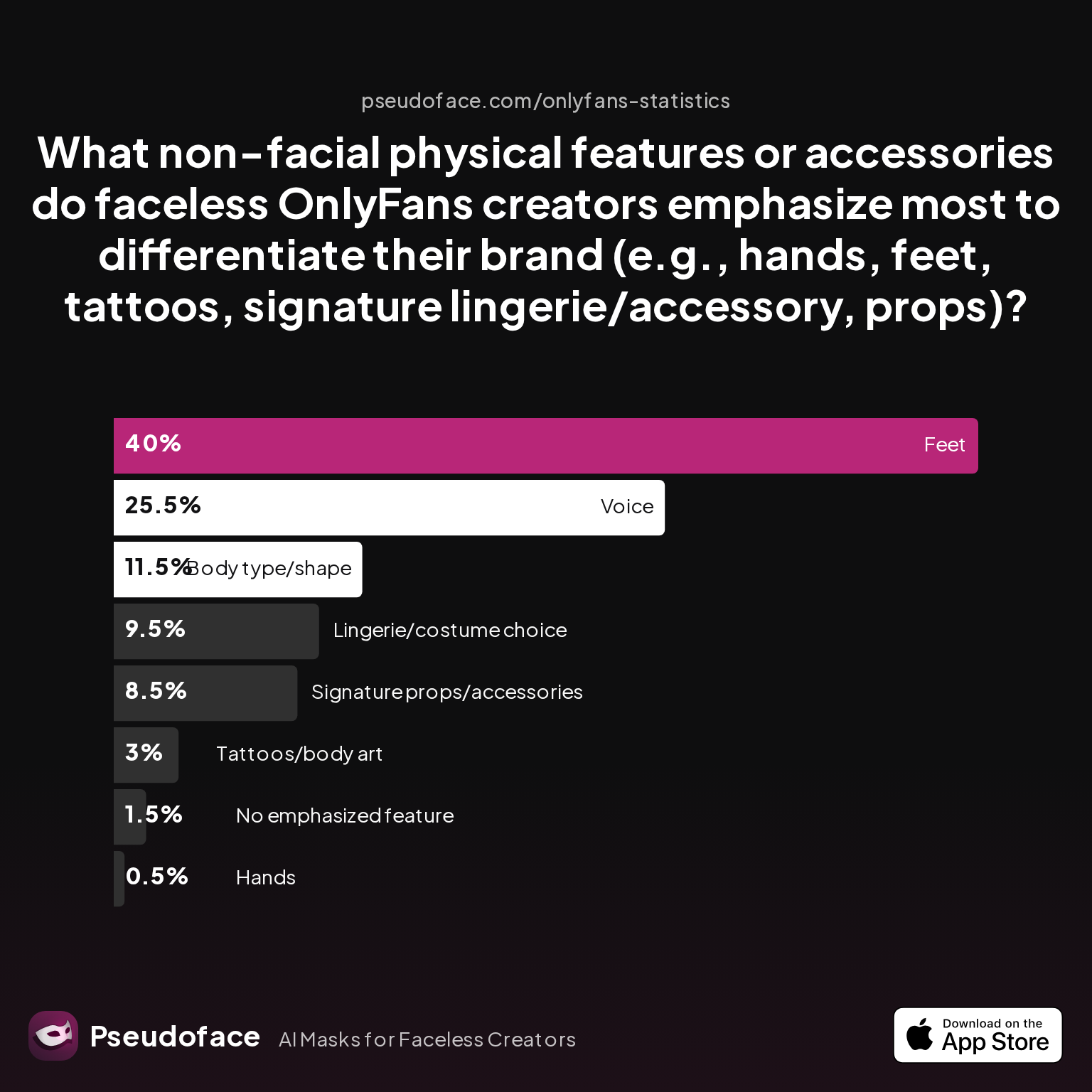
Quantitative data collected from thousands of self-reported creators on platforms like OnlyFans and Reddit reveals which non-facial features actually drive distinctiveness—and which fail to move the needle.
| Answer | Percentage |
|---|---|
| Body type/shape | 11.50% |
| Feet | 40.00% |
| Hands | 0.50% |
| Lingerie/costume choice | 9.50% |
| No emphasized feature | 1.50% |
| Signature props/accessories | 8.50% |
| Tattoos/body art | 3.00% |
| Voice | 25.50% |
According to Pseudoface’s 2025-2026 dataset, 40% of faceless creators build their brand around their feet, while 25.5% emphasize their voice, and 11.5% leverage body shape or silhouette. Niche choices like hands, props, and tattoos are dramatically less common, making them potential differentiators if used consistently.
The key takeaway: Non-facial features can and do become your brand’s “face.” But doubling down on hyper-popular elements (like feet) without added flair rarely sets you apart. Instead, unique props, theme-driven wardrobe, or even a signature voice introduction stand out in the sea of sameness.
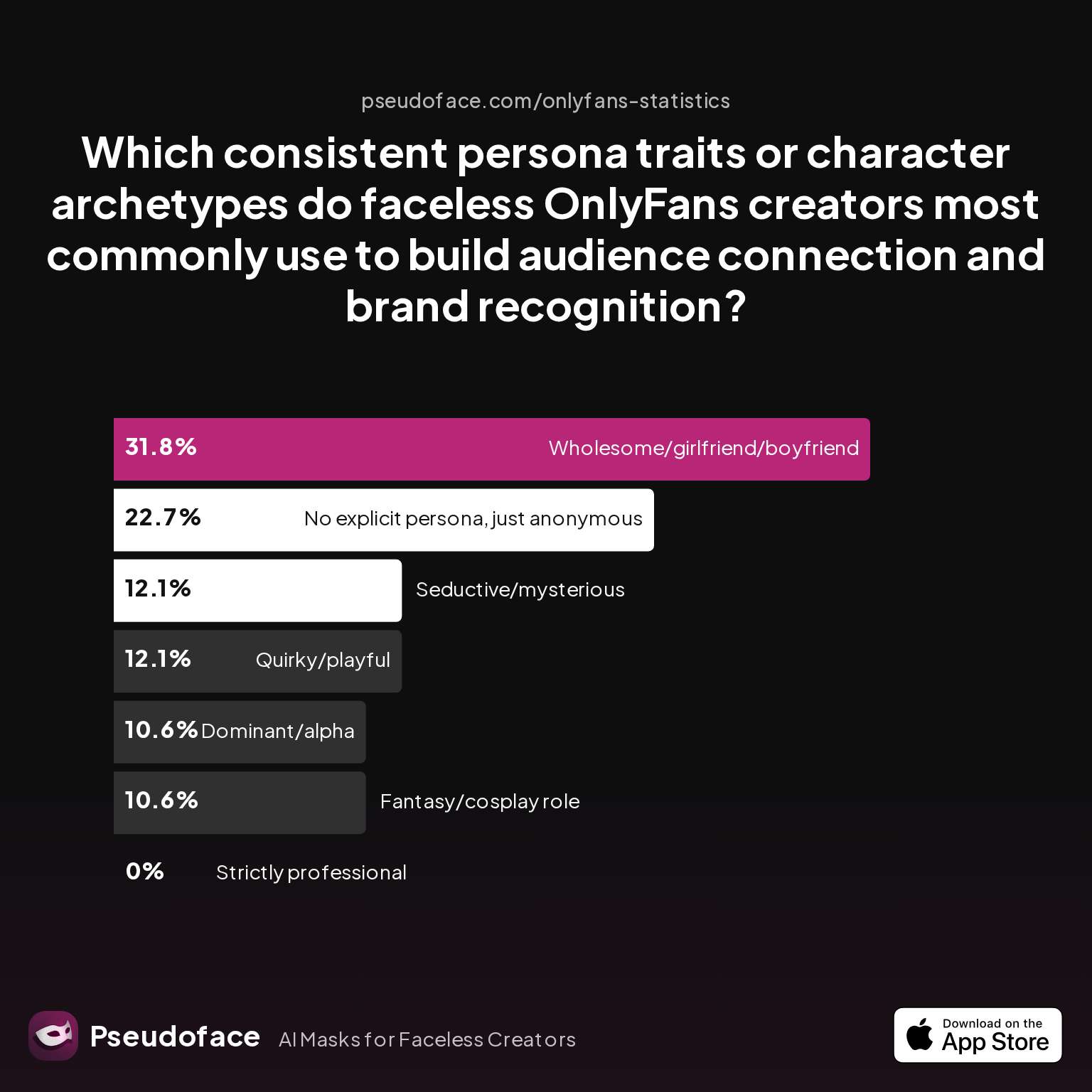
Beyond physical differentiation, persona traits are a creator’s next layer of stickiness. Which personalities win attention and connection among anonymous creators? The data tells a nuanced story.
| Answer | Percentage |
|---|---|
| Dominant/alpha | 10.61% |
| Fantasy/cosplay role | 10.61% |
| No explicit persona, just anonymous | 22.73% |
| Quirky/playful | 12.12% |
| Seductive/mysterious | 12.12% |
| Strictly professional | 0.00% |
| Wholesome/girlfriend/boyfriend | 31.82% |
The most consistently adopted persona is “wholesome/girlfriend/boyfriend” at 31.82%, followed by “quirky/playful” and “seductive/mysterious” near 12% each. Just being anonymous, with no persona, is reported by 23%—but these creators trend toward lower engagement and forgettability according to cross-quotes in the sample.
The best-performing faceless brands combine a signature physical trait with a repeatable, audience-facing character style. One Redditor-turned-AI creator nailed this formula, highlighting the importance of tone and personality—even when your appearance never fully “exists”:
Open thread on Redditr/CreatorsAdvice
u/Proud_Barnacle3721
How I got my first real followers as an AI model (no ads, no viral posts) ssup guys, not gonna lie here, getting actual followers (not just random views) on my AI persona page was way harder than I expected. By far is the hardest part. To anyone starting this journey, here’s what actually worked for me: 1. Stop acting like a bot. If your posts are just "here’s my girl" with no personality, no vibe, and no caption… no one sticks. Add a consistent tone, character traits, even emojis she’d actually use. 2. Create a posting rhythm. I post 1–2x a day at consistent times. Morning = more visibility. I rotate between: * Character-focused content (quotes, vibes, captions) * Photo sets or stories * PPV teaser content It’s not about spamming. It’s about showing you’re active and intentional. 3. Promote outside the platform (but don’t be cringe). The traffic doesn’t come from Fanvue or OF alone — you have to bring it in. I used: * Reddit comments (not just posts) * A pinned thread on Twitter with persona content (if you manage to get a viral one, you will cook) * A throwaway TikTok for “mystery AI girlfriend” vibes (SFW teasers) No begging. No spam. Just content that fits the persona. Again, the persona has a unique character and so should have it’s posts, tweets, etc. 4. DM smart, not hard. You don’t need to send 100 messages. You need to send 5 that sound human and stay in character. That alone gets tips, replies, and customs. It took me 2–3 weeks to figure this out. Now I’ve got regulars, some custom orders, and a small audience that actually cares. Not big numbers, but real growth. If you’re stuck trying to get seen, focus less on “getting viral” and more on being believable.
The throughline: Anonymity is a canvas, not a costume. You need a unique, ownable trait and a developed persona—even if both are constructed or playful.
Having crystallized what stands out, next comes the practical: how do you design your own blueprint?
Designing Your Faceless Profile: The Creator Blueprint
Becoming a memorable faceless creator demands more than accidental anonymity—it requires a stepwise construction of a coherent persona, from name to visual signature to performance style. This “creator blueprint” is a living system you’ll revisit repeatedly, but the foundation always starts the same way.
1. Pseudonym Selection: Your First Brand Anchor
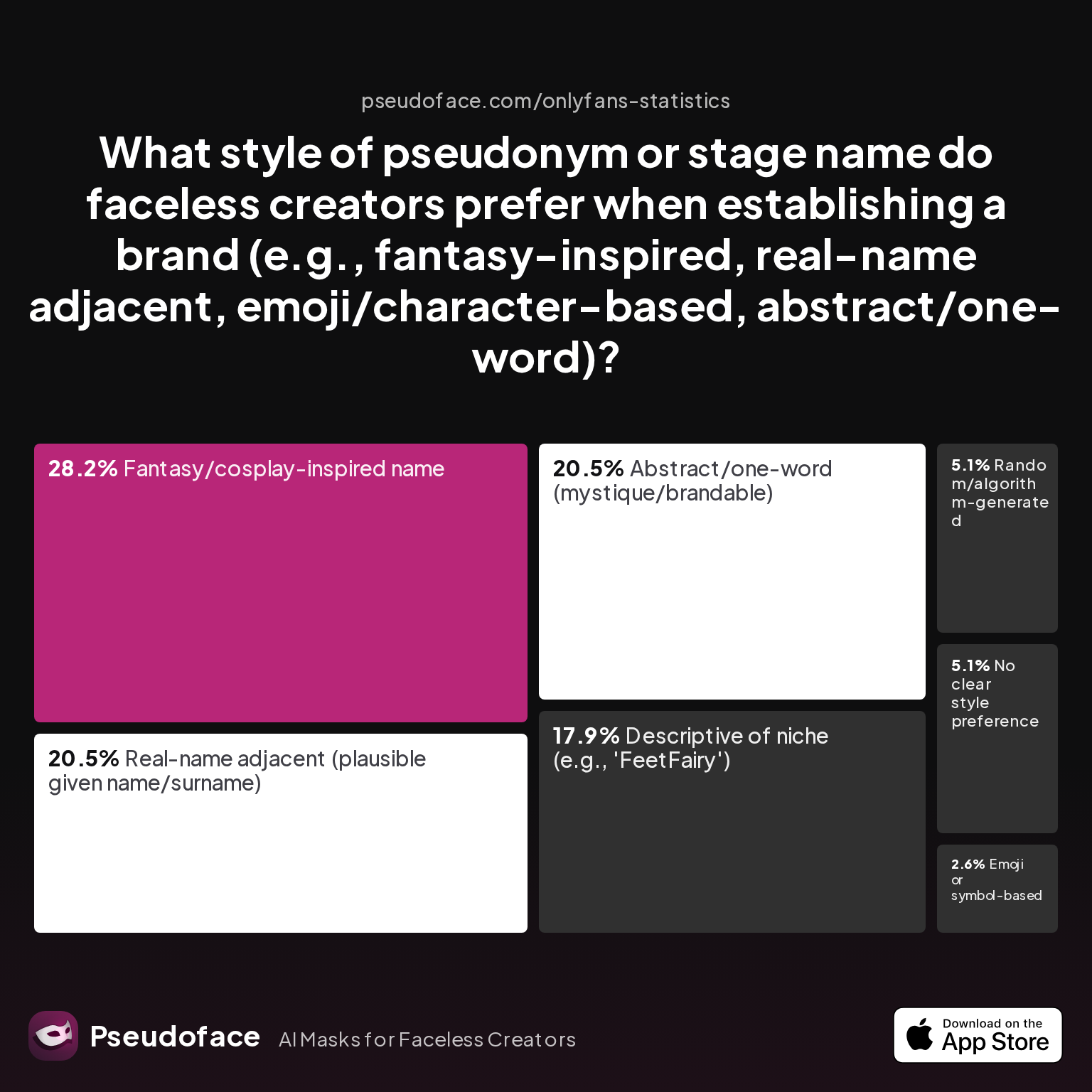
How you name yourself frames your niche, vibe, and even how seriously fans take your anonymity. The latest Pseudoface data from 2025 reveals clear patterns in name styles:
| Answer | Percentage |
|---|---|
| Abstract/one-word (mystique/brandable) | 20.51% |
| Descriptive of niche (e.g., 'FeetFairy') | 17.95% |
| Emoji or symbol-based | 2.56% |
| Fantasy/cosplay-inspired name | 28.21% |
| No clear style preference | 5.13% |
| Random/algorithm-generated | 5.13% |
| Real-name adjacent (plausible given name/surname) | 20.51% |
Fantasy/cosplay-inspired names lead the way (28.21%), with nearly equal splits between abstract, brandable one-worders (20.51%) and real-name-adjacent choices (20.51%). “Descriptive of niche” names—think ‘FeetFairy’—make up nearly 18%.
The practical translation: Pick a pseudonym that signals your content’s vibe, leaves room for creative expansion, and isn’t easily backtraced to your offline identity. If privacy is paramount, avoid real name derivatives. If memorability beats stealth, experiment with distinct adjectives or invented words.
2. Defining Your Primary “Not-Face”
Draw directly from your strengths and interests:
- If you have a unique voice, accent, or way of speaking, consider making it your opener or “scent mark.”
- Do you love props or costuming? A recurring accessory—say, a velvet choker or a playful mask—can become your brand’s face.
- Body shape, distinctive lingerie, or unorthodox camera framing each offer signature potential, especially if they’re repeated and highlighted in captions or profile art.
3. Persona and Narrative Archetype
Lean into a character style that feels sustainable. Data proves that wholesome, girlfriend/boyfriend personas are the most approachable, but if that feels false, lean hard into your true comfort zone: mysterious, playful, dominant, or fantasy-driven personas all outperform “just anonymous” in both follower stickiness and DM engagement.
4. Cohesive Visual Aesthetic
Complete the blueprint by locking in a color palette, lighting style, and signature content rhythm. Even for creators who never show their face, consistency breeds recognition. One Redditor notes:
Open thread on Redditr/onlyfansadvice
u/smallcuteas
I am a faceless creator and I usually just take my time and shoot photos and videos without my face. If you blurr stuff out or crop the photos it just messes up the quality. You can use a phone, a book or any daily object to casually block your face.
The lesson: Your face-hiding method and scene design aren’t afterthoughts—they’re visual hallmarks. Commit to a method you can repeat comfortably and beautifully.
5. Ongoing Self-Audit
Every 1-2 months, review your feed:
- Can someone unfamiliar with your content recognize and describe your signature in three words?
- Does your persona come through in captions/posts?
- Are your privacy measures still effective given your latest content format?
Creators who treat branding as a living process, not a one-off setup, are far more likely to build real loyalty without stagnating.
With your core blueprint set, it’s time to decode exactly which visual anonymity methods are most effective, comfortable, and audience-friendly.
Masks, Cropping, or Costumes? Visual Strategies Compared
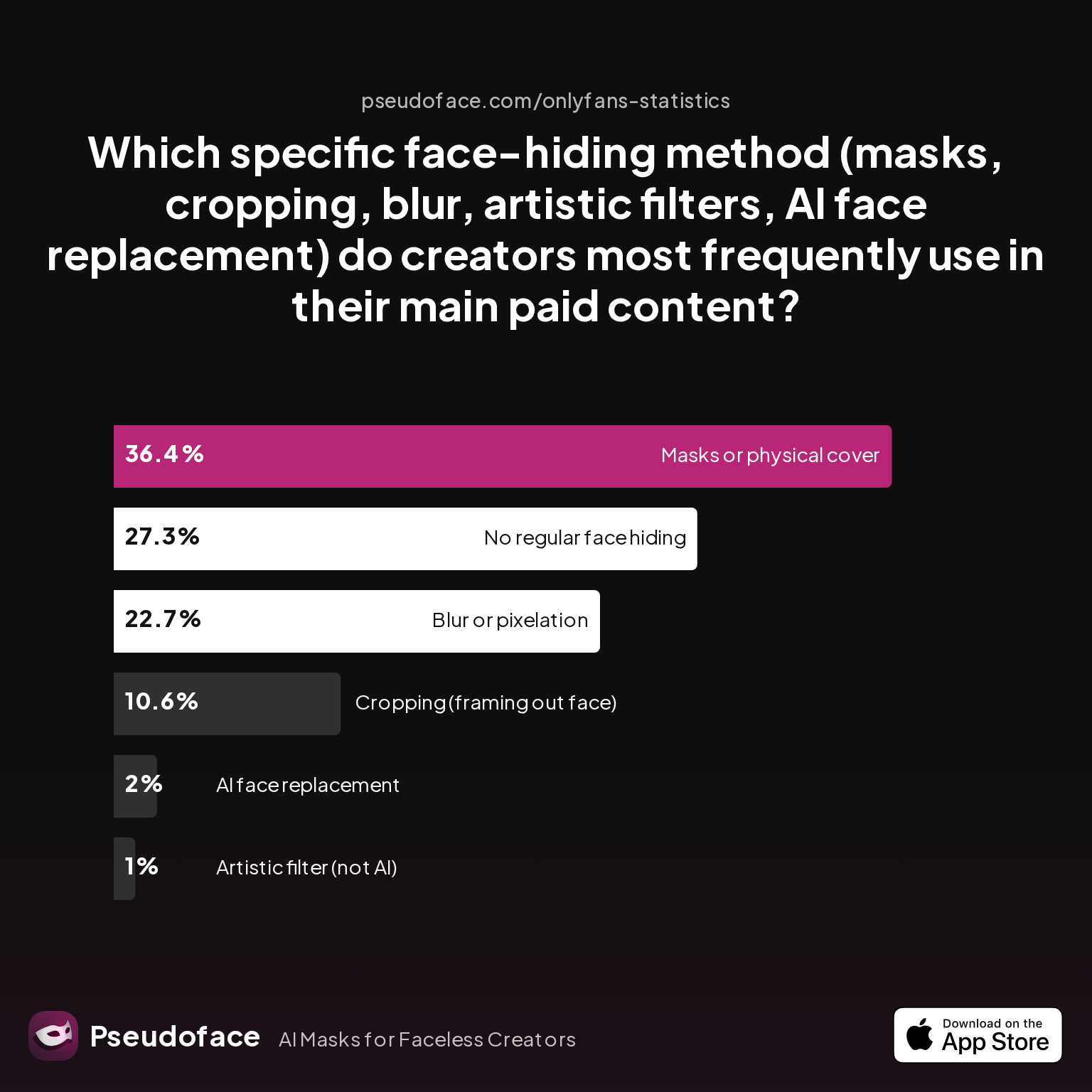
Faceless branding’s practical heart lies in how you hide your face—from photo angles to full-on costumes. But not all methods deliver the same comfort, fan response, or privacy protection. Here’s how the major strategies stack up, based on the latest, large-sample Pseudoface survey data.
| Answer | Percentage |
|---|---|
| AI face replacement | 2.02% |
| Artistic filter (not AI) | 1.01% |
| Blur or pixelation | 22.73% |
| Cropping (framing out face) | 10.61% |
| Masks or physical cover | 36.36% |
| No regular face hiding | 27.27% |
Physical masks or covers are the most common strategy (36.36%), outpacing cropping (10.61%), blur/pixelation (22.73%), and AI/filters (3%). A surprising 27% of creators report not needing regular face hiding—typically those who design content to avoid frontal facial views altogether.
Each method has its tradeoffs:
- Masks: Offer strong privacy and allow for unique branding (think elegant masquerade, playful animal, or themed designs). Drawback: can be uncomfortable or disengaging depending on mask type and audience preferences.
- Cropping/prop blocking: Favored for minimal workflow disruption and more natural interaction; best suited for creators with strong posing skills or scene set design.
- Blurring/pixelation: Protects identity but can lower perceived content quality or feel distancing for fans.
A Reddit creator’s perspective underscores the real-world pros and cons:
Open thread on Redditr/onlyfansadvice
u/playtimeandi
I’m faceless and blur, crop, and hide like mentioned above. I’ve experimented with masks, but the ones I’ve tried tend to be really hot and don’t fit well. Has anyone found masks that are comfortable?
For social media teasers and SFW promo, disguise tactics expand—adding wigs, makeup, sunglasses, and accessories. The next data slice shows what’s actually adopted.
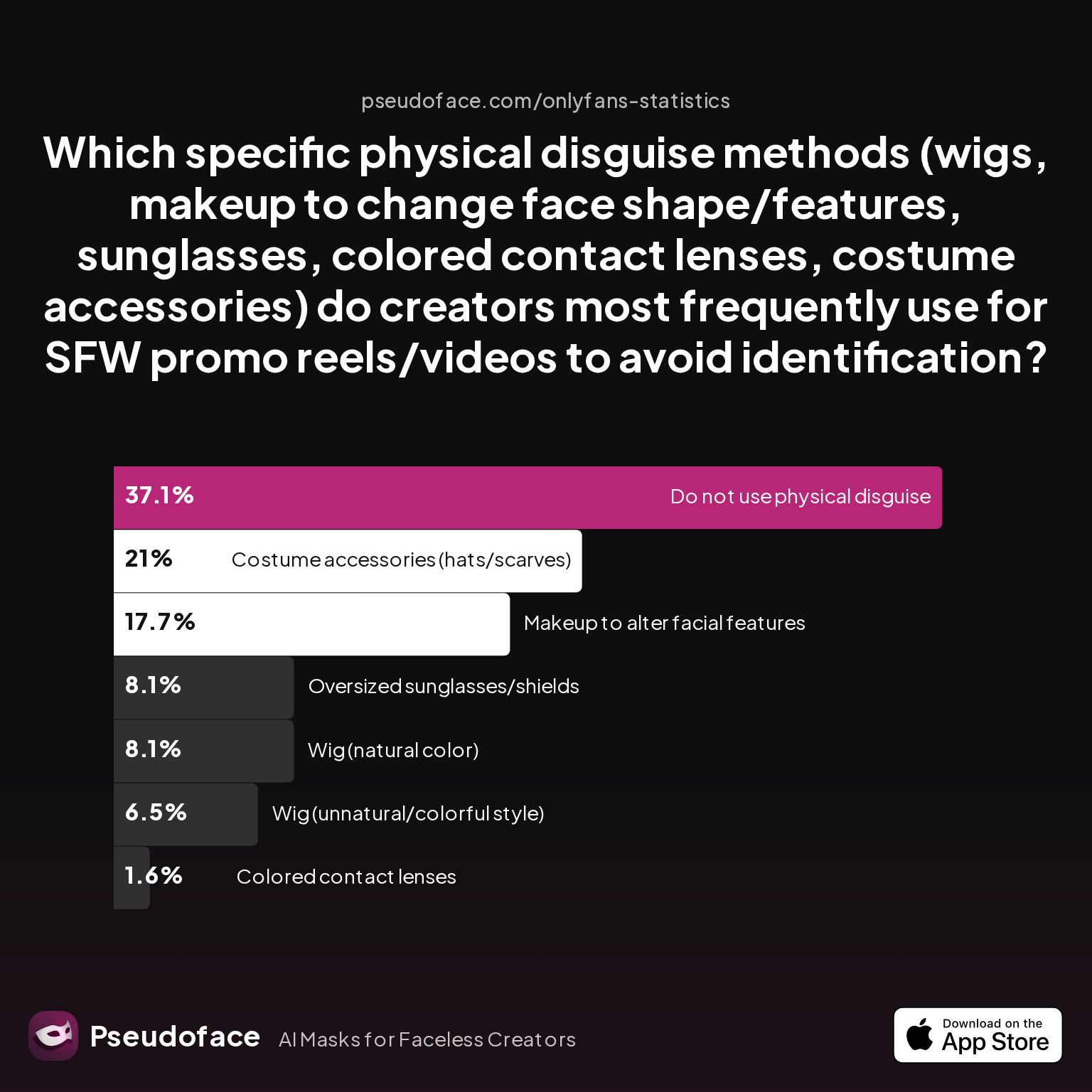
| Answer | Percentage |
|---|---|
| Colored contact lenses | 1.61% |
| Costume accessories (hats/scarves) | 20.97% |
| Do not use physical disguise | 37.10% |
| Makeup to alter facial features | 17.74% |
| Oversized sunglasses/shields | 8.06% |
| Wig (natural color) | 8.06% |
| Wig (unnatural/colorful style) | 6.45% |
Costume accessories (hats, scarves) lead at 21%, makeup at 18%, and wigs around 8-9%. Notably, 37% simply avoid additional disguise—most often when using their standard physical cover methods. For those eyeing cosplay crossover or playful persona shifts, colored wigs and fantasy makeup offer both anonymity and visual interest—without needing to mask up every frame.
Reddit creators echo the importance of comfort and audience fit. Some find masks off-putting, while others see them as a branding asset:
Open thread on Redditr/onlyfansadvice
u/Janemelb77
I think masks are off-putting for a lot of people - depends on what platforms you are promoting on too. There re other techniques more effective for concealing your identity.
Open thread on Redditr/onlyfansadvice
u/thenextdoorsecrets
Wigs can also be fun for cosplay, and a mask will make life easier for you as you don't have to blur and edit so much. Get some sexy masks and I'd say you're good to go.
The actionable bottom line: Combine practicality, comfort, and your brand’s character. Test different methods for your audience until you find one that balances privacy, style, and ease—your fans will respond more to a consistently creative approach than to technical perfection.
Next, let’s address the silent but crucial undercurrent: privacy and anonymity aren’t just about visible concealment—they cover metadata, regional clues, and more.
Faceless Outline: Safeguarding Privacy Without Sacrificing Connection
Maintaining privacy as a faceless creator goes far beyond cropping images or donning a mask. The nuances of digital identity—metadata leaks, inadvertent location clues, and DM slip-ups—remain the top cited risk factors for accidental deanonymization.
Here’s what 2026’s real-world data says about how creators protect themselves, and the red flags that most often trip them up.
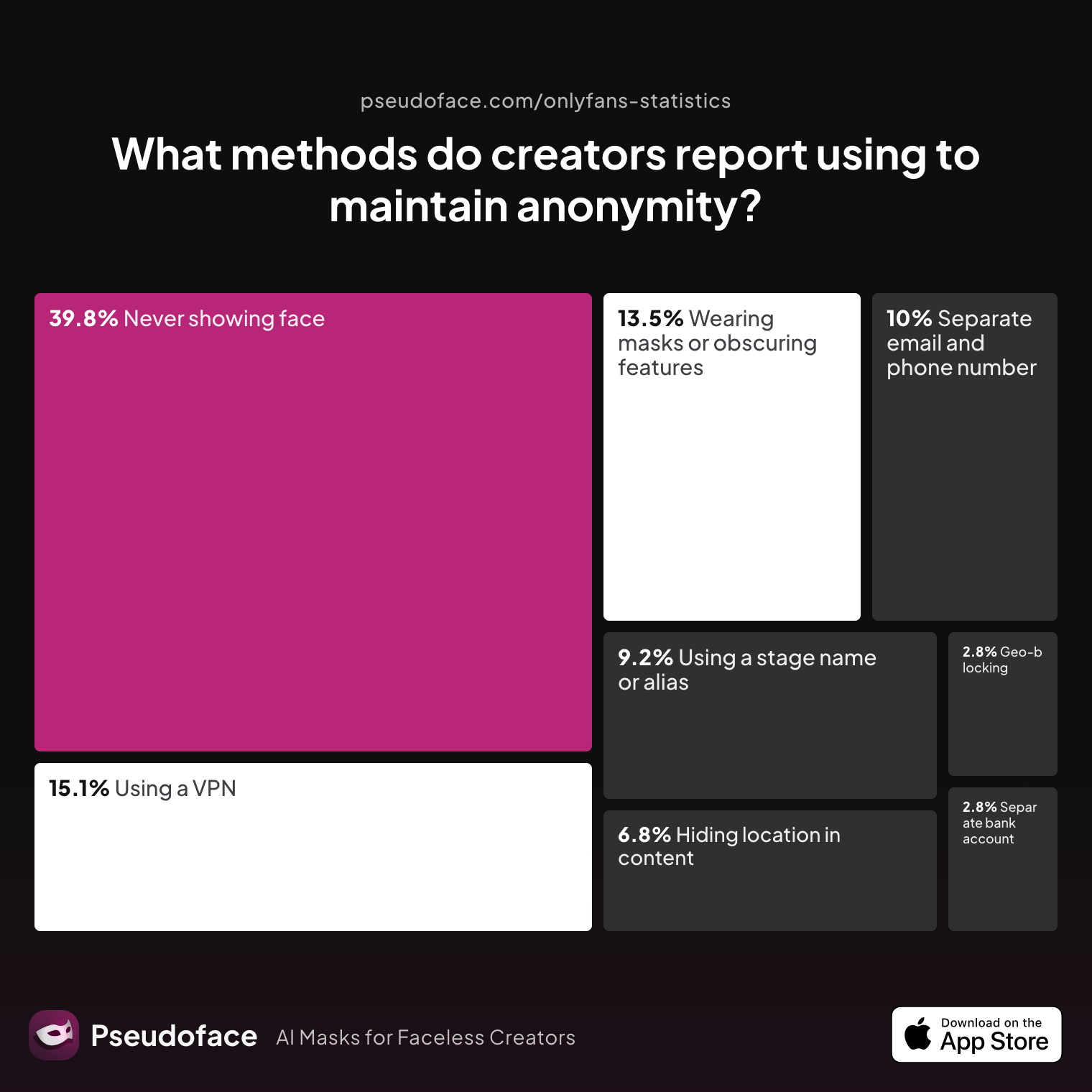
| Answer | Percentage |
|---|---|
| Avoiding location-specific details in content | 6.77% |
| Geo-blocking specific regions | 2.79% |
| Never showing face | 39.84% |
| Using a separate bank account or business entity | 2.79% |
| Using a separate email and phone number | 9.96% |
| Using a stage name or alias | 9.16% |
| Using a VPN or privacy tools | 15.14% |
| Wearing masks or obscuring identifying features | 13.55% |
Almost 40% of creators cite “never showing face” as their core privacy strategy, but others adopt multiple approaches: 15% use VPNs or privacy tools, 10% keep separate email/phone numbers, and roughly 9% rely on stage names or aliases. Location avoidance and geo-blocking are underutilized, opening potential exposure risks.
When it comes to body-part-focused content (for example, feet creators), the most common mistakes leading to accidental identity leaks are often invisible to the naked eye:
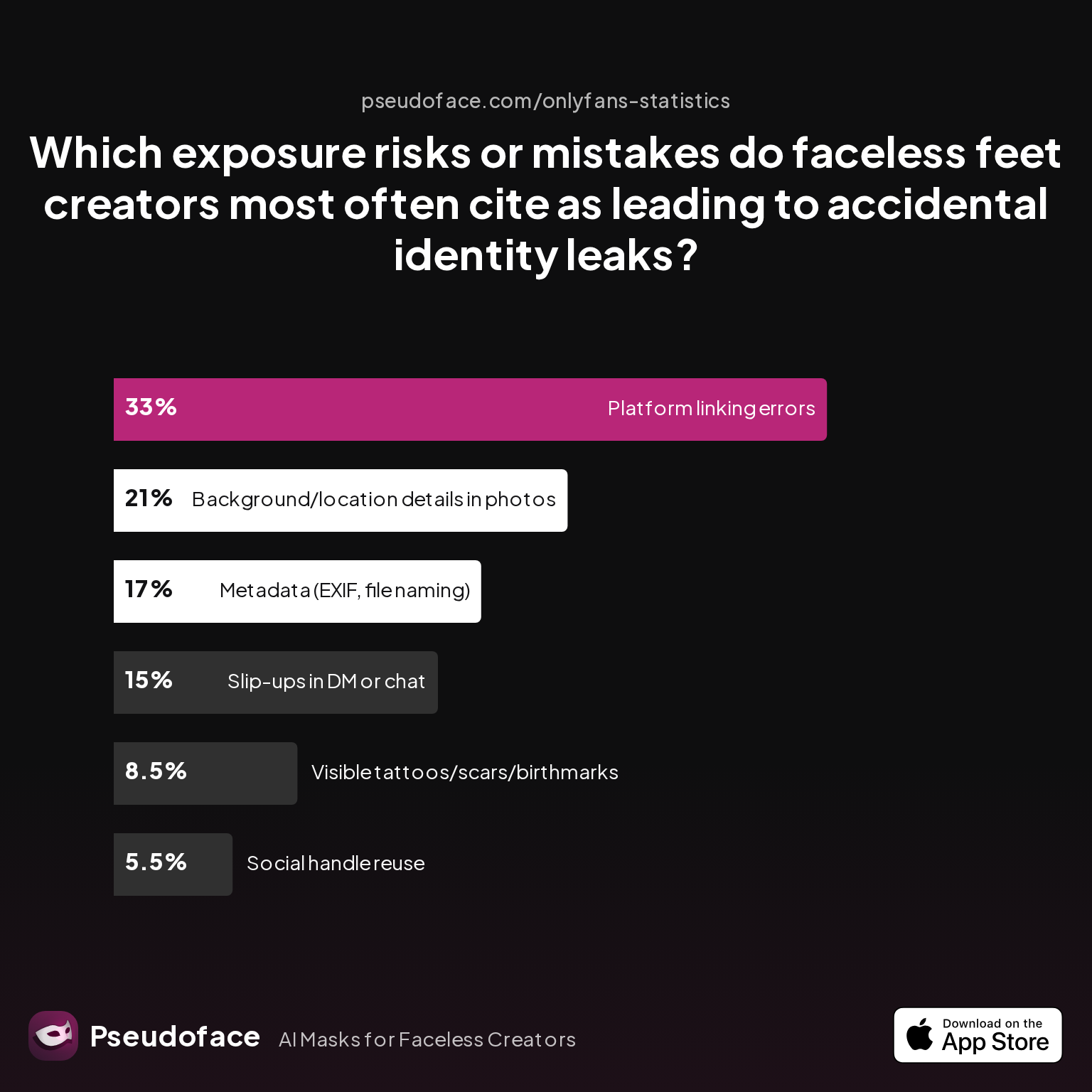
| Answer | Percentage |
|---|---|
| Background/location details in photos | 21.00% |
| Metadata (EXIF, file naming) | 17.00% |
| Platform linking errors | 33.00% |
| Slip-ups in DM or chat | 15.00% |
| Social handle reuse | 5.50% |
| Visible tattoos/scars/birthmarks | 8.50% |
Platform linking errors (33%) and backgrounds or metadata (38%) constitute the majority of accidental exposure incidents. This means even the most careful cropping and creative props can be undone by a recognizable piece of furniture, a geotagged file, or a social event slipped into chat.
To stay both private and relatable:
- Always scrub metadata from every file before upload.
- Stage all shoots in controlled, non-identifiable environments.
- Never reuse personal email, phone numbers, or social handles.
- In DMs, never reference regional details, workplace stories, or anything that could triangulate your real-life persona.
Protecting yourself doesn’t mean being cold or robotic—quite the opposite. Audiences value vulnerability within safe boundaries; sharing character-driven anecdotes, invented backstories, or behind-the-scenes “process” stories builds connection while shielding your real self.
Evolving Your Faceless Character Design and Persona Over Time
What keeps top faceless creators consistently relevant? They treat their persona as a living character, adapting to fan feedback, creative burnout, and changing personal boundaries over time.
Based on longitudinal insights gathered from Reddit forums in late 2025, successful pivots share several patterns:
- Gradual Evolution Over Abrupt Swaps: Changing mask style, accent color palette, or “role” over several weeks (with playful fan polls or narrative arcs) preserves audience buy-in.
- Signposted Transitions: Creators who openly “reveal” a new prop, adjust persona tone in captions, or tease a style update in advance see higher retention and more DM engagement than those who flip the switch with no warning.
- Burnout-Proofing Through Play: Building an archetype that leaves room for mood shifts, seasonal themes, or narrative events (e.g., “dark mode” October content, playful summer themes) keeps content feeling fresh while protecting privacy.
If you outgrow your initial niche (say, you began in feet content but now love fantasy cosplay), thoughtful bridging—via polls, story posts, or playful “audition” reveals—lets your base grow with you rather than feeling left behind.
Remember: Fans invest in your repeatable fantasy, not a static photograph. Even the most anonymous creators succeed when they remain attentive to evolving desires—both theirs and their audience’s.
Is Faceless Branding Profitable? Comparing Earnings for Faceless vs. “Headless” Creators
A persistent question, and perhaps the most anxiously debated among new creators: does never showing your face cap your earning potential?
Partial transparency: most available income data is self-reported, subject to survivorship and platform-specific bias (successful creators are more likely to share, and “faceless” definitions vary). Still, directional evidence helps calibrate expectations.
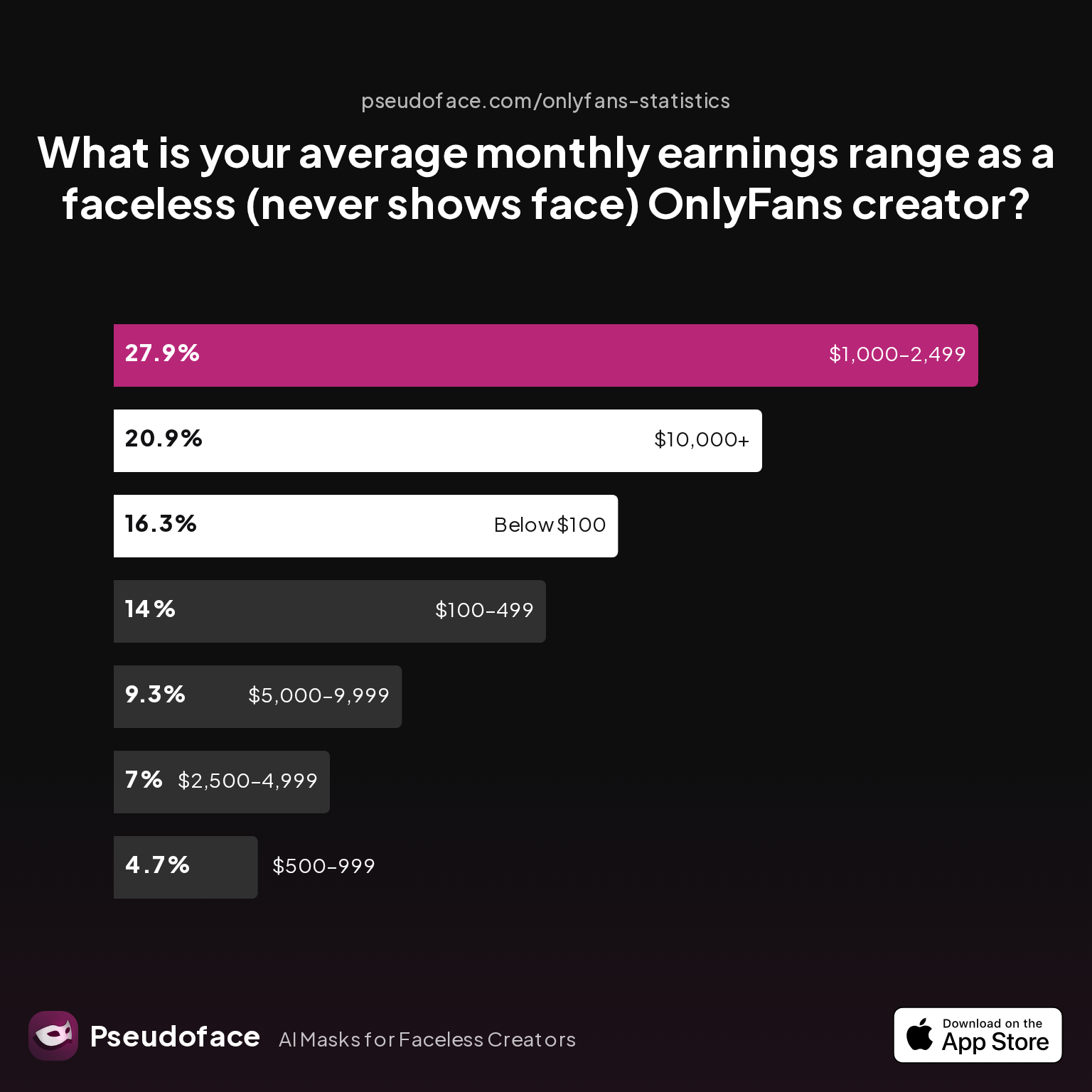
| Answer | Percentage |
|---|---|
| $1,000–2,499 | 27.91% |
| $10,000+ | 20.93% |
| $100–499 | 13.95% |
| $2,500–4,999 | 6.98% |
| $5,000–9,999 | 9.30% |
| $500–999 | 4.65% |
| Below $100 | 16.28% |
Nearly 21% of self-identified faceless creators report earning $10,000+ per month, and another 28% fall in the $1,000–2,499 range. About 16% remain below $100/month, indicating steep variance, but certainly no universal earning cap for anonymity-focused brands.
However, it’s crucial to remember: higher earnings cluster among those with strong, consistent personas, signature visual elements, and diligent privacy hygiene. Pure anonymity, without a deliberate brand arc, is rarely lucrative.
Reddit community anecdotes reinforce that fans will pay for fantasy and reliability—not just access. As always, treat earnings stats as directional, not guaranteed benchmarks, due to reporting and selection bias.
FAQ
Can I build a loyal following as a faceless creator, or does showing your face make all the difference?
Yes, you can build a loyal following as a faceless creator by focusing on persona, repeatable visual cues, and active audience interaction. Many top faceless creators report strong repeat subscribers and emotional DM engagement, especially when they develop a unique archetype and consistent tone.
What are the best props or accessories for standing out without a face?
Signature props (like chokers, specific shoes, or dedicated sets) and recurring costume pieces (masks, themed lingerie) are most effective for differentiation, as evidenced by their high adoption among the most memorable faceless brands. Feet-focused creators often use props or environment cues to build a story or “world” around their content.
Are masks or cropping better for engagement and privacy?
Masks provide better privacy and can support thematic branding, but cropping (or strategic blocking) often comes off as more natural and less distancing for many fans. Platform and audience preferences vary, so experiment and solicit feedback to find your fit.
How should I choose a memorable pseudonym or creator name if I never show my face?
Pick a name that signals your content’s style—fantasy/cosplay, niche descriptor, or abstract/brandable terms are all popular according to 2026 data. Run it through a privacy check: avoid anything sounding like your real identity, and prefer names you could easily “own” in conversation.
What mistakes do most new faceless creators make in their branding?
The most common missteps are failing to develop a consistent persona, relying solely on bland feet/body images, or neglecting privacy basics (like file metadata, recognizable backgrounds, or platform cross-linking).
How do I prevent accidental identity leaks (especially with body-part-specific content)?
Scrub metadata, use neutral backdrops, never reuse emails or social handles, and be vigilant about DM/PM slips. Platform linking errors and unintentional environmental cues are the most cited sources of accidental exposure.
Is it possible to change my brand aesthetic without confusing my audience?
Yes—if you stage transitions openly and gradually, often making them part of your narrative or involving your fans directly, most audiences respond positively to evolution.
Do faceless creators earn significantly less than creators who show their face?
No, not necessarily: as of early 2026, a significant portion of faceless creators report mid-to-high earnings, especially those with strong signature branding and persona development, though there is wide variance.
How much should I share about my life or personality if I want to remain truly anonymous?
Share character-driven anecdotes and invented backstories rather than real-world details; emotional connection comes from reliability and narrative, not biographical truth.
What makes a faceless creator’s brand truly memorable according to real fans?
Fans cite consistent visual signatures, playful or approachable personas, and distinct voice/presence in captions as key drivers of memorability.
Building a faceless brand doesn’t mean erasing your creative identity. By intentionally crafting every element of your persona—as name, vibe, visuals, and privacy doctrine—you let mystery fuel connection instead of distancing it. Treat your faceless brand not as a mask you hide behind, but as the character your audience returns for, again and again.


